

What’s the teacher’s takeaway from September 10th?
Sickened and disgusted. That’s how I felt after learning of the senseless shooting of Charlie Kirk. I’m still processing it.
Charlie was a controversial figure. I disagreed with him vehemently on some issues. You probably did too.
One thing that every educator can agree with Charlie on, however, is the importance of dialogue, ideas, and debate. It’s easy to find that principle in his content.
How to argue well
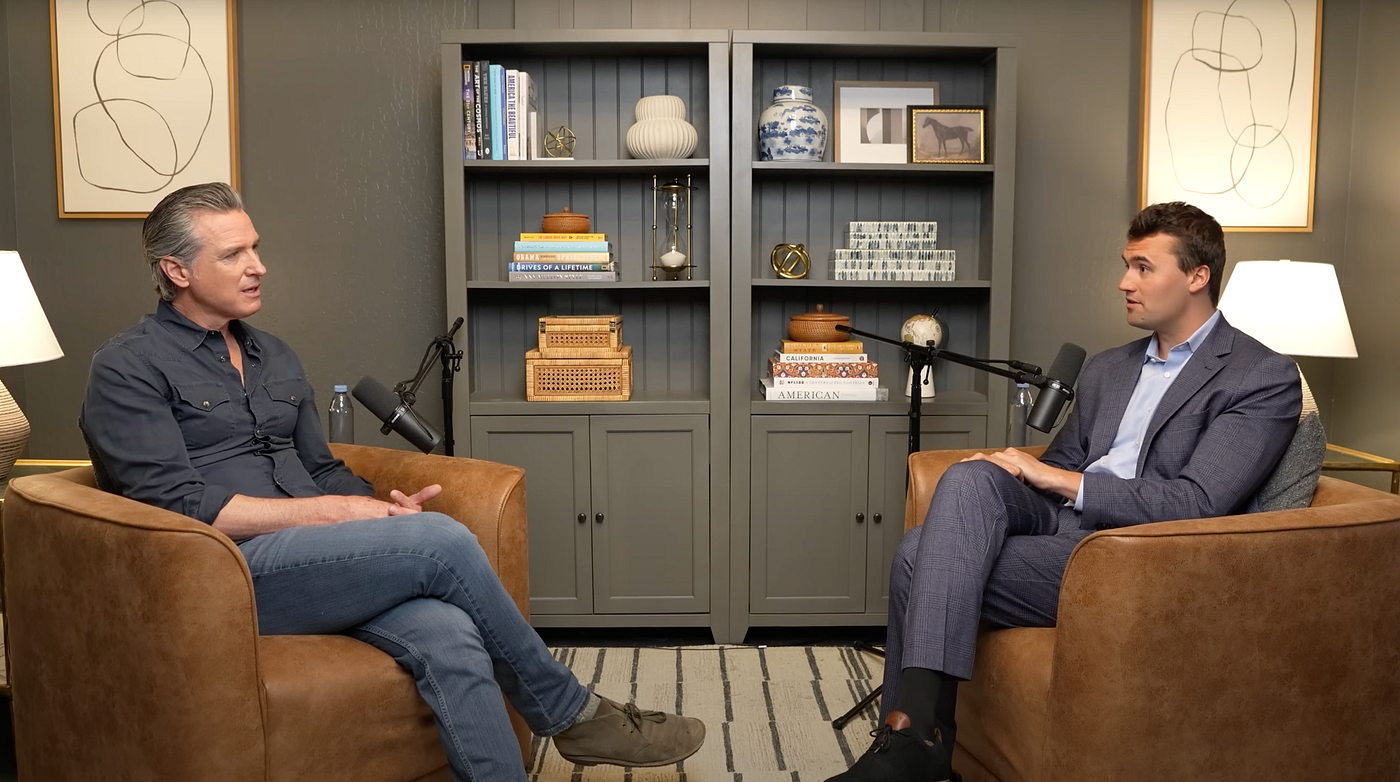
Earlier this year, I listened to a conversation between California governor Gavin Newsom and Charlie Kirk.
Democrat and Republican. Here were two ideological adversaries — men from opposite sides of the aisle, each with a legitimate path to the presidency in the years to come.
Fascinating.
They each see (saw) the world very differently. Yet they were willing to sit down with the other, look at each other, and have an open, respectful, lengthy conversation.
Lengthy conversations
Those are harder to come by these days. In a world of reels, shorts, TikToks, posts of 280 characters, and nonstop amusement, reading is on a steep decline across society.
Thoughtful dialogue has become officially endangered.
Generative AI has put the act of writing on decline as well. If writing = thinking, that’s a very sobering prospect.
One thing I appreciated about Charlie — and something I respect on all points of the political spectrum when I see it — is that he genuinely engaged with opposing ideas.
He invited hard questions at his college campus events, just like the one he was killed at.
And it wasn’t in a predatory, I’m-going-to-embarrass-you, f#$%-you kind of way. When you actually sit down and watch his conversations, you’ll see that he genuinely enjoyed the exchange of ideas.
Did he resort to sarcasm sometimes? For sure.
Did he frame some things in ways that I found distasteful? Absolutely.
But by and large, he clung to the high ground. He remained respectful. He avoided swearing and name-calling. He often responded graciously to abusive tirades.
As I said, I disagreed strongly with some of his positions, and still do. But Charlie was a reader, a thinker, a reasoner. I wanted to hear what he had to say.
As our classrooms go, so goes the world
In the last year, we’ve seen state legislators killed. We’ve seen the president shot. And on Wednesday, a 31-year-old husband, father, and activist was assassinated.
I’ve seen some educators post takes to the effect that Kirk deserved this outcome for his views on guns.
That’s not the takeaway, colleague.
The takeaway is that a growing number of people believe that cold-blooded violence is an acceptable response to political ideas.
The takeaway is that more and more students will think twice before defending unpopular positions.
The takeaway is that the public forum just got a little bit smaller.
Here in the West, we laugh scornfully at regimes like North Korea, where all must adulate the Supreme Leader and those who dare to dissent find themselves bundled off the streets into the backs of unmarked vans.
Our liberal democracy is so far from that, we exult.
Is it? In some ways, yes. Trump is no noble protector of political expression, but he is also no Stalin.
Yet free speech and open debate are fragile ideals. They must be nurtured and protected, or they will fade.
That nurturing work begins in our classrooms, our schools, our colleges and universities. Whatever our own beliefs, it falls on us to create space for hard questions.
To offer a stage.
To value every voice.
To require genuine thought, rational articulations, and conversations.
I’m not talking about giving free license to incitements of violence or name-calling.
But somehow, some way, we must defend the right of our students to take unpopular positions without fear of being instantly shouted down or suffering violent retribution.
This week, have your students write about an issue that matters.
Have them share their writing with peers.
Put away the screens, and create space for an exchange of ideas.
The future of our democracy depends on free speech.
Our classrooms offer a preview.

 Teachers on Fire
Leave a comment