🔥 Are Kahoot and Blooket really the best ways for students to review content?
🔥 How can we build fluency, literacy, and thinking skills in the science classroom?
🔥 What’s the role of pencils and paper in the classroom of 2025?
Today’s Teacher on Fire is Marcie Samayoa. Marcie is a high school chemistry teacher from Los Angeles, California with ten years of experience in the classroom. Through her blog, Scientists in the Making, she shares evidence-based teaching strategies that connect cognitive science to instructional practices.
A little recognition and encouragement can go a long way.
🔥 What can we do as teachers to uplift the students in our classrooms?
🔥 What happens when our students see themselves in a story of learning?
🔥 What should concern us most about AI tools in education?
Welcome back to another episode of the Teachers on Fire Podcast, airing live on YouTube most Saturday mornings at 8am Pacific, 11am Eastern. My name is Tim Cavey, and my mission here is to warm your heart, spark your thinking, and ignite your professional practice.
This episode’s Teacher on Fire is Marcus Luther. Marcus is a high school English teacher with over a decade in the classroom. He cohosts a teacher-centered podcast and Substack called The Broken Copier, which focus on conversations and strategies to better support teachers.
🔥 What are the best ways to organize our workspaces?
🔥 When is the right time to leave the school building?
Join me in conversation with Liz Prather as we dig into these critical questions.
About This Guest
Today’s Teacher on Fire is Liz Prather. A 30-year high school classroom teacher, Liz is the Co-Director of Programming for the Kentucky Writing Project. She holds an MFA in Fiction from the University of Texas-Austin and is the author of three books about teaching writing from Heinemann Press: Project Based Writing; Story Matters; and The Confidence to Write.
I had a blind spot, and their feedback made me a better educator.
“Imma go out with my friends.”
It’s so painful.
Something inside this former English teacher dies when “I am going to” becomes “imma,” but such is life on the family chat when you have a 19-year-old university student at home.
I know he’s capable of better. I remember his brilliant creative writing, delivered in elegant handwriting as far back as sixth grade. But our young man speaks and texts in the language of his people. If you’re a parent, you know how this goes.
It’s news to no one that the grammar ship sailed from our text threads long ago, if it was ever there to begin with. As educators, we can still pat ourselves on the back, though.
After all, our speech and written communication holds to the highest standards of English, especially in professional contexts. Right?
Cornered by colleagues
Years ago, I was teaching a group of 25 high school students from Hong Kong. They were on a short summer exchange. Their mission was to learn about Canadian culture, enjoy Vancouver’s natural beauty, and brush up on their English.
The typical shape of each day looked like classes in the morning, excursions in the afternoon. We were a few days into the program, and both pieces seemed to be going well.
A couple of teachers from Hong Kong had accompanied these students to Vancouver as chaperones. They were friendly, professional, and it was interesting to compare notes on our teaching experiences.
One morning, our two international colleagues pulled me and my partner aside during a break. They were clearly concerned about something.
“Please speak to our students using proper English,” they asked politely.
Mortified, we asked what we were saying incorrectly.
“Gonna” was the response.
Humbled, I realized they were right. It was true. Gonna was everywhere in my speech.
As in: “Okay, class, we’re gonna take a five-minute break.”
Apologetically, we pledged to stick closely to “going to” from that point on. I hope we delivered, but I can’t be 100% certain.
Old habits are hard to break.
Letting down my learners
“Gonna” is one of the most pervasive forms of slang in North America. If you listen closely, you’ll hear it everywhere.
You’ll hear it from educators, yes. But you’ll also hear it from politicians. You’ll hear it on the news. You’ll hear it from professors. So we know we’re not alone in this grammatical goof.
Still, it’s ugly. It’s right there with “Imma.”
No doubt my high school students from Hong Kong had paid decent money to be taught by native English speakers. Educators who knew the language well. English majors, even. And I was all of those things.
But there I was, at the front of that UBC classroom, butchering my native language in front of students who knew its rules inside and out. And I didn’t even know I was doing it.
Ouch.
We all need critical friends
When I replay this story, the thing I appreciate is that our Hong Kong colleagues had the courage to confront us. They did so quietly, discreetly, and respectfully. They did so after we had built a professional relationship.
But they told it like it was. They let us know that we weren’t meeting the standard that their students expected and the program demanded.
Our zippers were down, so to speak. And it took fellow educators from another context to let us know.
Kind candor creates healthy culture
Candor is tough. Being a critical friend feels scary. It’s much easier to be quiet, nice, and agreeable.
As Sonja Pullen reminded me, Brene Brown has a great quote that fits well here: “Failure can become our most powerful path to learning if we’re willing to choose courage over comfort.”
My Hong Kong colleagues chose courage that summer, and I was a better instructor for it.
And no, the takeaway here is not to run around the halls of your building pointing out every observable flaw. Ha! We have enough planks in our own eyes to hunt for specks in others.
But sometimes, when the relationship is there, the intention is right, and the problem is real, your gentle critique can be precisely the thing that your fellow educator needs.
We all want to do better and be better. Growth feels good, after all. Sometimes, we really do just need to be told where and how.
And that’s a lesson for every professional educator.
I guess this post opens me up to a raft of fresh critique from my current colleagues. I’m ready!
What’s the teacher’s takeaway from September 10th?
Sickened and disgusted. That’s how I felt after learning of the senseless shooting of Charlie Kirk. I’m still processing it.
Charlie was a controversial figure. I disagreed with him vehemently on some issues. You probably did too.
One thing that every educator can agree with Charlie on, however, is the importance of dialogue, ideas, and debate. It’s easy to find that principle in his content.
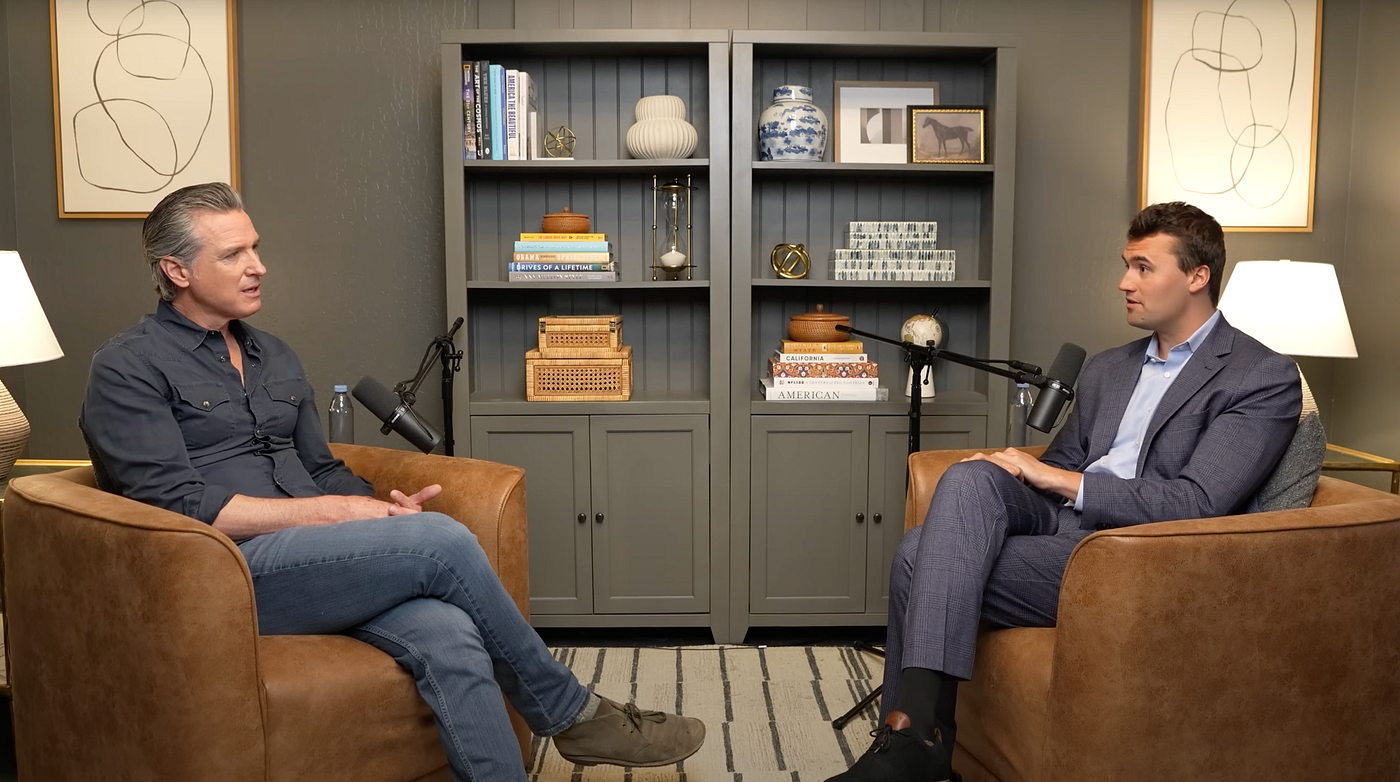
Earlier this year, I listened to a conversation between California governor Gavin Newsom and Charlie Kirk.
Democrat and Republican. Here were two ideological adversaries — men from opposite sides of the aisle, each with a legitimate path to the presidency in the years to come.
Fascinating.
They each see (saw) the world very differently. Yet they were willing to sit down with the other, look at each other, and have an open, respectful, lengthy conversation.
Lengthy conversations
Those are harder to come by these days. In a world of reels, shorts, TikToks, posts of 280 characters, and nonstop amusement, reading is on a steep decline across society.
Thoughtful dialogue has become officially endangered.
Generative AI has put the act of writing on decline as well. If writing = thinking, that’s a very sobering prospect.
One thing I appreciated about Charlie — and something I respect on all points of the political spectrum when I see it — is that he genuinely engaged with opposing ideas.
He invited hard questions at his college campus events, just like the one he was killed at.
And it wasn’t in a predatory, I’m-going-to-embarrass-you, f#$%-you kind of way. When you actually sit down and watch his conversations, you’ll see that he genuinely enjoyed the exchange of ideas.
Did he resort to sarcasm sometimes? For sure.
Did he frame some things in ways that I found distasteful? Absolutely.
But by and large, he clung to the high ground. He remained respectful. He avoided swearing and name-calling. He often responded graciously to abusive tirades.
As I said, I disagreed strongly with some of his positions, and still do. But Charlie was a reader, a thinker, a reasoner. I wanted to hear what he had to say.
As our classrooms go, so goes the world
In the last year, we’ve seen state legislators killed. We’ve seen the president shot. And on Wednesday, a 31-year-old husband, father, and activist was assassinated.
I’ve seen some educators post takes to the effect that Kirk deserved this outcome for his views on guns.
That’s not the takeaway, colleague.
The takeaway is that a growing number of people believe that cold-blooded violence is an acceptable response to political ideas.
The takeaway is that more and more students will think twice before defending unpopular positions.
The takeaway is that the public forum just got a little bit smaller.
Here in the West, we laugh scornfully at regimes like North Korea, where all must adulate the Supreme Leader and those who dare to dissent find themselves bundled off the streets into the backs of unmarked vans.
Our liberal democracy is so far from that, we exult.
Is it? In some ways, yes. Trump is no noble protector of political expression, but he is also no Stalin.
Yet free speech and open debate are fragile ideals. They must be nurtured and protected, or they will fade.
That nurturing work begins in our classrooms, our schools, our colleges and universities. Whatever our own beliefs, it falls on us to create space for hard questions.
To offer a stage.
To value every voice.
To require genuine thought, rational articulations, and conversations.
I’m not talking about giving free license to incitements of violence or name-calling.
But somehow, some way, we must defend the right of our students to take unpopular positions without fear of being instantly shouted down or suffering violent retribution.
This week, have your students write about an issue that matters.
Have them share their writing with peers.
Put away the screens, and create space for an exchange of ideas.
The future of our democracy depends on free speech.





 Teachers on Fire