• The Settings I Recommend for Your Seesaw Classroom

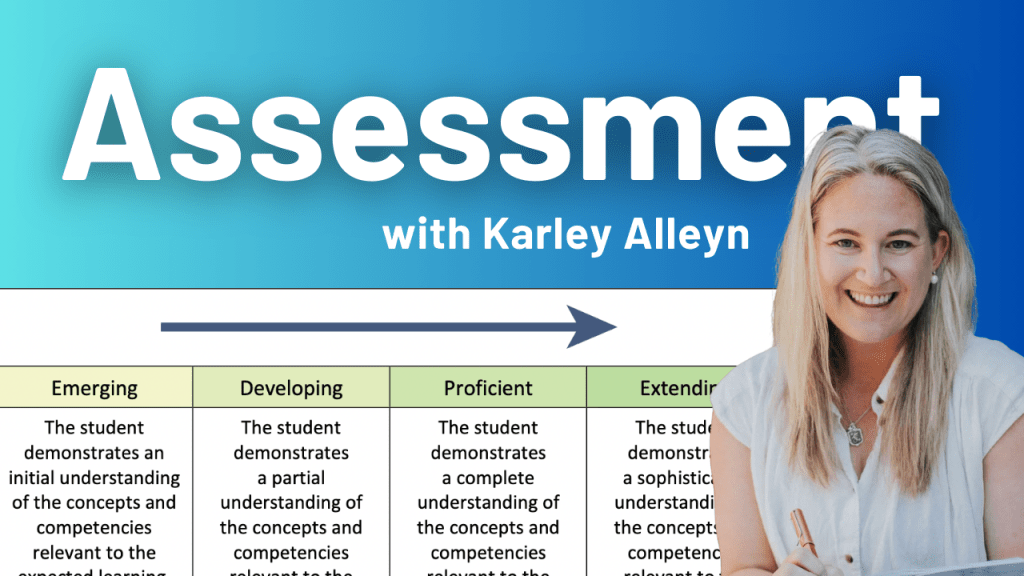
    The Settings I Recommend for Your Seesaw Classroom

    Here are the best ways to set up your Seesaw classroom, especially in the middle years.

    Unlock the full power of this student learning journal by following my settings recommendations here.

  • Take the 3-Minute Leadership Reset with Sean Gaillard

    Take the 3-Minute Leadership Reset with Sean Gaillard

    🔥 What happens when our doubts, mistakes, and questions start to take over?

    🔥 What is a quick, simple routine that we can follow to rekindle our fire?

    🔥 How can music build identity and belonging in a learning community?

    About This Guest

    Sean Gaillard is a school administrator in North Carolina, author of The Pepper Effect, and host of the Leadership Liner Notes podcast. He blogs about leadership, education, and inspiration for Leadership Liner Notes, and is currently writing a new book for Dave Burgess Consulting, Inc. titled Leadership Riffs.

    Connect with Sean

    In This Conversation

    • 0:00:00 – Sean Gaillard is a principal and author in Lexington, North Carolina
    • 1:59 – The dark times that education leaders face
    • 6:37 – Reset Step 1: Take a breath
    • 8:49 – Reset Step 2: Anchor in gratitude
    • 12:02 – Reset Step 3: Affirm and reframe
    • 15:28 – Reset Step 4: Reconnect
    • 21:36 – One more thing: your presence matters
    • 24:10 – Revisiting our why, passions, dreams, and values
    • 27:22 – How can music build identity and belonging?
    • 30:00 – What to expect from Leadership Riffs
    • 31:36 – How to motivate teams with low morale
    • 34:01 – How and where to connect with Sean Gaillard online

    Song Track Credit: Tropic Fuse by French Fuse – retrieved from the YouTube Audio Library at https://www.youtube.com/audiolibrary/.


  • Will AI Replace Teachers?

    Will AI Replace Teachers?

    Reports of our coming demise have been greatly exaggerated.

    If you’re a K-12 teacher, you’ve probably heard this question from friends and family.

    “So do you think AI will eventually put you out of a job?”

    It’s amusing. And ridiculous. And a little concerning, actually.

    Will AI replace teachers? No, because AI and robotics technologies have been laughably overhyped.

    AI tools and technologies offer helpful benefits and possibilities for many focused tasks. Not a day passes that I don’t use AI tools in some form or another. And I’m grateful for them.

    AI is slowly changing some industries. We see it chipping away at the outer fringes of data entry, collection, and curation. We see it taking greater roles in production automation. As educators, we see it creeping into learning aids and teaching tools.

    Still, the capacity of AI tools and robots remains wildly, wildly overhyped. As Marques Brownlee pointed to this week in a video titled The Problem with this Humanoid Robot, progress in robotics is nowhere near the sorts of at-scale employment disruption and societal revolution that we have been repeatedly promised.

    Zoom out with me for a second as we consider big tech’s track record over the last two decades.

    • Three years into generative AI, the largest tools in the space continue to produce frequent errors and hallucinations — frustratingly so. We can’t trust them for any high-stakes work.
    • Four years and over $40B since Mark Zuckerberg’s launch of the Metaverse, at-scale adoption is basically zero.
    • Seven years ago, Gary Vaynerchuk promised us that a huge portion of online shopping was about to shift into voice-AI tools and technologies. That hasn’t happened.
    • Eight years ago, we were told that art and collectibles were best bought and sold as non-fungible tokens. Since then, they’ve crashed so hard that we’re now back to “What’s an NFT?”
    • Thirteen years since Elon Musk promised self-driving cars, the technology remains elusive, experimental, and nowhere near mainstream.
    • Sixteen years ago, we were told that Bitcoin and crypto currencies would replace fiat. Although Bitcoin has enjoyed an enormously (speculative) run, its adoption as a currency of exchange remains statistically negligible.
    • Twenty-six years ago, we were told that the internet would destroy brick-and-mortar businesses. Then we watched as Pets.com went from a valuation of $400M to zero, and we’re back to buying our dog food at Costco.

    I’m not a technology hater — quite the opposite. I drive a smart car and use smart devices. AI tools and technologies will continue to force incremental change in our work and across many industries, without question.

    But will AI and robotics technologies really replace our nurses, lawyers, officers, owners, servers, police officers, plumbers, carpenters, and yes — teachers?

    No.

    Will AI replace teachers? No, because most parents hate the idea with a passion.

    When well-meaning friends and family ask me if I think teachers will one day be replaced by AI, another one of my silent reactions is “Wow, you really need to talk to more parents of little people.”

    There is a growing chorus of voices sounding the alarm and mounting a pushback against the over-exposure of children to social media, online entertainment, and AI platforms (including AI bots and sexualized companions) right now.

    I’m thinking of well-known voices like Tristan Harris (The Social Dilemma, 2020), Hannah Beach and Tamara Neufeld Strijack (Reclaiming Our Students, 2020), Johann Hari (Stolen Focus, 2022), Jonathan Haidt (Anxious Generation, 2024), and a host of others.

    Authors and researchers are unequivocal: our children need more moments of genuine attachment with caring adults, not less. That attachment begins with the child’s parents and expands outward to a village of care, including relatives and educators.

    If there are parents out there who want fewer human caregivers with their children in exchange for more time staring at screens, chatting with AI companions, and speaking to robots, I haven’t met them.

    The ones that I talk to would call that a horrible trade.

    Will AI replace teachers? No, because the question betrays a profound misunderstanding of education.

    When people speculate that AI might one day replace teachers, they also expose a startling assumption about education: that the entire school experience can be understood as the transmission of skills and information.

    Listen, and it pains me to have to say this: K-12 schools are not “downloading stations.” You don’t send your child to school to update their brain’s operating system to the latest version.

    Yes, learning is our top priority, but growth and learning capture so much more than multiplication tables, literacy skills, and chemical equations.

    Our work calls us to equip the whole child, which is why my local BC Ministry of Education points us toward a set of universal core competencies that shape student development from K-12. All the information and skills in the world aren’t of much use to adults who can’t communicate, collaborate, create, critique, or take responsibility.

    And so we guide students toward lives of transformation and service. Toward excellence and purpose. Toward values of well-being, kindness, integrity, industry, and respect for others.

    These competencies and values can’t be refined through headphones, iPads, and apps alone. They require authentic opportunities for communication, collaboration, and yes — conflict. They require all the beauty and complexity of the messy, human interactions that make our work meaningful.

    Our children need to see our “I’m so glad you’re here” faces.

    In The Joy Switch, author Chris Coursey writes that “Every human brain is looking for a face that is glad to be with them.” It’s something I think about as I greet our intermediate students at the rear doors of my school each morning.

    Some day, it won’t be my smiling face that welcomes students, but I don’t think it will be a screen, robot, or expression of artificial intelligence that replaces me.

    It’ll be another human being, committed to children, powered by purpose, and ready for engagement in the sacred work of education.

  • Is It Time to Rethink Our Use of Kahoot and Blooket in the Classroom?

    Is It Time to Rethink Our Use of Kahoot and Blooket in the Classroom?

    🔥 Are Kahoot and Blooket really the best ways for students to review content?

    🔥 How can we build fluency, literacy, and thinking skills in the science classroom?

    🔥 What’s the role of pencils and paper in the classroom of 2025?

    Today’s Teacher on Fire is Marcie Samayoa. Marcie is a high school chemistry teacher from Los Angeles, California with ten years of experience in the classroom. Through her blog, Scientists in the Making, she shares evidence-based teaching strategies that connect cognitive science to instructional practices.

    Connect with Marcie

    In This Conversation

    • 0:00:00 – Marcie Samayoa is a high school chemistry teacher based in Los Angeles, CA
    • 1:43 – Doesn’t Kahoot increase student engagement?
    • 4:16 – Review Step 1: a low-stakes practice test on paper with topics labeled
    • 5:48 – Review Step 2: turn to neighbours, compare answers, consult notes, discuss differences
    • 8:47 – Review Step 3: students note the topics that they struggled with
    • 8:54 – Review Step 4: students review weaker topics using retrieval
    • 10:10 – Review Step 5: 2nd practice test, this time in Google Forms without topics
    • 12:23 – Review Step 6: students take the test again as homework to build fluency
    • 16:55 – The current pushback from educators against overuse of edtech and AI in the classroom
    • 21:11 – Marcie’s critique of Building Thinking Classrooms
    • 27:22 – How and where to connect with Marcie

    Song Track Credit

  • 4 Ways to Lift up Our Students in the Classroom – with Marcus Luther

    4 Ways to Lift up Our Students in the Classroom – with Marcus Luther

    A little recognition and encouragement can go a long way.

    🔥 What can we do as teachers to uplift the students in our classrooms?

    🔥 What happens when our students see themselves in a story of learning?

    🔥 What should concern us most about AI tools in education?

    Welcome back to another episode of the Teachers on Fire Podcast, airing live on YouTube most Saturday mornings at 8am Pacific, 11am Eastern. My name is Tim Cavey, and my mission here is to warm your heart, spark your thinking, and ignite your professional practice.

    This episode’s Teacher on Fire is Marcus Luther. Marcus is a high school English teacher with over a decade in the classroom. He cohosts a teacher-centered podcast and Substack called The Broken Copier, which focus on conversations and strategies to better support teachers.

    Connect with Marcus

    • on LinkedIn,
    • on X @marcusluther6, 
    • on Instagram @thebrokencopier, 
    • on BlueSky @marcusluther.bsky.social, and 
    • on Substack at thebrokencopier.substack.com

    In This Conversation

    • 0:00:00 – Marcus Luther is a high school English teacher and host of The Broken Copier
    • 2:15 – The heaviness that can settle in a classroom
    • 4:31 – Uplifting Move 1: “Everyone write down what ___ said!”
    • 7:11 – Uplifting Move 2: Kneeling down and giving quiet praise
    • 9:37 – Uplifting Move 3: Ask if you can take a picture and use it as an example
    • 11:59 – Uplifting Move 4: Who can I brag to about how well you’re doing?
    • 16:12 – Helping students reflect on their own writing journeys
    • 20:23 – What’s the real problem with AI in K-12 education right now?
    • 28:27 – How and where to connect with Marcus Luther’s reflections online

    Song Track Credit

    • Tropic Fuse by French Fuse
    • GO! by Neffex

    *All songs retrieved from the YouTube Audio Library at https://www.youtube.com/audiolibrary/.