We’re almost there, colleague. The first day of classes for my Vancouver elementary school is Tuesday. Classrooms are coming together and teachers are hyped.
Our theme this year is You Belong.
Every educator knows that students learn best when they feel safe, loved, included, and appreciated. This is the work we already do on a daily basis, but this year, we’re taking things to another level.
Before heading to the beach yesterday, we asked our teachers and paraprofessionals to break into small groups and share: How do you create a sense of belonging for every student in your class?
I work with some brilliant educators, I tell you. What follows is just a sampling of their ideas. I hope you find them helpful as you create a sense of belonging for every student in your classroom this year.
Find one thing about each student that you really love about them and write it down. Revisit it with them throughout the year.
If your students eat in groups in the classroom, try “setting the table” with a placemat in front of each student.
Sit with students while they eat sometimes.
When one of your students has a birthday, ask them to stand on a birthday chair in the middle of the room and wear a birthday hat. Lead the rest of the class in a song and do a silly dance around them. Have fun watching their face as you do!
Print the class photo (and enlarge it if possible). Post it in a highly visible place in the room — on your desk, at the front, or near the door. Remind students that this is our class community and every member is important.
Use stories to reinforce the idea of belonging. Talk to your friendly librarian for read-aloud book ideas.
Ask all students to share things that they appreciate about the birthday student of the day. If you trust your group and the culture in your room, say these things out loud.
Collect written affirmations for the “cool kid of the week” and display a word cloud about them by the end of the week.
Early into the year, survey your students to find out someone they are grateful to work with, someone they appreciate, and one thing that they would like you to know about them.
Build the idea that each table group is a “crew.” We look out for our crew, which means we’re responsible for each other, we actively care for each other, pray for each other, and follow up with each other after absences.
Ask your teacher-librarian to help you connect students in different classes. For example, if one of your students is a big anime fan but they don’t find a lot of support in your class, your librarian likely knows other students in your building who are also big anime fans.
Acknowledge every student by name with a smile every morning. Let your face say “I’m glad you’re here.”
Make a point of acknowledging student absences when they return. “Hey, you’re back! We missed you.”
Ask students to support you in your learning space who you might not normally call upon for help. As teachers, it’s easy to call on the students who can’t wait to help us. Sometimes, we need to flip the script and call on the students who can cause frustration. Contribution = inclusion.
Ask your students’ parents to send in a physical photo of their entire family. Post these family photos in a special place in the classroom to honour each family that’s represented in the room.
When it’s your student’s birthday, try arranging a visit by their buddy (if your school uses a buddy class system). This can be especially touching if the buddy happens to be much older than your student.
Try singing Happy Birthday in every language represented in the class.
If you’ve read this far, you care deeply about kids. Thank you for that.
You likely also have some great ideas or strategies of your own. Please share them below.
Wishing you a great first week of school as you build a sense of belonging for every student in your building,
Summer holidays are a sacred blessing for K-12 educators. For the ten-month school year, we give this work our all — often to the point of mental, emotional, and physical exhaustion. Then summer blissfully arrives, and with it, an extended emotional intermission.
We have our critics, of course. Friends and family in other industries cry foul at the holidays we enjoy. They take their jabs boldly as they look on from the outside.
But ask any K-12 educator what they think of summer, and they’ll tell you: this is not a season to be taken lightly.
It’s not quite accurate or fair to dismiss these weeks as a bonanza of pleasures. Yes, we have our fun.
Summer is our time to rebuild, restore, recharge, revive. It’s how we stay active and committed to this work.
This season is sacred.
I need a day or two to mourn the end
This week, I reported back to my school. Classes haven’t begun yet, but it’s time to begin meeting as an administrative team. It’s time to support our new teachers as they meet our community for the first time.
It’s time prepare for another successful year.
As I brew my first coffee, my mind continues the transition it’s made every August for the last 24 years. I flash back through highlights from July and August: the adventures in Italy, the mountain hikes closer to home, the visits to Winnipeg and Vancouver Island and the Okanagan. I have much to be thankful for.
These days also gave me the time and space to enjoy the precious, unhurried moments that mean so much.
Lunch dates with my wife at a cafe near our home.
The peace of coffee and reading on quiet, sunny mornings.
The satisfaction of completing a deep reorganization of my home office.
And let us not forget the absolute luxury of sleeping in or taking afternoon naps. Summer reminds us what it feels like to live well-slept and unstressed for multiple days in a row.
Summer is wonderful, and as it closes, there’s a mourning that is appropriate.
Let’s take a moment of silence to say good-bye.
Embracing the return of mission and deep purpose
The work of K-12 education is many things, but one thing that rings true in every school on the planet: our work has profound significance.
We’re not on a warehouse assembly line making widgets all day, folks. And we need our widget makers. But our work is much more human than that.
Education is still — and will always be — a people business.
Each new school day brings amazing, existential, life-altering opportunities. Opportunities to make a difference.
To support reconciliation and restoration.
To create community and belonging for little humans.
To guide that teenager who is struggling to find his way.
To call out the good we see in that girl who feels invisible.
To defend the undefended and empower the disempowered.
To let that defeated single parent know that we believe in their child.
To encourage that colleague who is doing inspiring work but feels exhausted.
To affirm that administrator who took a courageous position and is facing the fire.
To unlock passions and talents and skills that have been lying dormant, waiting to be named.
In loco parentis means in place of parents. For seven hours a day, you and I interact with hundreds of young humans who are learning, growing, and finding their place in this world.
I know it’s hard work.
I know it’s exhausting.
I know there are days when it takes everything out of us.
There will be days when we’ll cry, we’ll be shaken, and we’ll feel like failures. We’ll wonder why we even bother.
It’s particularly for those days that I’m here to remind you: your faithful service is making an important, inestimable impact. It matters.
So let’s press forward.
Let’s lean in.
Let’s learn and grow and support each other and love kids well.
This is season 25 for me in education, and I’m lacing ’em up once again.
Seven moves you can make to save your sanity and empower your students.
What’s one student behavior that you’ve found challenging recently?
Whether you’re new to teaching or you’ve been around for a couple of decades, we’ve all got room to grow in terms of how we interact with students and manage our spaces effectively.
This was my message at a workshop I co-led with colleague Vanessa Neufeld last Friday. No one in our profession has this down perfectly. The school life just isn’t that neat and tidy.
We’re ALL developing learners.
Enter Love and Logic, a research-driven, whole-child philosophy that has guided educators and parents since the seventies. Though applications evolve with the times, its simple tools continue to equip educators and empower children in profound ways.
I’ll get to some of the essential skills in a moment, but first, let’s set the stage with two primary rules of Love and Logic.
Two primary rules of Love and Logic
Rule 1: Educators set limits in loving ways without anger, lectures, threats, or repeated warnings. Love allows students to grow through their mistakes.
Rule 2: When students misbehave and cause problems, adults hand these problems back in loving ways. Logic allows them to learn from the consequences of their choices.
These rules lay a critical foundation for the essential skills to come.
Now, are you ready to add some tools to your classroom management toolkit?
Let’s go.
Image Source: Canva
Seven essential skills that save teacher sanity and empower students to solve their own problems
Skill 1: Neutralize student arguments.
We’ve all had the moment in the middle of an activity when a student wants to get into it with us. Like really get into it.
They’re upset. They think we’re being unfair. They’re furious that we “always” or “never” do X, Y, or Z.
And they want to argue their case, loudly, passionately, and persistently.
There’s only one problem. We’re in the middle of an activity, and we’ve got 24 other students to support. We don’t have the time or capacity to hold court in the moment.
Love and Logic tells us to respond in two ways:
Use a one-liner response — not a paragraph.
Deliver the one-liner with empathy — not sarcasm.
One-liners to practice might include:
“I know you’re frustrated.”
“Thank you for sharing that feedback.”
“I appreciate your opinion, but that’s not an option.”
“Let’s continue this conversation when your voice is calm like mine.”
“If you’d like to talk about this more, let’s meet at lunch break or the end of the day.”
None of these one-liners are eye-rolling, sarcastic, or dismissive. They’re stated with care, concern, and respectful eye contact.
Then we move on.
Image Source: Canva
Skill 2: Delay consequences for student misbehavior.
Crash!
Your students were goofing around in a corner of the room, and they knocked an empty aquarium onto the floor, where it shattered.
Onlooking students are shocked, and your blood pressure spikes as you absorb what has just happened.
For the educator, it can feel absurdly important to react clearly, strongly, and promptly in the moment. To quickly assess wrongdoing and assign a big, proportional consequence that will satisfy onlookers and strike fear into the hearts of the careless wrongdoers right away.
Love and Logic advises against the knee-jerk consequence, for the following reasons:
It’s difficult to react well when we’re upset.
We don’t have all the information we need to make good decisions.
It’s challenging to come up with appropriate actions in the moment.
We may be taking ownership of the problem too quickly rather than handing it back to students.
We don’t have time to think carefully about the unique needs or learning profile of the students involved.
We don’t have time to put together a reasonable plan to carry it out (including making sure that the consequence doesn’t require punishing ourselves unnecessarily).
We deprive the student of a learning opportunity by removing their agency. We’re not even giving them a chance to think about the question: how can I make this right?
There’s no rush to make a big decision after a mistake has been made. Instead, try lines like these ones:
“This is not okay. We will have to figure out how to solve this problem later.”
“Oh no — I’m so sad this happened. I am going to have to do something about this later. Don’t worry about it.”
“I am feeling really angry right now. I need time to calm down and come back into the green zone we make a decision about what happens next here.”
“This was not a great decision. I would like to ask our principal for advice about what to do next. We will talk about this further tomorrow.”
Take a deep breath, and take your time with the problem, colleague. Things will go better for all concerned.
Image Source: Canva
Skill 3: Empathize with students.
As the old saying goes, students don’t care what we know until they know that we care.
So how can we show them that we care? How can we demonstrate that their problems matter to us?
Empathetic one-liners can sound like this:
“That sounds really frustrating.”
“Oh no! Tell me more about that.”
“That must have felt overwhelming.”
“It sounds like you think that was unfair.”
“I can tell that this situation made you feel really uncomfortable.”
To empathize with students, we don’t have to agree with their take on things. We just have to show that we’re listening.
Image Source: Canva
Skill 4: Set limits and save our sanity with enforceable statements.
Try not to use threats or bribes. We’ve all used them, but they’re not not effective.
Threat: “If you don’t stop talking, NO ONE is going to the playground!”
Bribe: “If you all stop talking, we can all go to the playground!”
Instead, focus on your own behavior and let your students know what YOU will do.
Instead of “Don’t shout in the classroom!” try “I speak with students when they use calm voices.”
Instead of “We will not leave the classroom if the class stays this noisy!” try “We will leave the classroom once the class volume is zero.”
Instead of “Stop arguing with me!” try “I’ll be glad to discuss this with you as soon as you are ready to listen.”
These are almost the same messages, aren’t they?
But with slight adjustments in our language and phrasing, we’re no longer begging or bargaining with students. We’re simply letting them know what we will do.
And that, colleagues, remains within our control.
Image Source: Canva
Skill 5: Offer choices to avoid power struggles
Most students crave degrees of autonomy, freedom, and independence, just as we all do. The more choices we build into their learning, the greater their sense of agency will be, and the less likely they are to argue when the teacher’s instructions don’t allow for choice.
It’s helpful to think of every choice we offer students as a deposit, every demand as a withdrawal. It’s easier to make withdrawals like “We’re all going to read this short story now” when there’s a balance in the account.
With this in mind, let’s be flexible when and where we can. We were planning for students to work individually on this next learning activity, but could they work in partners?
This is also where Universal Design for Learning shines.
UDL encourages multiple ways of engagement, representation, action and expression. Choice boards and similar mechanisms give students options: How would they like to interact with content and show what they’ve learned?
Depending on the learning target, there may be a lot of room for alternatives.
One warning to keep in mind: It’s important to avoid framing an instruction as a choice when it’s not really a choice.
“Would you like to clean up now?” is better expressed as “Okay, it’s time to start cleaning up.”
Or, to offer students some agency in this context, we can ask “Do you think I should set the 5-minute timer or the 10-minute timer for clean-up?”
Make frequent choice deposits, and instruction withdrawals will flow more naturally.
Image Source: Credit
Skill 6: Guide students to solve their own problems.
Do any of these distress signals sound familiar?
“I don’t have a pencil.”
“I can’t find my homework.”
“Suzie hit me.”
“I don’t know what we’re supposed to do.”
“My Chromebook is dead!”
We live in an age when parents and educators are told to shield our children from anxiety. It’s implied in many different ways, so when our students encounter problems, our instinct is often to run to the rescue.
But rescuing our students isn’t actually empowering, and it reinforces a victim mindset in students. Whenever we solve a problem for a student that they could have solved themselves, we’ve robbed them of an opportunity to think for themselves and learn that they ARE capable.
Handing problems back to students might sound like:
“Oh, I’m sorry to hear that. What are you going to do about it?”
“I have some ideas for you. Would you like to hear them?”
“Some students in your position have tried …. Do you think that could work?”
“Let me know how that goes for you.”
Allowing students to solve their own problems is also a key piece of a restorative justice approach.
When students make messes, damage property, or hurt others, we don’t need to invent an obscure consequence. They simply need to own the natural consequence of their actions: clean up the mess, replace what was lost, repair what was damaged, or restore the relationship.
A student spilled paint on the floor during art class? They should clean it up.
A student broke their Chromebook screen? They should pay for the repairs.
Two students were playing catch with a chair and put it through the drywall in a classroom? They should patch it up and paint over it. (This actually happened in my room one year.)
As we help our students own their problems and work through the natural consequences of their choices, Love and Logic warns us not to destroy the teaching value of the logical consequence by …
Saying things like “This will teach you a lesson.”
Displaying anger or disgust.
Explaining the value of the consequence.
Moralizing or threatening.
Talking too much.
Feeling sorry and “giving in.”
Contriving an additional consequence for the purpose of “getting even” or “making this sting more.”
The less talking and explaining we do, the more we’re letting the natural consequence speak for itself.
Image Source: Canva
Skill 7: Develop strong relationships with students.
I’ve saved the best for last. At the heart of the Love and Logic philosophy is RELATIONSHIPS.
As educators, it’s not healthy or helpful to try to become friends with our students. But education is a people business, and relationships count for a lot. It’s hard for children to learn outside of them.
Books can and have been written about this, so I’ll just boil this one down to two simple strategies: noticing and collecting.
Strategy 1: Noticing
Noticing is a strategy that essentially boils down to this: teachers build bridges with difficult, hostile students by signalling that they have our attention.
We signal this by consistently approaching the student, smiling, and dropping innocent, neutral-value (non-praising) observations like this:
“Hey, I noticed that you play the violin.”
“Hi Mike. Are those new shoes?”
“Hi Vicky. I noticed that you made the basketball team.”
“Hey, I noticed that you’re interested in chess.”
Observe: there’s no material for an argument here. We’re simply sharing an observation.
Sometimes, the student may want to talk further about this area of passion or interest. Or they may not. We’re not there to press the issue — we’re just sowing another seed of connection.
To do this well, we need to read the room. It may not be a strategy to try with a student when they’re surrounded by peers or in the throes of a challenging moment. And we probably don’t want to try this more than once in a day.
But when we use this strategy consistently in quieter, calmer times, it has a way of slowly building trust.
Strategy 2: Collecting
I’m jumping out of the Love and Logic philosophy a little bit here to bring in a term I’ve learned from noted psychologist Gordon Neufeld: collecting.
Collecting our students is as simple as making eye contact, smiling (showing we are happy to see them), and extending a greeting that includes their name. That’s it.
Dale Carnegie famously said that the most powerful word in the English language is a person’s name.
A smiling “Good morning, Tim” or “Welcome, Kristine” may not seem like a big deal, but it is.
I’m convinced that a high percentage of conflicts and power struggles in the classroom are avoided by teachers who have collected each of their students before or at the beginning of class.
And listen, I know that in the life of the school day in the middle and upper grades, it can be hard — well nigh impossible — to stand at the door and greet each student by name before every single block.
But give it a try, educators. You’ll have more fun, you’ll come to love and appreciate your students more, and they’ll reciprocate.
Everything just flows more smoothly once you’ve established this simple connection with your students.
Source: Love and Logic.com
Final thoughts
By now, perhaps you’re wondering if this is a paid endorsement. It’s not. I have no affiliation or communication of any kind with the authors of Love and Logic, and I earn nothing if you buy the book, but here it is.
I just know that these skills work in my world.
No, the students in my school aren’t perfect. But we find that by following these seven habits, building trusting relationships with kids, and allowing them to own their problems, our community is better for it.
It sounds like a reasonable idea, but a closer look shows some impossible flaws.
A former student reached out on X last week with a link to this clip and a question: What do I think of merit-based pay for teachers?
Well hello, Sean and Vivek.
Vivek Ramaswamy has provided a lot of good conversation starters over the last two years. I’ve listened to a bunch of his speeches and podcast appearances.
He’s an interesting guy.
He’s said a lot about returning to democratic principles, unleashing free enterprise, restoring government transparency, and building an optimistic vision for America’s future.
He’s said a lot of helpful things and proposed some good ideas.
This, my friends, is not one of those good ideas.
The merit-based pay idea begins with a faulty premise
The idea of merit-based pay for teachers begins with a faulty premise, and don’t miss this.
The premise is that a teacher’s merit can be objectively measured and entirely quantified by how their students perform on standardized tests.
It’s simple and seems logical, but it doesn’t stand up to scrutiny.
Here are some of the many problems that merit-based pay models would create in our schools and districts.
Five reasons why merit-based pay for teachers would be toxic
1. Merit-based pay for teachers puts dollar signs over every child’s head.
If my bread and butter is coming from the average of my students’ performance, every child in my room takes on a personal, financial implication.
Brilliant students represent higher pay and security. Struggling students represent a tax and a threat to my livelihood.
Class composition meetings between teachers would become like draft day. Teachers would literally resent, even despise, their underachieving students.
That kid with the learning disability? He’s going to drag down your class average.
That kid with the traumatic home situation and spotty attendance? She’s costing you money.
Why do I have these five students and my teaching neighbour has all the learning superstars? Oh right, it’s because my neighbour is tight with our principal, who makes the final decisions on class composition.
Watch the toxic impacts that follow when students impact their teacher’s bottom line.
2. Merit-based pay for teachers de-incentivizes professional collaboration.
If I’m teaching in a merit-based pay system and discover teaching strategies or resources that help my students learn better, why would I share them with the teacher next door or down the hall?
The more separation I can create between myself and my teaching teammates, the more I’ll look like a superstar and the more I’ll get paid.
Merit-based pay for teachers means survival of the fittest. That may work fine at the used car dealership.
But that’s not the work culture we need in our elementary staff room.
3. Merit-based pay for teachers minimizes the intangible wins of the school life.
If a teacher’s livelihood depends on how their students perform on the next standardized test, you’d better believe that’s going to be the number one priority all year long.
Field trips? Not important.
Spontaneous sledding at a nearby park after a big snowfall? A waste of time.
Independent reading, inquiry learning, and Genius Hour opportunities? Unhelpful distractions.
I’m hyperbolizing a little bit, of course, because teachers are such altruistic human beings that many would do these things with their students anyway — even if it cost them financially.
But the point remains that merit-based pay promotes obsession over the test, the test, the test at the expense of so many experiences that add richness to the school life.
And that’s far from the vision of holistic growth that we want for our children.
4. Teaching to the test is generally low-grade teaching and learning.
Something that educators generally know but the public may miss: teaching to the test favors low-grade instruction and cheap learning experiences.
Here’s an example of what I mean.
There was a time in my teaching career that I gave my upper elementary students weekly spelling and vocabulary quizzes. These quizzes produced reliable, objective data that looked great in my gradebook as I stacked quiz result after quiz result after quiz result.
At some point, however, I came to a concerning realization: if a student had poor literacy skills but a ferocious work ethic, they could literally memorize all 30 words and definitions and ace my quizzes, week after week.
They could game my quizzes. They had learned the quiz format and memorized the content, and that was enough for a 30/30.
Could they use those vocabulary words in proper context in their next written product? No.
Could they spell those same spelling words accurately in three months? No.
My spelling and vocabulary quizzes weren’t really assessing their literacy skills. They were assessing their memorization skills.
A similar effect can happen with standardized tests. I can spend weeks and weeks pushing my students to work through a 2024 version of the test, then a 2023 version, then a 2022 version, and so on, even at the expense of hands-on learning experiences.
Get to know the format. Memorize the content. Crush your performance.
There’s only one problem: a successful performance may not mean deep learning.
5. Schools in underserved areas would struggle even more to attract good teachers.
Underserved areas already have a hard enough time attracting good teachers, but this effect would be amplified by merit-based pay structures.
If my personal income depends on the performance of my students, you’d better know I’m not headed to an inner city school.
I’m not headed for immigrant communities.
I’m not applying in working class neighborhoods.
I’m definitely not looking seriously at a city that is struggling with violence.
If making my mortgage payments and providing for my family depends on the performance of my students, I’m choosing my school and district strategically.
Which communities have the best-funded schools, the best programs, the best technology, the best supports, the most supportive families, the most access to tutors, the most books in the average home?
Look, this effect is already a thing. But as things stand today, many competent, good-hearted teachers still make the choice to teach in underserved areas with the confidence that they’ll be compensated fairly for their contributions.
Take away that financial security, and these schools will lose those teachers, too. Hiring will become even more grim, and student learning will suffer further.
And the cycle will continue.
Final thoughts
In an age of rising national debts and mounting examples of government inefficiency, I applaud initiatives that hold our public servants to account.
No taxpayer likes to see public sector employees paid well for doing nothing.
Quiet quitters shouldn’t be rewarded.
We need results, and our children deserve a quality education.
But K-12 schools are incredibly complex. Learning depends on a host of school and non-school factors, and it shows up in many forms that are hard to quantify.
I’m not saying that standardized tests are worthless. They have their place, and achievement benchmarks are helpful.
But when we pay teachers according to how their students perform on tests, we poison the whole system.
That’s why merit-based pay for teachers would be a fail for student learning.
It can be the wind in our sails that we didn’t realize we needed.
This past Thursday was one of my marathon days. You know the kind, right?
With an early morning commute and an evening event at the school, I found myself in the building for over 15 hours.
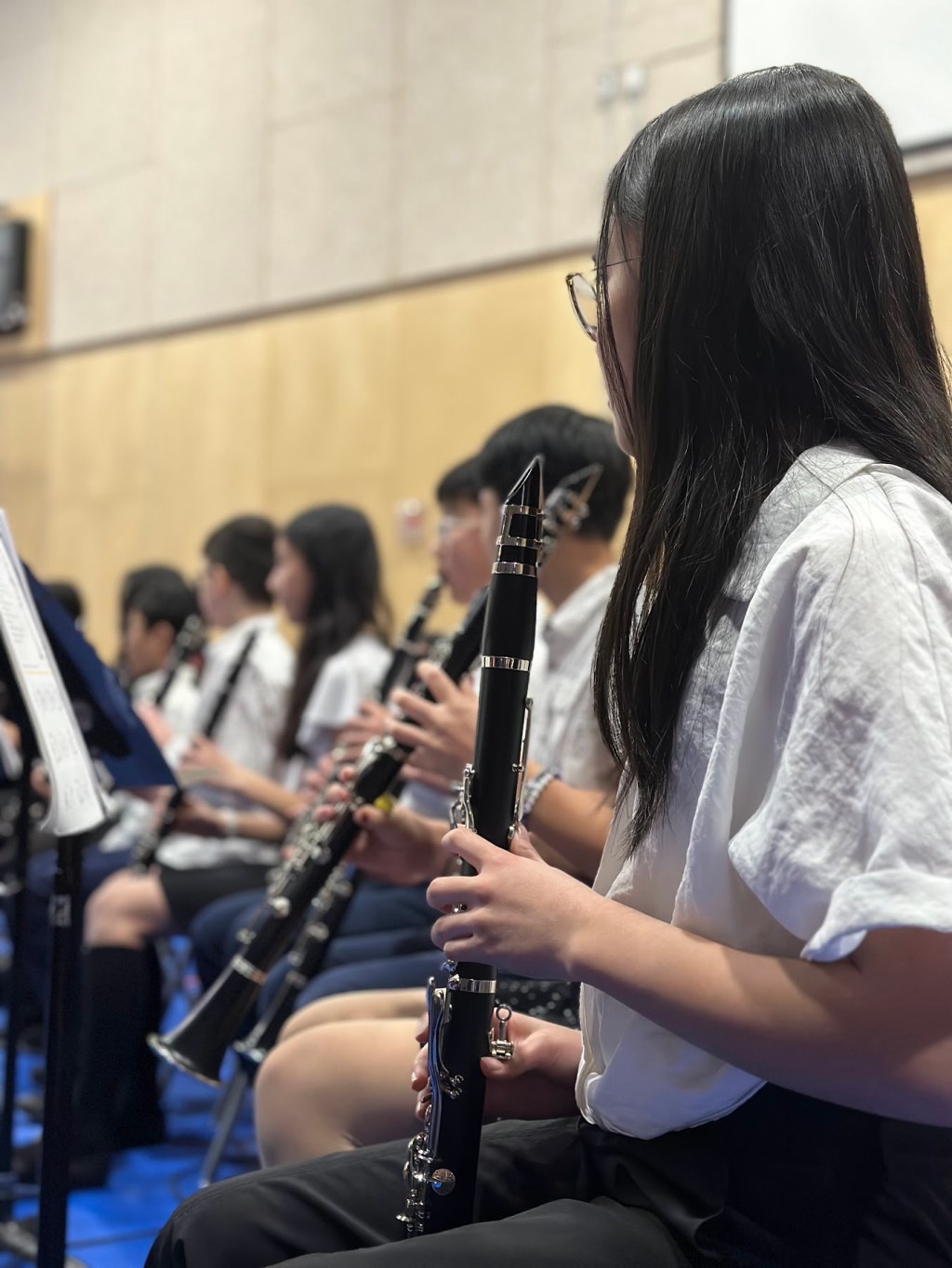
Long days are sometimes part of the job, and it’s all great stuff. This was a day filled with ingredients that make this work so rewarding, capped off by 75 seventh graders filling our larger gym with the thunderous sounds of their band instruments.
How can you not love those moments?
The music is rocking, students are proud, parents are adoring, and teachers enjoy the opportunity to cheer on their pupils in a context outside of the norm.
Events like these fill my cup. But by the end of it all, by the time I get back in my car and back home, I’m exhausted.
What made all the difference for me
Here’s the thing about Thursday night, though.
I was on the microphone at the end of our band concert, praising students and their faithful band teacher for the impressive sounds they created together. There was plenty of deserving applause and smiles all around.
I asked parents to help us out by folding chairs, stacking them on carts, and leaving the gym quickly so that we could make quick progress on sweeping and clean-up. I also humbly put it out there that if any parents were able and willing to help us roll up the protective floor covering, we’d be incredibly grateful.
Rolling up our protective gym floor covering is not a quick thing. It involves large, heavy carts, power tools, careful hand-eye coordination, and a lot of patience. (This is not my school, but even though the crew is making it look easy, it gives you an idea of what I’m talking about.)
I’ve had varying degrees of success with this process in the past, depending on how many floor-covering-experts happened to be helping us out after the event in question.
This past Thursday night, however, none of our community floor covering experts — the staff members or parents who have the most experience with the whole procedure — were around. It was up to me, my principal, a couple of teachers, and whatever parents were willing to give us their time and energy to figure it all out.
My principal located the two power tools we needed. We started sweeping the coverings off before rolling them up. I grabbed a couple of extension cords. Then we moved the big storage carts into position.
And together, we got to work. Three or four dads (and a few of their children) joined the effort. We assembled the power drills, figured out how to operate them, lined up the coverings, and slowly began rolling them up.
One after the other, we rolled these huge vinyl floor coverings on to their big storage carts. It’s kind of hard to describe, but it’s a job that requires vigilance and good team communication.
You can’t let folds or ripples appear in these long vinyl strips of flooring as they roll up, or the ripples compound with each successive roll and the whole thing becomes a mess.
You also can’t let the coverings veer too far to the left or right on the rack, or the vinyl will get damaged and chewed up by the metal edges of the cart. So as the vinyl rolls up like carpet, there’s plenty of communication that goes on.
“A little to the left.”
“Steady!”
“A little to the right.”
“Whoa — back it up.”
Positive, partnering parents are the wind in our sails
By 9:30 or so, our little group was all done. We were tired, but satisfied: the gym was back to its original state and ready for a 6:30 a.m. basketball practice the next morning.
I shook hands with the last remaining men and thanked them (and their children — my students) from the bottom of my heart. This was a team effort, and we were so grateful for their help.
“Not a problem,” these dads said. “Happy to do it.” And off they went into the night. As I packed up and headed to my own car, I smiled.
These parents have their own jobs. They have families at home. Like us, they were tired too. There was absolutely nothing compelling them to stay behind and help us out, and no one would have complained if they hadn’t.
Yet they did. They volunteered 45–60 minutes of their weeknight to help us take on a challenging task. They did it with smiles, encouragement, and positivity.
And here’s the point of it all, the takeaway from this little tale: positive parents like these make all the difference.
When we see parents that are that selfless, that generous, that willing to pitch in, there’s a feeling of I will now do literally anything for your child.
Not just their child or that student, but all of our students. The mission is reframed yet again.
Positive parents are energizing. They’re affirming. Their volunteerism tells us this work matters, they believe in us, we’re the right people for the job, and we should keep doing what we’re doing.
We’ve all experienced the emotional devastation of unreasonable or antagonistic parents, and that can be a thing, too — a worthy topic for another post.
But at this time, on this Thursday night, on a dark Vancouver night, exhausted and underslept, I was flying high.
I was charged up, motivated, and ready to be back first thing in the morning.













 Teachers on Fire