
“I’d be stupid not to do it. Right?”
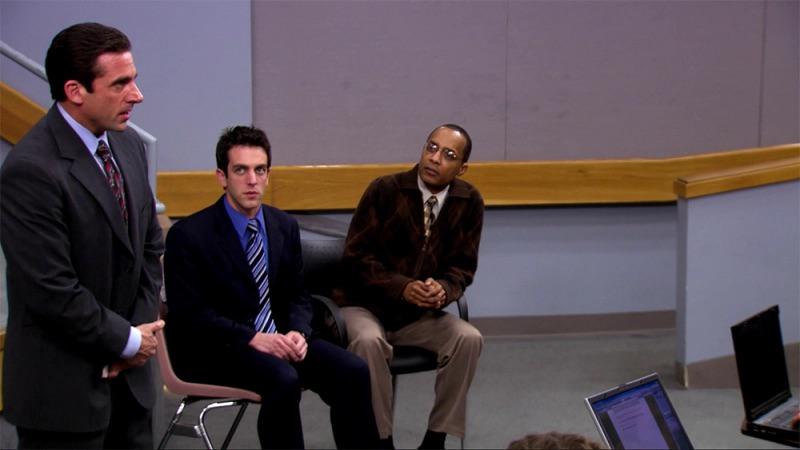
One of the greatest episodes from The Office — indisputably the funniest sitcom ever created — has a detail buried in it that says something profound about traditional assessment paradigms.
The episode, of course, features Michael Scott (Ryan’s office manager) as guest speaker for Ryan’s business school class. True to form, Michael launches into a confidently delivered but basically nonsensical lecture on what he considers the essential principles of business.
“There are four kinds of businesses,” he rants in front of a full college classroom. “Tourism, food service, railroads, and sales.”
Watching Ryan sit there mortified through it all is side-splitting stuff.
But the detail I find most significant in terms of our professional teaching practice is a quote that comes from Ryan early on in the episode, as he explains to the “documentary” film crew why he invited Michael to speak to his college business class in the first place.
“If you bring your boss to class, it automatically bumps you up a full letter grade. So … I’d be stupid not to do it, right?”
Of course, the comedic factor enjoyed by Office fans here is the knowledge that giving Michael this kind of stage is a recipe for disaster.
It’s a terrible deal, Ryan. Don’t do it!
But what most viewers miss is the ridiculous proposition made by the professor. Bring in someone from your work, and your grade goes up by a full letter.
What?
Looks like grades have more to do with hoops and compliance than actual abilities or skills in this course.
But of course Ryan isn’t objecting. He’s taking the invitation and playing along, because this is the system of assessment that America has accepted.
The traditional grades-as-wages paradigm
In traditional paradigms of assessment, grades aren’t necessarily about learning or evidence of proficiency. They’re as much about pleasing the person at the front of the room.
Grades are really just wages. Currency.
Do what I want, and you get paid, maybe even rewarded with a pay bonus.
Don’t do what I want, and you won’t get paid. Misbehave, and you’ll actually be fined.
I’ve seen a teacher offer students a percentage increase in their overall average in exchange for tidying up classroom shelves.
I’ve seen a band teacher require students to clean up chairs and equipment after a concert under threat of lost grades.
In possibly the funniest example ever, a veteran colleague recounted to me how when she was in high school, her PE teacher would award bonus points to students who had showers after PE classes.
Weird. And a little creepy.
The saddest part of all of this is that like Ryan Howard, the students caught up in the middle of these arrangements generally accept them.
They’ve been conditioned to do so. They’ve learned that education is really just a big game to understand, a set of hoops to jump through, a case of pleasing and impressing the right people.
I once asked a class of 8th graders which they would value more: a straight-A report card or more learning? Results were split.
Friends. School is about learning. Assessments should support the learning — not the other way around.
Every bit of assessment we collect, document, share, and report should reflect student learning against curricular standards. Nothing else.
When we hold up grades as wages to be paid to students, we’re leveraging our gradebooks for compliance and making up our own weird version of education.
How do I feel about that?
Well, in the words of Michael Scott, “I don’t hate it. I just don’t like it at all and it’s terrible.”

 Teachers on Fire
Leave a comment