• 17 Powerful Quotes from Essential Truths for Teachers

    They may not remember what their teachers taught them, but they will always remember if their teachers enjoyed teaching them.
    Image (of Teacher) Source: Canva Stock Library

    When it comes to names I trust in education, Danny Steele and Todd Whitaker are near the top of that list.

    They love people. They’re passionate about learning. They’re bold and don’t hesitate to tell it like it is.

    Essential Truths for Teachers isn’t a book about instructional practice. It’s not about classroom management techniques, the best uses of technology, or assessment.

    This book is more of a manifesto. It’s about the fundamental beliefs and values that teachers need to own in order to be successful.

    It’s a quick and easy read. I have no affiliation and gain nothing from sales of this book, but I highly recommend it.

    What follows is just a sample of the essential truths that every teacher in the world needs to hear (in bold), with my reflections in plain text below each quote.

    17 Quotes from Essential Truths for Teachers

    1. The positive energy of the teacher is the single most important factor in determining the climate of the classroom. When teachers realize their own attitude affects the motivation of their students, it can be a game changer.

    At some point in my own teacher journey, I realized the intense power of this idea.

    On most days, positive energy is a choice. It boils down to deciding to be positive.

    Try pretending three things — and I do say pretend, because one, two, or three of these may not be true for every single day of your teaching practice: 1) you are thrilled to be in that particular classroom, 2) you absolutely love the students you’re working with, and 3) you find the content incredibly fascinating and enjoyable.

    Once students believe that one, two, or three of those things are true, you’ve got them. And if you weren’t having fun before, you’ll start to then.

    2. They may not remember what their teachers taught them, but they will always remember if their teachers enjoyed teaching them. They may forget what you said, but they will never forget how you made them feel.

    It’s so true. Name one of my teachers, and I can probably give you at least a vague impression of whether or not they enjoyed being in the classroom each day. I can also give you a sense of what they thought of me as a student.

    Think about that. Our students crave our approval, our smiles, our engagement. This stuff matters.

    3. Some students need us to be their cheerleader more than they need us to be their instructor. Students are not motivated by lessons; they are motivated by teachers.

    I have a teaching friend who finds it hard to get passionate about curricular standards, instructional practices, or progressive assessment. He’ll never voluntarily read a book about pedagogical theory.

    What he is passionate about is kids, and wow — do they love him for it. His following is cult-like. And at some point in the journey I realized that some kids — many kids — need exactly that kind of teacher.

    They may not get the absolute best instruction in English, Math, or Science. But how much does that really matter in the end?

    Those kids will know that they are deeply loved. They’ll have fun. They’ll laugh. They’ll feel safe. They’ll enjoy the feeling of someone believing in them and trusting them enough to allow them to take risks.

    When you zoom out for a moment and think about school as a vehicle of formation for life, you realize this teacher may be the very best outcome possible for a child.

    4. The best learning happens when students are pursuing answers to their own questions. Schools can compel the attendance of students, but teachers must understand that the learning is always voluntary.

    I appreciated this nod to inquiry-based learning. Make it student-centered and you’ll activate new powers in students.

    However it happens, we need to give students opportunities to answer their own questions.

    For some, that’s the point of ignition.

    5. Do not have rules you are not going to continually and consistently enforce. Do not threaten to call parents. Call parents.

    The idea that we can coerce students into good behavior through threats is an enticing one for new teachers. As the misbehavior increases, the threats get bigger.

    Bad idea. Teachers end up making threats that they don’t actually want to deliver on — they’re just hoping the threat is scary enough to produce the desired behavior.

    So what happens when the student commits said misbehavior? Now it’s all eyes on the teacher to see whether they will follow through on the threat or let their credibility take a blow. Unfortunately, the threat in question was often poorly thought through and damages the teacher-student relationship without properly addressing the root issue.

    I’ll be blunt: I don’t make threats anymore. Not at all. Never. Nada.

    Instead, I keep things vague. Any predictions or warnings I make are couched in “I may” or “I might.”

    Best of all, I don’t promise anything specific. I borrow from the Love & Logic philosophy to make vague pronouncements like “If someone is bothering someone else, I may need to do something.”

    Don’t make threats, and you’ll keep the cards you want to have when trouble shows up.

    6. Do not leave compliments left unsaid. When we are proud of our students, we should tell them. When they are making progress, we should encourage them. They will remember our kind words longer than they will remember our lesson. We are not just offering our students an education; we are offering them hope.

    Carol Dweck taught us to compliment behavior and effort, not ability and intelligence. Build a growth mindset — not a fixed mindset that becomes so intoxicated by “you’re smart” that it’s unable to risk that identity by stepping into discomfort or uncertainty.

    Fine. But I think it’s fair to compliment representations of learning, as well. One way that I try to do this is by whipping out my phone and adding student work to my Instagram stories, ooohing and aaahing all the while. I make it a big deal.

    We see amazing work every day. Let’s not hesitate to let our learners know when we’re blown away.

    7. When a student is misbehaving, the teacher needs to make sure the student is the only one misbehaving.

    I’ll never forget my high school science teacher. Nice guy. The only trouble for him was that he had a very short fuse.

    Get under his skin, and things would start to unravel. He would raise his voice. His skin would start changing colors. He would throw chalk at students. He would smash his speaking podium on the floor.

    All of this was highly entertaining for his 16-year-old learners. For one of my classmates in particular, it became a bit of a daily ritual to try to get this teacher to lose his mind.

    What’s the takeaway? Just that angry teacher behavior never, ever yields positive results.

    We’re the professionals, colleagues. Modeling self-control and respect no matter the circumstances is what we do. It may be the most important trait of an effective teacher.

    8. Technology has replaced a lot of things in the classroom. It will never replace a smiling teacher greeting kids as they walk into class. A genuine greeting at the door can set the tone for the class, it can put the student in a positive frame of mind, and can even change the trajectory of a student’s bad day.

    Listen, teachers. I get it. We’re busy. We’re behind. We just came back from the restroom, or we came from the other side of campus. We’ve got to rush around to set up a few things to prepare before the bell.

    We can’t always greet students at the door as they come into our class, and I would never lay that burden on teachers.

    But let’s do it when we can. It’s such a difference-maker.

    9. Kind, caring, intelligent, interested in you, challenging, energetic. All of these things are powerful and important. But one thing seems to regularly arise: That is that the best teacher they ever had was fun.

    We can be highly competent. We can nail the curricular standards. We can follow the best instructional practices, use the best technology, and adhere to the strongest assessment methods. But if our kids are never having fun, we’re missing the mark.

    This hasn’t always come easily for me. I mean, I love to have fun and laugh with kids. I think I’m pretty good at both.

    But at times, I’ve had to give myself permission to set the script aside for the class or the afternoon or the day. I’ve had to risk some chaos in the classroom in order to allow the laughs, interest, and emotional capital that I knew we would need to succeed in this unit of study.

    The authors are right. When kids are asked for their favorite teachers, time and again they point to the ones who were fun. Think about that.

    10. Having a sense of humor is helpful in life, but it is essential in the classroom.

    Sometimes this means laughing at my own jokes. Sometimes it means laughing at my own mistakes. Often, it means laughing at student humor, despite our better principles.

    Let laughter be heard in your classroom. Laughter = life.

    11. We begin to encourage innovation when we teach students to recognize that failure presents new opportunities to learn. We encourage it when we validate the effort, not just the result — when we value the process, not just the product.

    Did a student take a risk and try something daring? Shout that out, and let everyone know why you’re making a big deal.

    Walking around and pointing out evident successes is fine. Students need examples to aim for and be inspired by.

    But let’s praise the process, too.

    “Oh cool, I see what you’re trying to do there!”

    That’s an innovation-builder.

    12. When a great teacher is in a bad mood, only one person knows. When a bad teacher is in a bad mood, the entire school knows.

    I’ve taught middle schoolers while working through a divorce process. I’ve taught them after surviving a house fire and finding myself temporarily homeless. And of course I’ve taught while feeling stressed, underslept, or ill — just as you have.

    Whoever said teachers just need to be 100% authentic with their students didn’t have a clue what they were talking about. We are professional actors. Pretending to be balanced and measured and happy and excited and friendly is an important part of the job.

    Sure, we’re going to have our days when it’s just too hard to fake it. Our students notice we’re off and it may be appropriate to give them some insight on where we’re at.

    But learning to function well even when we’re stretched, stressed, or hurt is a sign of emotional maturity. It’s a tough demand on any human being, but for teachers, it’s a skill that must be mastered.

    13. The best teachers have three things in common: They are all about the students; they always bring positive energy into the classroom; and they are relentless about getting better. These are qualities that endure.

    What a great list.

    Relentless about getting better. I especially like that phrase.

    It doesn’t mean we’re always getting better. Growth is not linear. We all have our ups and downs.

    But we remain curious. And hungry. And committed.

    That’s a teacher on fire.

    14. Good teachers are relentless in encouraging their students. They give out compliments on a regular basis. They avoid sarcasm. They control their own negative emotions.

    Our tongues have great power — power to build up, and power to tear down. Our words have incredible impact.

    Our students are always listening and watching, which means they’re taking mental notes on the ways we talk about others. Most of us know better than to speak ill of administrators, staff members, or students in the building — those are no-brainers.

    But even the ways that we ridicule celebrities, professional athletes, or politicians can make an impression on a child. It’s funny to speak of others this way can be the unintended takeaway.

    Next thing we know, we’re pouring fuel on the savage trolling culture that has become common online and in public discourse.

    Let’s make it our mission to always always always speak life, and when we must criticize public figures to do so in respectful, dignified ways.

    15. Innovation thrives in schools where teachers are free to fail.

    Do you have the freedom to try unfamiliar things as a teacher? Do you feel safe enough with your administrators to take risks in the classroom or attempt new initiatives? Do you have the room to establish new traditions?

    I hope you do.

    Feeling safe, respected, and trusted as a professional is so important to teachers that it can keep them in their schools even when compensation and other environmental advantages aren’t what they should be.

    Our students need the freedom and autonomy to try new things, too. If we want innovation to thrive in our learning communities, we need to create the freedom to fail.

    16. Optimism is contagious. So is pessimism. Which one do we want to permeate the school?

    What if the climate of your school building is the net total of all the optimism and pessimism of its staff members put together?

    I think we need to operate on that assumption.

    17. You are leaving a legacy that transcends grades and test scores. Your impact on kids will be felt in the little moments — the handshakes, the high-fives, the hugs, and the quiet conversations. Do not forfeit any of those moments; your kids will remember them.

    Whenever I have escapist moments in education — and let’s face it, we all have moments when we dream of quiet, predictable, 9 to 5 jobs — I remind myself of this fact.

    I get to say hi and smile at children every freaking day. I get to engage with them. I get to ask them questions. I get to encourage them, congratulate them, surprise them, and make them feel special.

    I won’t be a teacher forever. But as long as I am, I’m going to treasure these moments.

    Note: In a couple of cases above, I have rolled two quotes together even though they appeared in different places in the book.
  • 15 Best Practices for Substitute Teachers

    Make your day a success for everyone involved.

    Dear Substitute Teacher,

    We are so grateful for your service to our school communities. You keep the wheels of learning turning when our teachers cannot be present in the classroom. Thank you for being present and for caring for our young learners.

    Here are a few guidelines, hopes, and expectations to keep in mind while you serve at your local school. We know that you’re human and you may still be new to formal educational contexts, so embrace the grace of knowing that none of us are perfect. Consider the list of practices and principles described here as a set of commitments to aspire to.

    1. Student safety and welfare is number one.

    Every decision you make in our learning environments should pass through that filter. If you’re uncomfortable or unsure about a situation, feel free to ask a nearby administrator, teacher, or paraprofessional. But if you’re keeping our students safe, happy, and well, you’re already on the right track.

    Student safety also requires that we refrain from ever touching students as a way to guide or correct them, except to avoid an emergency. In case of student injury or illness, call the main office immediately for first aid support and seek help from a colleague. In case of a serious or life-threatening emergency, call 911 and then the school office.

    2. Model the values of the school community.

    Most school communities extol the virtues of industry, innovation, kindness, generosity, hospitality, inclusiveness, and respect. My school’s mission statement describes transformation of character through excellence and service.

    Whatever the mission, vision, and values of the community you’re in, you’re an ambassador for the brand. Model the values of the school in everything you say and do while you’re on campus.

    3. Be friendly and smile. A lot.

    You may be new, which means some students won’t know what to make of you for a while. Smiles and laughter go a long way to let students know that they are safe with you and you are happy to be learning with them, so smile early and often.

    Act as if your day just took the best turn ever when you learned that you’d be spending part of it with these students.

    4. Be punctual.

    Aim to arrive at your school 20–30 minutes before your job begins. This allows for bad traffic on the commute, heavy parent or bus traffic around the school campus, human traffic in the halls, and other congestion or disruptions that appear before the first bell of the day.

    During the day, aim to be at assigned rooms before the bell that signals the beginning of the period.

    When you’re running late, stress and anxiety skyrocket and problems multiply. You’ll enter classrooms feeling flustered, behind, and out of sorts. It’s not a good look and it doesn’t feel good for you or anyone around you.

    5. Mingle, circulate, and establish proximity during learning blocks.

    Be present and visible during class periods. If students are working on pre-assigned tasks, circulate frequently through the classroom.

    Talk to students, ask curious questions, look over shoulders, and maintain awareness of your surroundings. Circulation is an easy way to gently remind students that you exist, you care, you have expectations for their learning, you’re supporting the absent teacher, and this class time is not a free-for-all. Try to limit your own phone activities to the essentials.

    6. Monitor student activities on devices frequently.

    Most schools frown on allowing students unrestricted free time online. Once students have finished a learning task, encourage them to engage in other learning or creative activities or shut computers off entirely. Gaming, social media, or YouTube surfing are not acceptable uses of class time.

    7. Always speak respectfully.

    You’re working with impressionable minors, which means you’ll need to avoid coarse language and speak with discretion at all times. It also means that we never insult, negatively label, ridicule, or use sarcasm with students (ex. “You’re lazy” or “That was stupid” or “Great idea, genius”).

    If students use defiant or inappropriate language with you, refuse to return it in like fashion. Take the high road, keep it classy, and represent the profession with dignity.

    8. Remain physically present at your assigned location.

    One exception to that would be a washroom break, but if you do leave the room temporarily for that purpose, let another staff member know.

    If you decide to leave the building for lunch, it’s also a good idea to let office personnel know, even if it’s just by text.

    Educational assistants may be present to support the students in your learning environment if you need to step out of the room briefly, but the overall safety and operation of the class is still your responsibility.

    9. Dress professionally.

    A number of factors will affect attire decisions, including weather and learning environment. Aiming for semi-professional attire in the classroom and new(ish) athletic wear in gymnasiums is a good place to start.

    Dressing well is a way to show respect for the learners you’re serving and the colleagues you’re serving beside. It says this work matters to me.

    10. Support the teacher’s intentions for the class.

    Listen, we know that you’re often coming into the teacher’s lesson plans cold and with little lead time, and we’re grateful that you’re doing the best you can.

    But avoid the temptation to shortcut the teacher’s intentions (ex. “Oh, let’s just skip that”) or contradict a teacher’s call in front of the class. Be mindful of the fact that teachers often invest considerable time and mental energy to prepare for your day, and what happens in their classes matters to them.

    11. Start your day well.

    Start by covering your bases. If you’re opening a school day with a class, you’ll need to (1) warmly welcome students and introduce yourself, (2) record attendance (hopefully the teacher has left you a class list), (3) communicate your attendance with the office by phone, paper message, or online system, and (4) share relevant announcements with students.

    12. Finish your day well.

    When you end the day with students in a given classroom, help them to take reasonable steps to clean and tidy the learning space. This looks like stacking chairs, picking up belongings, putting away trash, closing windows, and wiping down whiteboards.

    Don’t frustrate neighboring teachers and contribute to chaos in the hallways by dismissing your students early before the final bell.

    13. Leave notes for the teacher.

    Whoever left your plans for the day will want to know how the period(s) went: were students on task, were they engaged, did they behave themselves, did you experience any difficulties, and did you achieve the instructional goals of the lesson.

    Write brief summaries for each period to that effect. You can do so by commenting directly on the digital lesson plans, by writing some notes in an email, or by leaving handwritten notes on or in the teacher’s desk. The best medium will vary by context.

    14. Bring back-up activities.

    Always plan for the worst case scenario: a room full of students but no lesson plans, resources, or information of any kind (or a sudden loss of wifi for an all-online lesson).

    Take the time to photocopy and pack a full day’s worth of logic puzzles, sudokus, mapping activities, writing prompts, short stories, Math worksheets, and similar items x 35.

    This isn’t the time to worry about the world’s gold standards for pedagogical approaches. This is about making sure you have the tools to survive any resource disaster.

    15. Ask questions.

    If and when you’re not sure about something, don’t hesitate to ask an administrator, teacher, or office assistant. Everyone in the building wants you to have a successful experience while you’re at their school, and people are generally happy to help in any way they can.

    Thanks again, and good luck.

    Again, we’re incredibly grateful that you’ve made the commitment to support teachers and schools during this season of life. You’re playing an important role in the life of our learning communities, and we appreciate you.

    Take a deep breath, my friend. You’re going to make somebody’s day today.

    Now get into that school building with a smile and have some fun.

  • It’s Report Card Time and a Student’s Project Is Missing. Now What?

    There are better ways to respond than assigning a zero.

    When report card seasons roll around, it’s the responsibility of the teacher to report on student learning and progress as accurately as possible using the evidence at their disposal.

    This is not the time to wield grades as currency, rewarding diligent workers with big paychecks and bonuses while fining the lazy workers.

    That’s the grades-as-wages mindset.

    Instead, what we’re actually interested in is clearly communicating student proficiency, skills, and understanding.

    So for teachers committed to the true purpose of reporting, what should we do when key pieces of learning evidence are missing?

    Why students miss assignments

    First, let’s think about what’s going on when a learning activity is not completed or an assignment is not submitted.

    Josh never did turn in that project in American History class. Why not?

    There are lots of possible reasons:

    • He was highly engaged during class times and contributed to class activities, but his executive functioning skills were poor and he completely forgot about this due date, despite reminders.
    • His involvement on a sports team pulled him out of some classes and dominated his attention this term.
    • He’s an English language learner, and he couldn’t properly understand the project criteria.
    • His family went on a three-week vacation to Hawaii while this project was underway, and he completely missed all the related classes.
    • He’s addicted to video games and simply cannot bring himself to do any school work outside of school hours.
    • He’s been battling serious health issues which have taken him out of school for a number of days and taken away his ability to focus on school work.
    • He dislikes the course content and has no motivation to learn.
    • He was rocked by the death of a parent this term, and a lot of balls were dropped.
    Image Source: Canva stock library

    From a reporting standpoint, it doesn’t matter why the project was missed.

    That statement is going to tick off a lot of teachers, but stay with me on this.

    If our job as education professionals is to accurately report on a student’s learning against curricular standards, then an unsubmitted project is simply a missing piece of evidence.

    If you’re still using your report card to reward or punish your workers, then you’re not really teaching skills or content — not primarily. What you’re actually doing is exacting compliance.

    Listen. The unsubmitted project is a missing piece of evidence. The sprinter didn’t sprint.

    So the first thing we need to do is detach emotionally from this problem. If you’re upset with the student or irritated that they’ve been irresponsible and you’re mad that they’re about to get away with it, you’re playing your own power game.

    Re-focus on our mission: accurate reporting on learning.

    So how should we proceed?

    Helpful ways to respond to an unsubmitted project

    There are plenty of positive steps available to teachers when a project goes unsubmitted. They include:

    1. Have a private conversation with the student that is curious, not furious.

    “Hey Josh, I noticed that you still haven’t turned in the project. Can you help me understand why that is? Is there anything I can do to support you and help you get it finished?”

    Josh may need tutoring. Or counseling. Or more time. Or help with a home situation. Any number of things.

    This is a great opportunity for you to learn more about a student’s needs and consider doing something to support them — something the just-give-him-a-zero crowd isn’t going to bother with.

    2. Share concerns confidentially with teaching colleagues and your school-based team.

    Reach out informally for collegial support or formally request back-up from your school-based team. If the student issue is acute enough, you may want to invite other specialists in your building to speak into this situation and support you.

    3. Report on the student’s progress based on other available evidence of learning.

    If you have enough other pieces of evidence (including observations, peer assessments, self-assessments, and conversations) at your disposal, you may be able to report with authority on the learning standards in question — even without seeing the project in question.

    4. Write a clear course-specific comment in the report card that lets parents and student know that some work was not completed.

    “Josh’s evidence of learning was limited by extended absences this term, making it difficult to accurately report proficiency on some learning standards.”

    Gently flagging the missed work lets parents see the bigger picture of their child’s learning and gives them a chance to better support their child. This is a critical point and a professional obligation.

    5. In extreme cases — or when several pieces of evidence of student learning are missing — it may be appropriate to record an IE designation for Insufficient Evidence.

    We simply do not have enough evidence at our disposal to report on the student’s learning with any sense of confidence. So that’s what we report.

    6. Report on work habits elsewhere on the report card.

    At my school, teachers report on intermediate student work habits in the following categories with either consistently, often, sometimes, or rarely:

    • Submits work on time
    • Uses class time effectively
    • Listens to and follows teacher instructions
    • Participates actively in class/small group discussions
    • Prepared for learning
    • Positively contributes to group/team activities
    • Completes work thoughtfully and with care

    This is the place where we speak to the student’s holistic growth as a learner and a human being.

    Image Source: Canva stock library

    Final thoughts

    When I entered the profession 20+ years ago, I likely believed that the lazy-teacher response to unsubmitted work was to not penalize the student on their report card.

    To let the student get away with it and reward their laziness or lack of diligence? I would never be so irresponsible.

    I see the purpose of reporting much differently today.

    What learners need, what parents need, what other teachers and support staff need from a report card is an accurate picture of the student’s proficiency against curricular standards.

    Before we know how to move forward, we need to know where we are.

    So the purer that picture is, the better.

    Simply filling in a cell with a zero, averaging the row into a percentage, and moving on? That’s actually the easy way out.

    It’s not really interested in accurate reporting or teaching responsibility, despite protests to the contrary.

    Maybe you’re reading this and you’re incensed. If that’s you, I’m sure you’re a passionate and principled educator. You love kids and are interested in supporting their growth in character.

    But let me gently suggest that there are better ways to teach responsibility and support students who miss assignments than by handing them a zero.

    According to the BC Ministry of Education,

    “Assessment involves the wide variety of methods or tools that educators use to identify student learning needs, measure competency acquisition, and evaluate students’ progress toward meeting provincial learning standards.”

    Identify needs. Measure competencies. Evaluate progress.

    That’s the mission.

    Here’s to powerful, meaningful, and supportive report cards.


    *All images were sourced from the Canva stock library.

  • 3 Ways to Build Demanding Writing Tasks for Students in the Age of AI

    To produce reliable evidence of student learning, we need to evolve.

    Artificial intelligence and ChatGPT have disrupted the state of K-12 education.

    Perhaps disrupted is an understatement.

    Let’s be real. These tools have dropped an atomic bomb on teaching and learning norms around the world.

    Teachers of middle and high school students are suddenly asking how on earth they can be asked to create meaningful writing tasks that cannot be fulfilled by AI tools.

    “Summarize Three Important Moments in the Career of George Washington” is no longer suitable, although one could argue that it hasn’t been suitable for quite some time.

    Even next-level thinking tasks like “Compare and contrast the political ideologies of Donald Trump and Justin Trudeau” are now well within the reach of AI capabilities.

    The same goes for “Summarize the three most common ethical objections to stem cell research” or “Write a Shakespearean sonnet about a current political movement.”

    All of these prompts are fairly easy for AI tools to tackle in seconds.

    So how do we push student writing and thinking in ways that assure the significance of the produced work?

    How can we elicit writing that can actually be considered reliable evidence of learning against curricular standards?

    3 Ways to Build Demanding Writing Tasks for Students in the Age of AI

    1. Personalize

    The first approach I suggest we take with our writing tasks is personalization. Here’s what I mean.

    Require students to establish authentic connections and personal positions with the text or concepts being considered. Whether it’s a political figure, a set of ideologies, an ethical issue in biology, or a creative work in English, elicit more I-statements, opinions, and connections with personal experiences or beliefs.

    So instead of …

    “Describe the evolution of Ponyboy in The Outsiders, connecting changes in his character to important moments in the plot,”

    we can take that to the next level with …

    “Describe the evolution of Ponyboy in The Outsiders, comparing key moments from his journey with your own story of personal development.”

    Or instead of …

    “Compare and contrast the political ideologies of Donald Trump and Justin Trudeau,”

    we can personalize that with …

    “Compare and contrast the political ideologies of Donald Trump and Justin Trudeau with your own views. Which ideologies do you support, and which do you oppose? Justify each of your positions.”

    Sure, perhaps limited aspects of the latter are ChatGPT-able, but this kind of persistent personalization pulls students away from trite copy and paste actions. It requires learners to use I-messages and stake their claims to personal viewpoints.

    And that requires critical thinking.

    I-messages are everything here. We need to invite students to write in the first person as often as possible.

    2. Localize

    The second angle I suggest taking is localization. This is more challenging than personalization, but I think it has the potential to help. What we want to do here is to challenge AI tools like ChatGPT by building writing tasks that relate to specific local, micro environments.

    I work in a large city, so it may be well within ChatGPT’s reach to speak about my city with authority. But as smart as they are, the AI clones have a much tougher time with smaller municipalities, regions, and neighborhoods.

    Let’s start with something general and Google-able, like this: How does suburban growth and development affect raccoon populations?

    Source: ChatGPT 3.5

    No problem. Like I said, this is Google-able.

    But can ChatGPT speak to raccoon population trends occurring in one specific municipality?

    Source: ChatGPT 3.5

    No, it can’t. It can’t find (or hasn’t yet scraped) the data — something it subtly sidesteps before launching into a boilerplate listicle of factors that affect raccoon population trends in suburban areas, generally speaking.

    What’s my point here?

    Simply that the more we localize the demands of our writing tasks, the less useful AI tools become, and the more our students will need to rely on primary research, investigative journalism, and good old-fashioned critical thinking.

    “What do we do when ChatGPT doesn’t know the answer?”

    I’m so glad you asked, young learner.

    Let’s think about this.

    Image Source: Canva stock library

    3. Vocalize

    Vocalization is the icing on the cake. We take our writing tasks to yet another level of quality and evidence of mastery by asking our students to vocalize their texts.

    Present their works to the class.

    Share them in small groups.

    Read single paragraphs aloud in sharing circles.

    Require students to engage with their texts and the texts of others in dynamic ways (think, pair, share around ideas or passages, for example).

    Record portions or whole pieces (in audio or video format) of texts presented aloud to be shared with the broader learning community as podcasts, online learning portfolios, or on YouTube.

    Yes, part of what we’re doing here is building in accountability: students who rip off entire essays from ChatGPT risk being exposed when they stumble over words, expressions, and core concepts from the very texts that they pretend to have written themselves.

    But this isn’t a game of entrapment. That’s a loser’s game, and if that’s all we’re doing, the message we’re effectively sending is You’re going to have to try harder and work smarter in order to avoid being caught.

    What we’re actually more interested in is leaning into one of the great principles of learning.

    We’re seizing the moment to invite our students into higher order thinking and knowing.

    What our students can discuss with confidence is what they deeply understand.

    Final thoughts

    In the age of AI, it can be tempting to feel like we’re on the defensive as educators.

    It’s us against the machines. Students against academic integrity. Suddenly, we’re battling plagiarism and fabrication on a whole new level, and it can feel like we’re losing.

    There’s a different mindset to take here.

    ChatGPT and its allies have disrupted the world of learning, yes. But look what’s happening.

    It’s forcing us to ask more from our learners.

    More imagination.

    More authentic voice.

    More critical thinking.

    More investigation and inquiry.

    As we require students to personalizelocalize, and vocalize their learning, the evidence of learning that we’re after takes clearer shape.

    And that’s no deep fake.

  • How Ryan Howard Exposed Traditional Assessment Practices

    “I’d be stupid not to do it. Right?”

    One of the greatest episodes from The Office — indisputably the funniest sitcom ever created — has a detail buried in it that says something profound about traditional assessment paradigms.

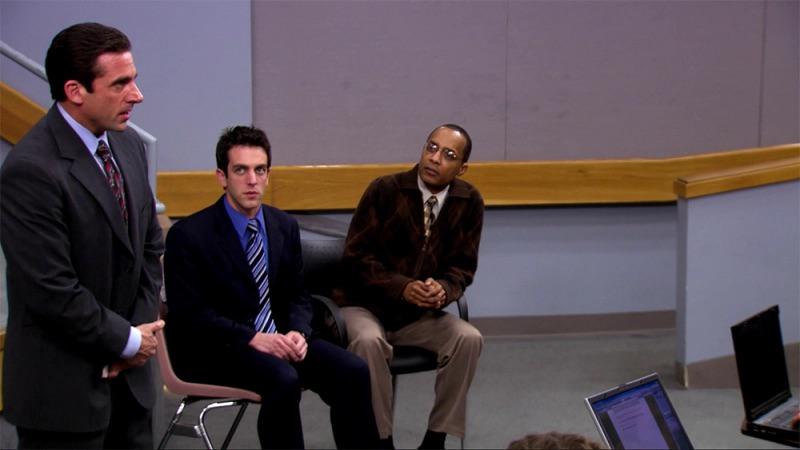
    The episode, of course, features Michael Scott (Ryan’s office manager) as guest speaker for Ryan’s business school class. True to form, Michael launches into a confidently delivered but basically nonsensical lecture on what he considers the essential principles of business.

    “There are four kinds of businesses,” he rants in front of a full college classroom. “Tourism, food service, railroads, and sales.”

    Watching Ryan sit there mortified through it all is side-splitting stuff.

    But the detail I find most significant in terms of our professional teaching practice is a quote that comes from Ryan early on in the episode, as he explains to the “documentary” film crew why he invited Michael to speak to his college business class in the first place.

    “If you bring your boss to class, it automatically bumps you up a full letter grade. So … I’d be stupid not to do it, right?”

    Of course, the comedic factor enjoyed by Office fans here is the knowledge that giving Michael this kind of stage is a recipe for disaster.

    It’s a terrible deal, Ryan. Don’t do it!

    But what most viewers miss is the ridiculous proposition made by the professor. Bring in someone from your work, and your grade goes up by a full letter.

    What?

    Looks like grades have more to do with hoops and compliance than actual abilities or skills in this course.

    But of course Ryan isn’t objecting. He’s taking the invitation and playing along, because this is the system of assessment that America has accepted.

    The traditional grades-as-wages paradigm

    In traditional paradigms of assessment, grades aren’t necessarily about learning or evidence of proficiency. They’re as much about pleasing the person at the front of the room.

    Grades are really just wages. Currency.

    Do what I want, and you get paid, maybe even rewarded with a pay bonus.

    Don’t do what I want, and you won’t get paid. Misbehave, and you’ll actually be fined.

    I’ve seen a teacher offer students a percentage increase in their overall average in exchange for tidying up classroom shelves.

    I’ve seen a band teacher require students to clean up chairs and equipment after a concert under threat of lost grades.

    In possibly the funniest example ever, a veteran colleague recounted to me how when she was in high school, her PE teacher would award bonus points to students who had showers after PE classes.

    Weird. And a little creepy.

    The saddest part of all of this is that like Ryan Howard, the students caught up in the middle of these arrangements generally accept them.

    They’ve been conditioned to do so. They’ve learned that education is really just a big game to understand, a set of hoops to jump through, a case of pleasing and impressing the right people.

    I once asked a class of 8th graders which they would value more: a straight-A report card or more learning? Results were split.

    Friends. School is about learning. Assessments should support the learning — not the other way around.

    Every bit of assessment we collect, document, share, and report should reflect student learning against curricular standards. Nothing else.

    When we hold up grades as wages to be paid to students, we’re leveraging our gradebooks for compliance and making up our own weird version of education.

    How do I feel about that?

    Well, in the words of Michael Scott, “I don’t hate it. I just don’t like it at all and it’s terrible.”