I’m a big believer in allowing our students to represent their learning in as many different ways as possible.
Writing is the conventional means for this, and don’t dump on it. Effective writing is as powerful and important as ever, says this English major.
The keyboard is still mightier than the sword, notwithstanding the trolls.
But students can also represent their learning through drawings, posters, brochures, magazines, slideshows, animations, group presentations, speeches, plays, audio recordings, and a host of other expressions.
They can also use video recordings.
The magic of video submissions
When I started teaching in 2001, there was no way for students to represent their learning through video and share it effectively.
We didn’t have iPads or Chromebooks back then. We didn’t even have wifi.
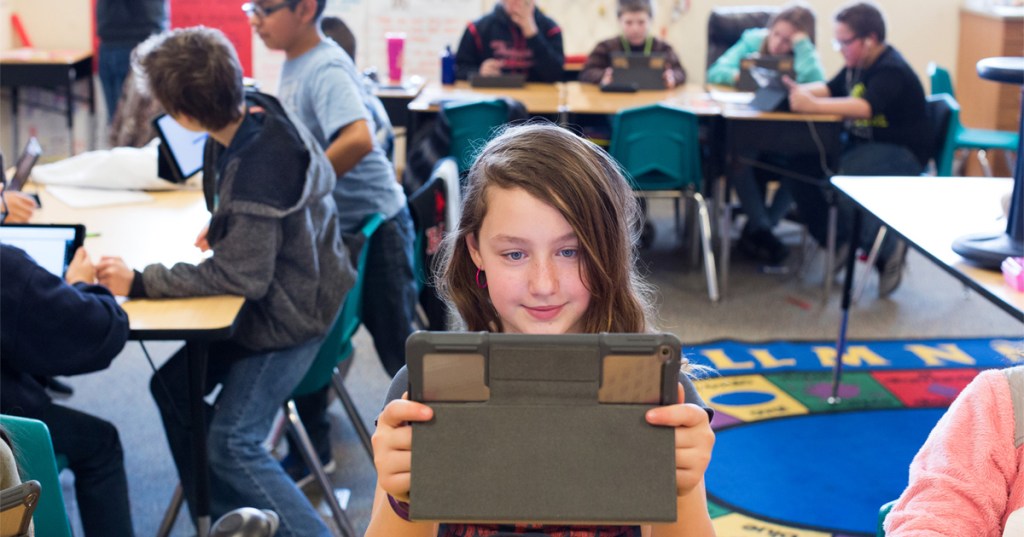
By comparison, students and teachers of today have an embarrassment of riches at our disposal. Using tools like Seesaw and Canva, students can record picture-in-picture videos or screencasts that include explanations and demonstrations of their learning.
There are probably hundreds of specific applications of video in the classroom, but here are three of my current favorites:
1. Writing piece read-alouds
Any time my English students complete a piece of writing of any significance, I ask them to read it aloud on Seesaw in the form of a screen recording. By zooming in on their text (usually a Google Doc) as they read, students allow their parents to follow along on their own devices while they listen to their child.
This practice is such a no-brainer for any middle school language classroom. It positions students to truly own their writing, refine and revise their texts (they always discover mistakes when they read them aloud), and strengthen their oral communication skills — another important curricular standard.
2. Video reflections after independent reading
Our students sometimes feel like every time they turn around, they’re writing another reflection. I think reflections are good practice for lots of reasons, but we can also mix it up a little bit. They don’t always need to be typed or written, and students generally appreciate the change-up.
Here’s an activity from my Seesaw library that I can re-post in a few clicks after any independent reading period. It meets curricular standards, requires critical thinking, strengthens oral communication skills, and provides some gentle accountability.
Wins all around.
3. Math solution demonstrations as screencasts
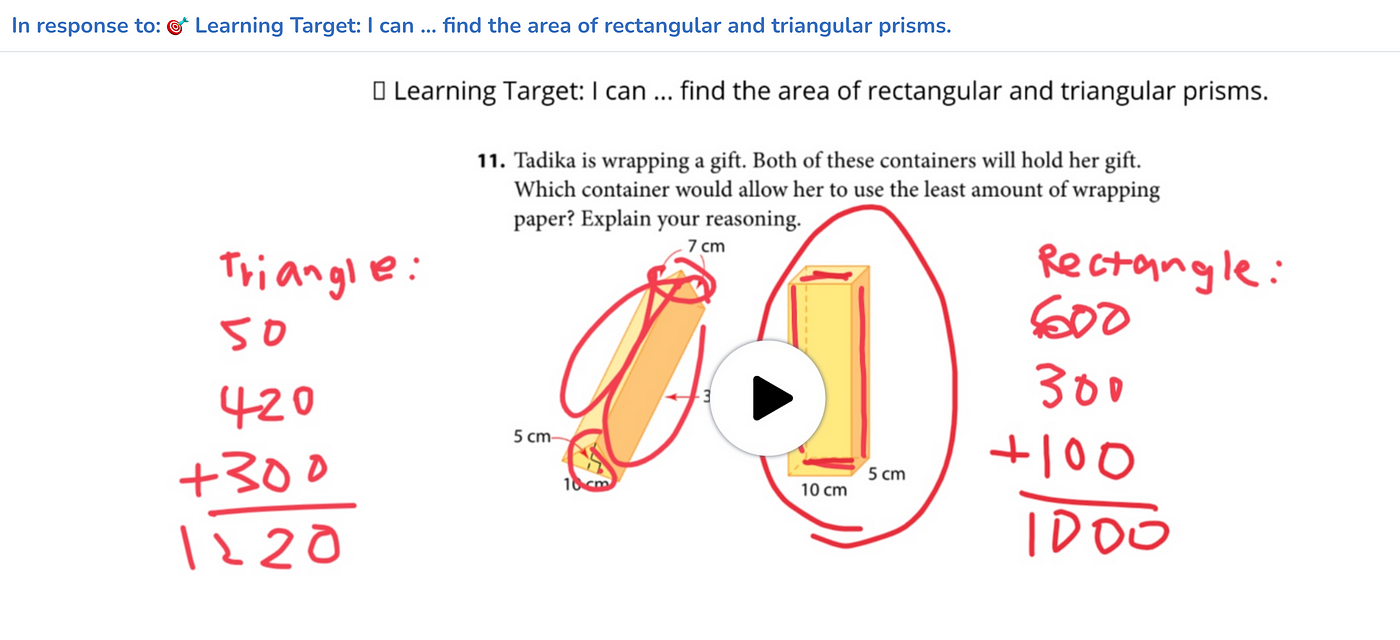
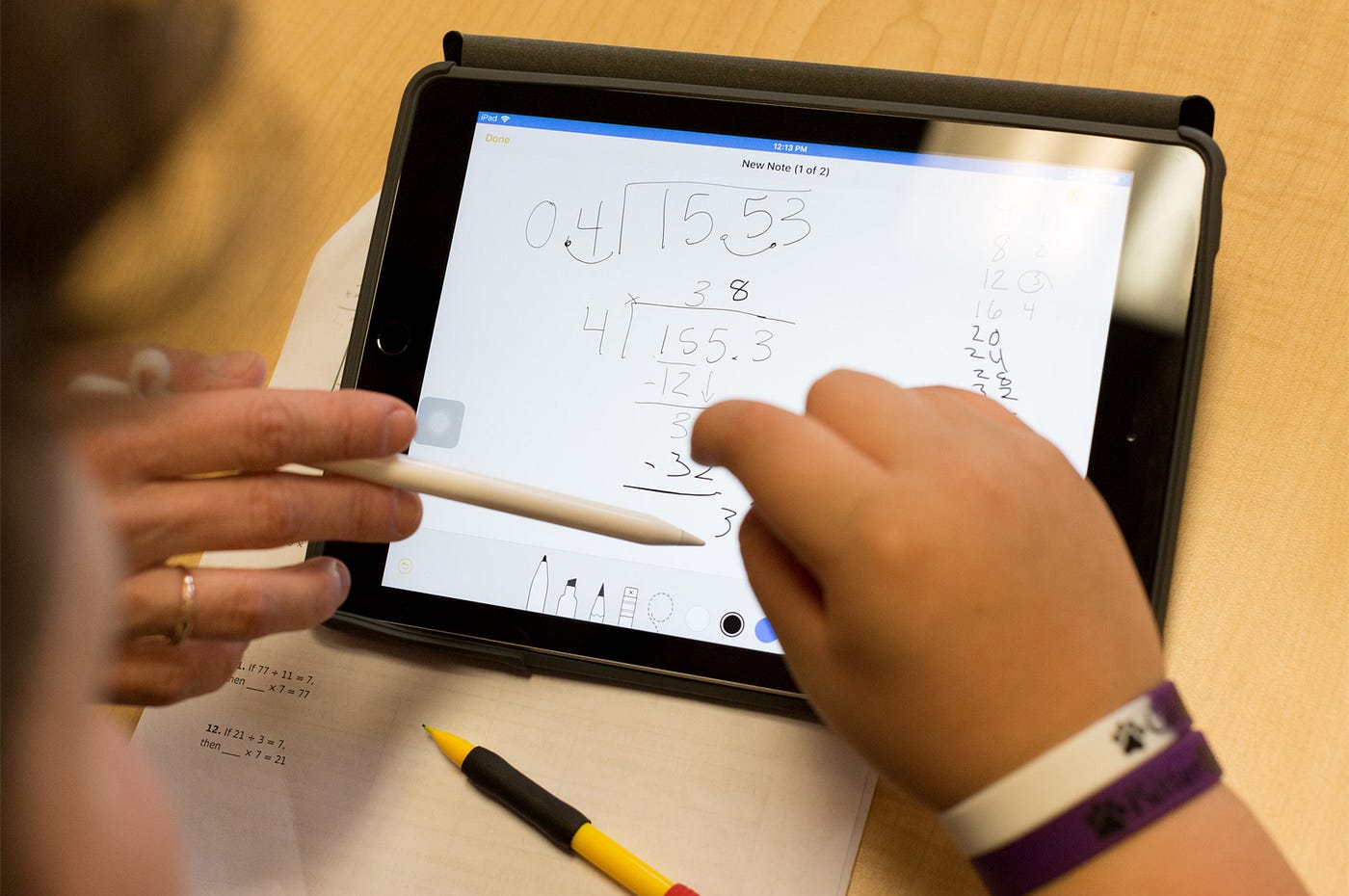
When I’m teaching Math, I like to ask students to demonstrate their solution to a problem as a narrated screen recording.
This gives me so much more information than simply “Did they find the right answer?” I can watch, listen, track their understanding and observe their whole process. Depth of proficiency is all right there.
The video becomes another helpful artifact in their learning journal. And the student’s parents can see precisely where their child’s learning is, too.
It’s a thing of beauty.
The misery of video submissions
Now it’s time to face the bitter truth about video submissions.
They take forever to fully review.
FOREVER.
I taught 160 unique middle school students each semester this year as part of my 60% teaching time. (We’ll stay focused today and ignore the fact that my 40% admin time took up about 80% of my energy.)
Let’s say that in the course of one week, I assigned each of my 160 students a learning activity that required submission of a video. (I know the UDL advocates will speak up to say that I should be offering more choices for means of representation, but work with me, folks.)
Let’s say that each of those 160 students submits a video that averages three minutes in length. That’s eight hours of viewing.
Now I know I don’t have to watch every single video in its entirety, but you see my point. When you put those hours beside all my other teaching and administrative duties, the time quickly becomes impossible. Absurd, even.
Some of my dear students sincerely expect me to watch every second of everything they post. Bless their hearts, but I can’t meet that demand and stay sane at the same time.
What are we to do?
Should we just give up and avoid video submissions altogether?
The good news about video activities
Thankfully, I bring you glad tidings of great joy, tired teacher. We don’t have to grade everything. We don’t have to offer feedback on everything, either.
I first encountered this word of hope from Dylan Wiliam and Siobhan Leahy in Embedding Formative Assessment:
“The most important takeaway from the research is that the shorter the time interval between eliciting the evidence and using it to improve instruction, the bigger the likely impact on learning.”
I draw three conclusions from this quote, and friend, they are important.
1. The feedback I offer my students in real time has the greatest impact of any feedback they receive.
This is as true on the basketball court or in the band room as it is in my English classroom. So I engage, interact, look over shoulders, sit with students, observe what they’re doing, ask questions, offer feedback, and support their learning whenever and wherever I can during class time.
2. The feedback I offer my students hours or days or even weeks after the fact isn’t too valuable.
You know those five hours you spent last Saturday posting feedback on student work? Not a great return on your investment, research suggests.
That’s not to say that we should never offer feedback or grade student work long after the time of completion. I do so when it seems important to, especially when I’m relying on particular pieces of evidence of learning to construct an accurate picture of a student’s progress.
But I weigh my investment of attention and energy against the time that has elapsed since the student completed the work. The greater the gap, the less impact my feedback or assessment is likely to have on their learning.
3. Learning activities can often support student learning, even without feedback or assessment from the teacher.
Look at the three examples of video submissions that I listed above. I would argue that each and every one is valuable for the student to complete, whether or not I offer feedback or assess the activity.
Yes, sometimes I will offer feedback during class or after it. But other times I can’t and won’t. And that’s okay, because the student is still winning.
They’re still thinking critically.
They’re still demonstrating their knowledge and understanding.
They’re still strengthening their oral communication skills.
They’re still reflecting on their learning.
My students don’t receive points or percentages for anything they do, so I hardly ever hear “Is this for marks?” or “Will this be graded?”
For the most part, they just do it. Because that’s the culture we’ve built.
And I sleep with the satisfaction of knowing they are moving their own learning forward.
Learning can happen without us, not to mention the possibilities afforded by peer- and self-assessment. Sometimes we need to drop the hero complex and remember that the children in our care have the capacity to learn and grow on their own.
Even if we don’t always see their finished product? (Gasp.)
Yes.
That’s not an abdication. It’s a recognition of student agency.
It was an 8th grade English class in a previous teaching context. Students were engaged in a collaborative writing activity in Google Docs, working in small table groups around the room.
I like to make learning visible whenever possible. While students worked, I began cycling through their various Google Docs on the big screen, adding real-time affirmations and encouragement when and where I could.
I did this for a few groups and was pleased with what I saw. So far so good.
Then I moved to another group’s Doc. They were writing, all right. But soon I could see that something was amiss.
One of my writers hadn’t yet caught on to the fact that his group’s work was now featured live on the big screen for all to see. And — not a shock for 8th graders — I could see that his writing wasn’t exactly on task.
Instead, he was trying to draw laughs from his writing partners. To my horror, I watched in real time as he typed something disrespectful about one of his female classmates who was in the room and working with another group. The comment was crude and inappropriate.
I switched quickly away from his Doc, but not quite quickly enough. A couple of classmates had seen his classless composition, and their reaction was loud. I felt angry and disappointed and sad all at once.
Time to craft those parent emails
Once the dust had settled and students were all home for the day, I set to work on writing emails home to parents. I wanted to address this issue quickly and head on, especially with the parents of the female student (who I expected would likely hear about it from their daughter). Nip it in the bud, as they say.
I wanted her parents to hear that they could count on me and our staff team to make sure that our school was a safe place for their daughter. That she was known, loved, and appreciated in our learning community. That we wouldn’t tolerate acts of aggression or sexual harassment in our classrooms.
And so I gave her parents a clear summary of what had happened along with a few thoughts and commitments regarding my next restorative steps. I felt good about my wording and made sure to BCC my principal.
I re-read the email to make sure I had avoided grammar errors and I was representing myself professionally.
Send.
There’s just one small issue
The next morning, my principal was his usual encouraging self. At first.
“Great email, Tim. Your communication was professional as always. There’s just one small issue.”
Uh oh.
He went on to kindly explain where I had gone off track. The parents of the female student in my classroom didn’t need to know the name of the student who had harassed her, he pointed out.
My mind raced. I had considered the privacy angle when I wrote the email but had decided to go ahead and name her aggressor. After all, their daughter would obviously name the boy involved, right?
If anything, my naming of him would signal to her parents that I wasn’t going to tiptoe around this issue. It would show them that I was serious about calling it like it was and following up firmly. Or so I thought.
There were a couple of problems in my thinking there.
For one thing, we never know exactly what our students will or will not tell their parents. My student may have shared the name of the other student, or she may not have. Frankly — and in the form of many middle schoolers — it was possible that she may not have even mentioned the incident at all.
But really, what my student communicated to her parents is beside the point. Because that’s her business. It’s between her and her family.
What is my business as an education professional is what I communicate with the parents of my students. And here, my principal made a critical point for me that I have never forgotten.
The parents of my students should NEVER learn about the misbehavior of other (identified) students from me.
Some privacy advocates will jump in here to take this rule even further. They’ll say that parents should never learn ANY information about other students from their teacher, but I’m not so sure. I can think of contexts where this may be appropriate. Imagine a class newsletter that celebrates the successes of group science projects, for example.
But all it takes is putting your parent hat on for one minute in order to quickly grasp the problem that occurs when a teacher overshares information about student misbehavior.
How would you feel if it was your child that was being reported on?
Speaking as a parent myself, I know I wouldn’t be thrilled. Some other parents out there are hearing a report with specific details about my son? Without the knowledge of his parents or an opportunity for us to see or hear this version of the facts?
Nope, not cool. Not cool at all.
When you really think about it, this kind of communication is completely unnecessary. It has basically zero chance of helping anything and instead has the dangerous potential to mushroom into other problems.
Just imagine parents of students in your class engaging in an unofficial WhatsApp chat (lots of those in my current school community) that gets into the topic of a recent behavior incident that occurred at school. One parent tries to helpfully clarify details of the event and leads with “Actually, I heard from Mr. Cavey that Johnny did X, Y, and Z.”
Yikes. That’s not going to end well for me.
It’s best practice and protects everyone involved.
I’m thankful that my principal had the courage to share this lesson with me. It’s one that I’ve never forgotten, and I pass it on whenever I can.
Yes, in some cases it will take a little more work to craft emails about school incidents that are rife with mentions of “a classmate” or “another student.” It makes the wording super awkward in some cases.
But that’s how it needs to be for all concerned.
We have a duty of care to our students, and part of that professional duty compels us to protect the reputation of each child. When we discuss student misbehavior incidents in the staff room, we take care not to name the students involved. Other teachers don’t need to know.
The same thing applies to our email and phone communications with parents. They don’t need to know the names of other students involved. And if gossip does come to their ears, we sleep easy knowing that it didn’t come from us.
Of course, the other win here is that by following this practice of privacy, you’re actually protecting yourself. When you name other students and describe their misbehavior to adults who are not their parents, you’re not just risking the trust that parents place in you. You’re inviting accusations of slander.
Do yourself a favor and abstain.
Thank you, teacher, for doing the hard work of carefully communicating important developments with the parents of your students. Keeping families well-informed is such a critical piece of the school-family relationship and it is deeply appreciated. It takes time, care, and energy.
Years ago, I messed up and overshared. That’s unfortunate.
But learn from my mistake, fellow educator. Protect your students and protect yourself. Your community will be safer, happier, and healthier for it.
When my creative voice lapses into silence, it’s both a symptom and a cause.
Friday’s paddleboarding trip was an important part of my summer recovery.
How are you doing, colleague?
Yesterday was officially my first freestyle day of summer.
By that, I mean that my last day of work was Friday, June 30th, and every day since has been spoken for. Not by work obligations – I’m talking about good stuff like a family vacation, appointments, and a paddleboard trip with colleagues. The last week has been life-giving in many ways, and I’m deeply grateful for the time I’ve enjoyed with family and friends.
But yesterday was wide open on the calendar. And the peace that I felt told me I freaking needed this. My spirit had been waiting for such a day for weeks, months even.
Which brought me back to this spot. Writing. Putting words together. Claiming the delicious luxury of unhurried quiet time to reflect, look back, take stock of myself, and think about how I want the next few weeks to unfold.
My last blog post was made on April 9th. Three months ago.
How am I doing now? Better.
How was I doing through May and June? Not awesome.
I’ve written many times about the ways that my MEdL degree (2017) and my creative work at Teachers on Fire (2018) breathed new fire into my work in education. Blog posts, podcast episodes, and YouTube videos have blessed me with more opportunities to reflect, learn, and engage with education thought leaders than I ever imagined.
When I’m doing well as a person, I’m doing well as a professional, but I’m also taking time each week to create. Profession and passion are both burning bright.
That means I’m writing. I’m speaking. I’m sharing ideas and engaging in education conversations that in turn pour fuel on my fire and help me be the education leader that I’m called to be. It’s a virtuous cycle.
I know that makes me a weirdo. I know that most teachers need a break from education reading, writing, and conversations on the weekends, and I get that. But for me, there’s a fire that is kindled when I’m engaged in those spaces.
The header on my Teachers on Fire YouTube channel reads “Warming your heart. Sparking your thinking. Igniting your practice.” That’s a mission born from personal experience.
So when my creative work lapses into silence, it’s both a symptom and a cause.
Creative silence as a symptom
On the one hand, my creative silence is a symptom, because when overwork and burnout encroach on my mental health, creative work becomes expendable. When I’m struggling just to keep my head above water professionally, I lose the bandwidth to write or record.
Even if I do find the scraps of emotional bandwidth to consider creating a piece of content on a weekend, I’m plagued by guilt and the optics of distraction. Should I really be writing for pleasure on a Saturday while work emails and tasks pile up unattended, family members deserve more of my time and attention, or home maintenance duties call?
My creative silence is a sign that I’m being stretched – sometimes badly so. It means that my mental, emotional, physical, and spiritual health is not what it should be. No margin.
Creative silence as a cause
My creative silence also becomes a cause of mental and emotional decline in itself. Just as restoring cars, fishing, or crocheting breathes life into some educators, producing and engaging with education is my catharsis. As an Adobe study recently found, creating content can be a deep source of joy and fulfillment for creators.
As I said, it’s been three months since I’ve felt the latitude to pick up the proverbial pen and write. Twelve weeks away from the written word.
A creative drought, if you will.
I know these are first-world problems. I know there’s a tremendous amount of privilege and entitlement involved when it comes to lamenting the absence of passion projects.
But I’m speaking to the space and place that I’m in, and I’m speaking from the conviction that every full-time educator owes it to their own mental health to engage in pursuits of passion outside of work time. We cannot be just our work.
By my ideals and values, 90 days between writing pieces is unacceptable.
Moving forward
In the days and weeks to come, I want to take some time, some rest, and further reflection to unpack the last term and sort through the mechanics of my decline in wellness and creative output. There’s some learning to be done here, and that will likely be worthy of its own post.
But for now, I’m going to enjoy this moment. Laundry is clean and sorted. The lawn has been mowed and the car has been washed. The family is safe, healthy, and happy. My office window is open and I’m enjoying the light breeze of a warm summer day.
I have nowhere to rush to and no tasks that require urgent attention. I’m back to writing, and I can feel my fire for learning coming back.
Have a great summer, colleague. Whenever you have the time or inclination, I’d love to connect on Twitter @MisterCavey. And if not – if your passions lead you elsewhere – know that I’m cheering you on.
For years, I’ve been teaching my media design students how to edit subjects out of photos using photo editing tools in Pixlr.com, the web’s best cloud-based photo editor. But AI applications are evolving quickly, and tools like Canva’s Magic Eraser can now do in seconds what used to take minutes.
Exactly how good is Canva’s Magic Eraser? I set out to find out using six increasingly complex images. Here are the timestamps for the video:
0:00:00 – Welcome! Start by logging into your Canva for Education account.
0:24 – How to use Canva’s Magic Eraser to remove a paddleboarder from a lake.
1:27 – How to use Canva’s Magic Eraser to remove a man (doing a handstand) from a beach.
2:52 – How to use Canva’s Magic Eraser to remove Elias Pettersson from a hockey photo.
4:27 – How to use Canva’s Magic Eraser to remove Lebron James from a basketball photo.
5:46 – How to use Canva’s Magic Eraser to remove a college student from a group photo.
7:16 – How to use Canva’s Magic Eraser to remove a politician from a political photo.
My conclusion: Canva’s Magic Eraser isn’t perfect, but it’s highly proficient and scary fast. For teachers looking to remove a photobomber, power lines, or another subject who shouldn’t be represented in a school publication, Canva’s Magic Eraser tool might be your solution.
What does the world’s most successful YouTuber have to teach students and teachers about creativity, learning, and education?
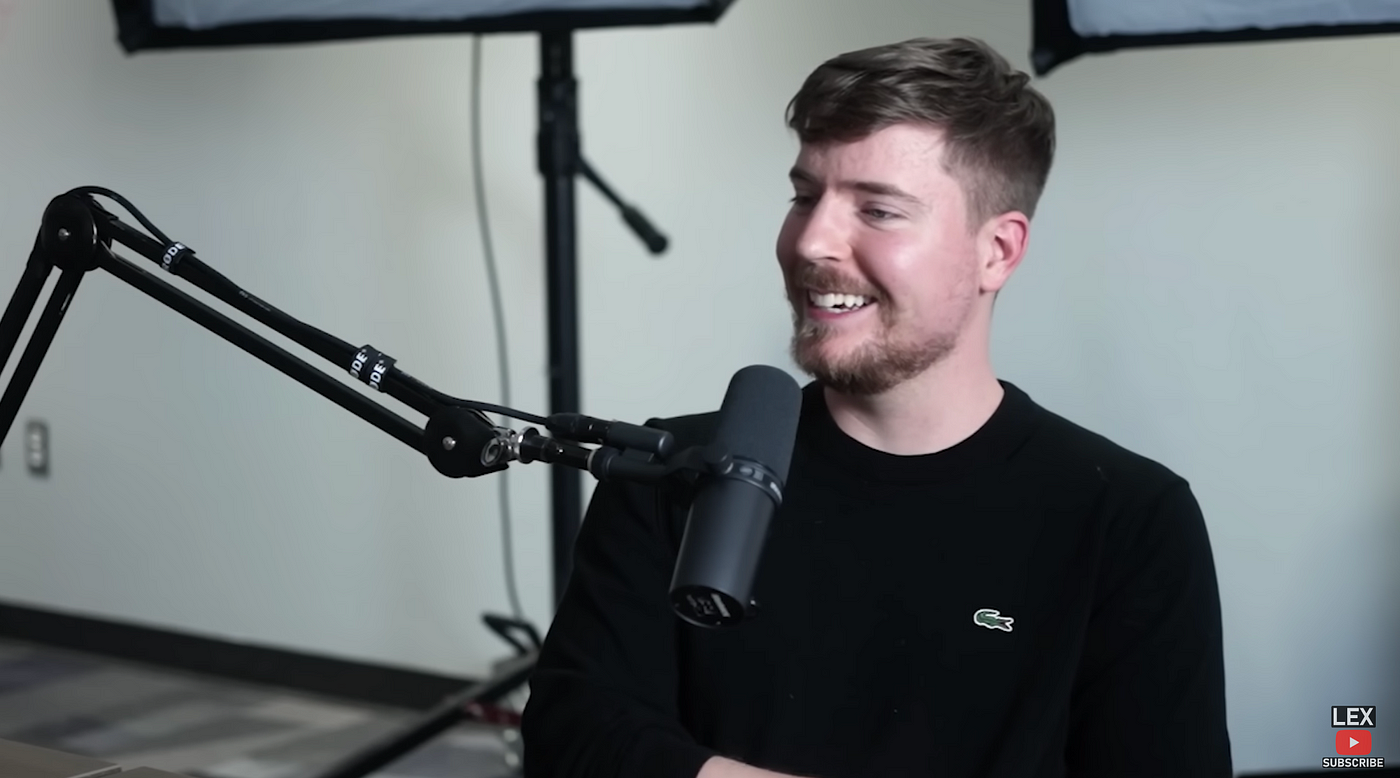
Meet Mr. Beast, the most successful individual YouTuber in the world. With 140M subscribers on his main channel and dozens of other channels in operation, Jimmy Donaldson’s life has been defined by his creative work on the platform.
His videos earn billions of views annually across multiple languages, and his first retail products have met with mind-numbing success.
The scary thing? He’s only 24 years old.
I have questions.
As an educator and creator, I’ve been intrigued by Jimmy’s story for some time.
How does he view formal K-12 and college education?
What’s his approach to learning and creativity?
What can we take from his story as creators, learners, and educators?
Several videos and documentaries later, I’ve got some answers and takeaways to share. Some surprises, too.
1. Extreme learning guarantees extreme results.
“I would say since I was eleven years old, almost every waking hour of the day I’m thinking about YouTube in some form or capacity.”
One thing that becomes quickly apparent in Jimmy’s story is his absolute obsession with learning more about the YouTube platform and the art of video production.
It’s manic. It’s compulsive.
He’s been continuously learning about YouTube content creation for over 13 years and he just refuses to stop.
It’s a kind of frenzied focus that we’re not sure we’d recommend for our own students or children. As educators, we’re in the business of developing the whole child, but to hear him describe it, Mr. Beast-style obsession doesn’t leave much room for other life priorities.
Still, Donaldson seems to have a good relationship with his mother and brother. He has a girlfriend and enjoys long-lasting friendships. He’s a renowned philanthropist and seems driven by opportunities to help others. Balanced lifestyle or not, the world could use more Jimmy Donaldsons.
There’s a clear takeaway here: extreme learning leads to extreme results. Mr. Beast’s level of obsession isn’t the path for everyone, but there’s a powerful principle at work here that is worth emulating.
2. It’s still possible to start at zero and become a master artist.
“I had no idea what worked. I had to teach myself everything.”
Watching Donaldson entertain millions of global viewers each month, you might be forgiven for guessing that he grew up in wealthy suburbia, enjoyed the stability of a nuclear family, attended elite private schools, or was given the financial resources to acquire cutting-edge equipment as a teen.
That’s where you’d be wrong — on all counts. He enjoyed none of those advantages.
He started at zero.
Jimmy grew up in lower class neighbourhoods of Greenville, North Carolina with a single mother. His first computers and cameras were giveaways from friends and family — some of the lowest quality gear possible. He never attended a formal course or received specialized training.
He’s entirely self-taught. He scratched and clawed and experimented and failed and learned and failed again and learned some more to become the creative genius that he is today.
He’s another testament to the 10,000 hours hypothesis popularized by Malcolm Gladwell in Outliers. Put in 10,000 hours at just about anything, and you’ll become an expert.
It’s an incredible story, and the takeaway is powerful: you don’t need a single external factor or advantage to become skilled in a creative field.
You don’t need a head start. You just need to start.
3. Accelerate your growth by learning with others.
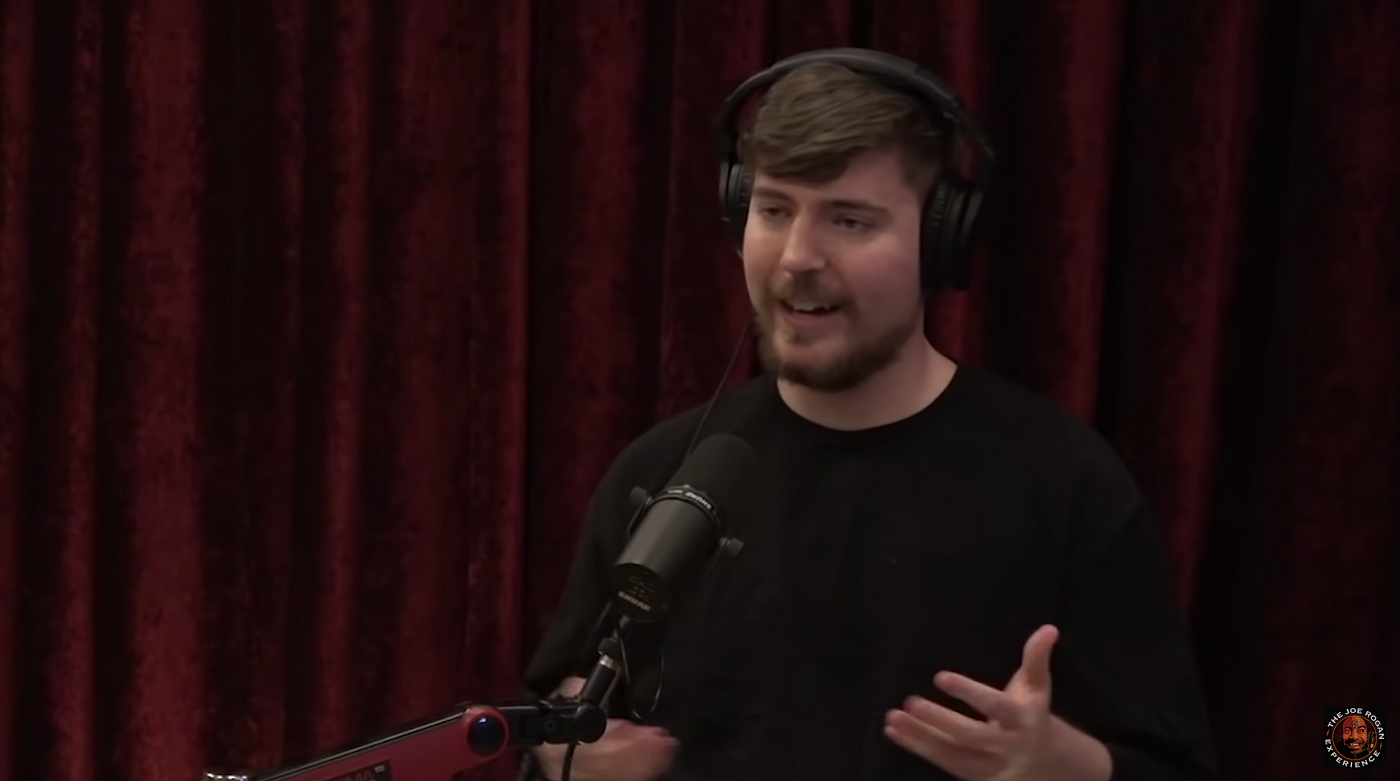
“Most of my growth came after I graduated high school. Basically what I did was somehow I found these other four lunatics … We were all super small YouTubers and we basically talked every day for 1,000 days in a row and did nothing but hyperstudy what makes a good video, what makes a good thumbnail, what’s good pacing, how to go viral. We’d just call them daily masterminds … We were very religious about it. That’s where most of my knowledge came from.”How Mr. Beast Became Successful on YouTube (PowerfulJRE)
A group of teenagers decided to collaborate — in person and online — every day.
All day, every day. To learn.
And when he says “all day,” he means it. Jimmy describes connecting with his friends on Skype in the mornings and remaining in the calls for literally the entire day.
Daily masterminds. For years. That’s a lot of learning in community.
Here he describes why this level of collaboration is such a powerful hack.
“It’s like, if you envision a world where you’re trying to be great at something … and it’s just you learning and [messing] up and learning from your mistakes, in two years you might have learned from twenty mistakes. Where if you have four other people who are also messing up, and when they learn from their mistakes and they teach you what they learned, hypothetically two years down the road you’ve learned five times the amount of stuff. It helps you grow exponentially way quicker.” — How Mr. Beast Became Successful on YouTube (PowerfulJRE)
He’s right, of course. This perspective matches everything we know about the powers of collaborative learning, peer assessment, and the iterative design process.
Simply put, more brains are better than one brain. Accelerate your learning by learning with others.
4. For significant results, action is everything.
“Like, the entire room is a huge LEGO fort. He was intense, and he was passionate about what it was that he was working on at the time.”
We’re all creative beings. For many, the trick is simply to identify their passions, unlock them, and give them the opportunities they need to blossom and flourish.
And by “opportunities,” I mean taking action. I mean creating. Publishing.
This bit about action isn’t automatic. Lots of people have dreams and ideas of creative work. But few people act on them.
In Big Magic, Elizabeth Gilbert writes: “This is the central question upon which all creative living hinges: Do you have the courage to bring forth the treasures that are hidden within you?”
I like the scene of the little LEGO builder told by his mother in the excerpt above, because it gives us a valuable snapshot of Mr. Beast before YouTube.
He was a builder. He was an experimenter. He was a creator before he was online.
From LEGO to videos to businesses, Jimmy has had the courage to bring forth the treasures hidden within him.
His creative passions have led to consistent action.
And when it comes to results, action is everything.
5. Proficiency requires resilience through adversity.
“Every night before bed, I’d just be like, it sucks. It’s a lot of work. And I feel like I’m not getting anywhere, but if I just do it long enough, eventually it will click. Eventually, I’ll figure it out.”
Every successful creator has experienced discouragement and dark days.
Days when nothing seems to be going right. Days when it seems like the only ones who even see the work are laughing.
They’re going to happen.
Most creative spaces require considerable investments of time, patience, and focus in the face of difficulty. Quality content — regardless of the medium — doesn’t happen just because you’re present.
Mr. Beast doesn’t talk about his lows often, but listen to his story enough times and you’ll realize that he’s dealt with more than his share of adversity.
From equipment fails to editing disasters to dismissive comments to the theft of all of his gear, there were many moments when he could have thrown in the towel and moved on to other hobbies.
But he refused to let problems, setbacks, or failures defeat him. Refused.
And fifteen years later, he’s enjoying the results.
6. Failure isn’t just something to survive: it’s an essential part of the creative process.
“Just fail. A lot of people get analysis paralysis and they’ll just sit there and they’ll plan their first video for three months … Your first video is not going to get views. Your first ten are not going to get views. So stop sitting there and thinking for months and months on end. Get to work and start uploading. All you need to do is make 100 videos and improve something every time. Then on your 101st video we’ll start talking about maybe you can get some views.”
In Mindset, Carol Dweck taught us the importance of a growth mindset in learners of all ages.
Those with a fixed mindset view new learning and potential failure as a threat to identity. If X doesn’t go well for me, it will mean I’m dumb or a loser or both.
In contrast, those with a growth mindset embrace the challenges of X precisely because it represents new territory. Failures are interesting to those with this mindset. Failures are viewed as opportunities to learn.
“Make 100 videos and improve something every time.” For me, that’s the key phrase in the quote above.
Yes, we will make mistakes in the creative process, but that’s actually the point. Austin famously took six tries to draw a butterfly, but he never would have achieved proficiency without trying for the first time.
“That’s the beauty of content creation online. There’s literally infinite ways [to improve]. Every little thing can be improved and they can never not be improved. There’s no such thing as a perfect video.”
Weightlifters welcome muscle failure because it means they are pushing their limits.
Creators should be no different.
Try, fail, learn, and improve one more thing every single time.
7. Traditional schooling isn’t a required path to success. For some students, it’s the obstacle.
“Even in high school, I never once studied. I literally wouldn’t even take my books home. I legit don’t think I studied once for all of high school at my house … I didn’t have the best grades … I hated school with a passion, but [my mom] forced me to go to community college. That was the worst thing ever. That made me hate life, like borderline suicidal. I just can’t stand having to just sit there and listen to this dumb stuff and listen to some teacher read out of a book.” — How Mr. Beast Became Successful on YouTube (PowerfulJRE)
Mr. Beast doesn’t hold back when it comes to his school and college experiences.
Listening to this brought up all kinds of questions for me.
Did he ever enjoy any of his teachers in K-12 education?
Did he ever get any opportunities to experiment with media creation in school?
One thing becomes crystal clear here: the traditional K-12 school experience is not a required stop on the highway to success.
And by “success,” I’m not just thinking of financial freedom, although Mr. Beast certainly has that. I’m thinking of self-actualization, the ability to cultivate quality relationships, becoming a contributing member of society, and the practical power to make the world a better place.
Mr. Beast is just one of millions of creators, entrepreneurs, and leaders who didn’t need traditional education and never once saw value in it. He saw school as something to survive, to outlast, to get away from.
As a teacher, this is a little discouraging. But I also find it liberating.
You know that seventh grader who refuses to finish assignments and obsesses endlessly about creating games on Roblox? Yes, do what you can to push, support, and hold him to high standards. Encourage him, love him, let him know that he belongs and that he matters.
But once you’ve done all that, don’t lose sleep over him.
Chances are, he’s going to be fine.
8. Creative work can thrive where friendships fail.
“I was really shy, especially when I was younger. I really didn’t like being around people … Outside of sports, it was just literally YouTube. That was all I watched. No one in my school watched videos, so I kind of just felt like an outcast, ’cause I was just hyper obsessed over it.”
They’re present in our rooms and in our halls. But they’re disconnected. And as much as we try to do to include them, connect them, love on them, and help them engage in the life of our learning communities, we’re not always successful.
Here’s the thing. Friendships and relationships are incredibly important. But they’re not everything in a child’s life or development.
The story of Mr. Beast reminds me that in the absence of busy social lives, some students will dive deep into creative pursuits. I find that comforting.
Where does that leave me as a teacher? No, I can’t actually make middle schoolers build deep friendships with other middle schoolers.
But I can get to know the creative impulses of my students. Curiosity and encouragement from adults that students know, like, and trust can go a long way to fan those flames of passion.
We’re not giving up on relationship-building. But just maybe, while some of these students struggle along, we can help them develop a life-giving world of creative work that will boost their self-confidence, define their identities, and introduce them to others who think like they do.
In a world of obsessive gaming, vaping, drugs, and TikTok consumption, the path of creative work can be one of the healthiest for our students to walk.
Let’s cheer them on.
9. A creative life is a fulfilled life. Take time to create.
“If I’m not creating, then I don’t feel fulfilled, I don’t feel like I’m progressing, and I feel like I’m wasting my time.” — How Much Money MrBeast Makes | The Full Story (Graham Stephan)
Adobe released a report in 2022 that confirmed what many of us already know: the more we create, the happier we feel.
Every human being has a creative impulse inside of them.
I do. You do. Everyone we know does.
Fulfillment in life comes in many forms: meaningful faith, family, friendships, generosity, gratitude, service, and alignment between values, identity, work, and play.
For an increasing number of people, including Mr. Beast, fulfillment is also found in creating.
There are a couple of important takeaways here for educators.
One is to weave as much creativity into our instruction as possible. Give students the tools and opportunities to design and express and create multimodal representations of their learning. There are a host of good reasons to do this.
The second takeaway is more subtle, and I don’t want to pile another should on already-tired teachers. But here it is.
Do you want to go from burnout to on fire as a teacher? Try taking some time to indulge your creative side.
When you share your creative work with the world, you’re giving us all a gift.
But you’re also developing yourself. You’re taking another step toward self-actualization. You’re building confidence and competence with every rep.
You’re hopping on an upward trajectory that will make you a better educator and increase the value of what you have to share with the world at the same time.
Creative work is fulfilling.
Mr. Beast’s story makes me sad and glad at the same time.
As an educator, Mr. Beast’s story is both saddening and inspiring. He’s experienced phenomenal creative success despite his education experience, not because of it.
School fail.
But his story has a lot to teach students and teachers about the nature of learning and creativity. Whatever your role in education, there are powerful lessons to be taken from his journey.
Self-directed learning. Collaboration. Resilience. Multiple iterations of work. Excellence. Generosity. Finding joy in the creative process. These are all values and practices that are easy to see in the journey of Jimmy Donaldson.
From student to teacher, classroom to district, we could all use a little more Mr. Beast.










 Teachers on Fire