If you’re passionate about literacy, about promoting the place and pleasure of effective reading and writing in your classroom, I strongly recommend this title.
I said “in your classroom,” but one of the things that comes across so powerfully in Sparks in the Dark is the fact that literacy must be a lifestyle.
To be genuine, to be vibrant, to be contagious — reading and writing must spill out of our personal lives.
And this goes for all teachers — not just those who teach English Language Arts. As educators, as thinkers, as lead learners, we must model a life of constant reading and writing.
Literacy is Breathing
If we say that communication, creativity, curiosity, and critical thinking are the core competencies at the foundation of today’s education, we must practice what we preach.
In an age of digital amusement and easy-everywhere distraction, we must show our learners what it looks like to mentally breathe. To stop, be still, and practice the acts of mental inhalation (reading) and exhalation (writing).
One of the most important reasons that we write is to know ourselves. As Don Murray says, “You write to discover what you want to say.”
It sometimes feels like the act and art of self-reflection is a vanishing habit. But we must show our learners that these practices are essential aspects of living a healthy and productive life.
When Our Reading Lives Are Shallow, So is Our Teaching
Speaking especially to educators, Crowder and Nesloney write “We prioritize what we value, and when we do not value reading or learning, it shows. Our instruction is a mixture of what we have read, and when our reading lives are shallow, so is our teaching. It isn’t an insult; it’s the truth.”
We cannot be effective educators if we are not regularly reading and reflectively writing.
Becoming a Writer
To those who feel defeated by identity before they even start (“I’m not a writer”), James Clear describes his own evolution as a writer in his recent book, Atomic Habits.
“For most of my early life, I didn’t consider myself a writer. If you were to ask any of my high school teachers or college professors, they would tell you I was an average writer at best: certainly not a standout. When I began my writing career, I published a new article every Monday and Thursday for the first few years. As the evidence grew, so did my identity as a writer. I didn’t start out as a writer. I became one through my habits.”
You may not be a reader or writer today. But you can and will become one — one paragraph, one page, one article at a time.
So pick up a book. Grab a pen or sit down at the keyboard. Score some small wins, and begin the gradual process of redefining yourself.
Start breathing.
Because the more reflective you are, the more effective you are.
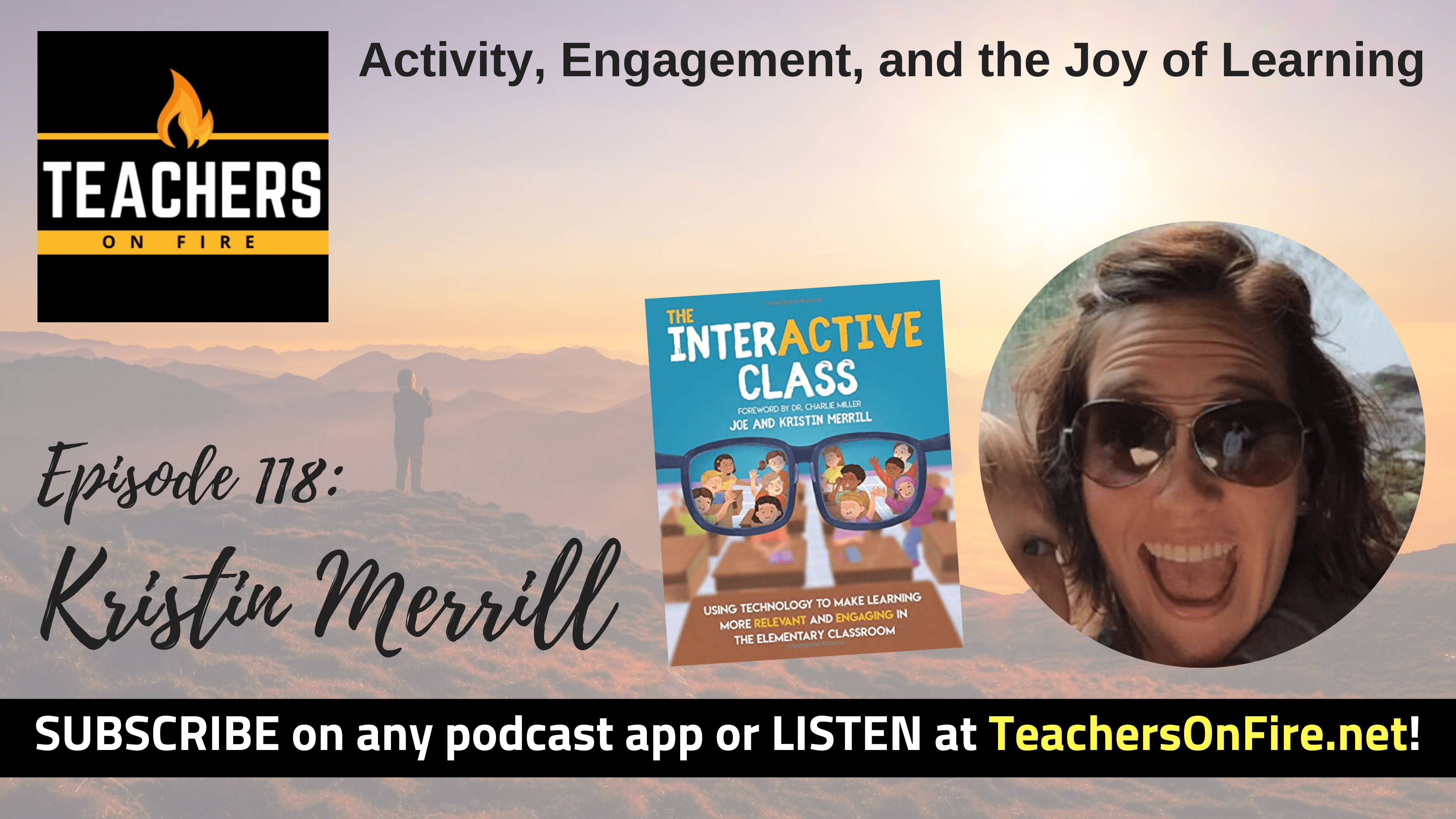
KRISTIN MERRILL is a fourth grade teacher in south Florida who specializes in language arts and strives to make lessons interactive and engaging through the use of educational technology. She teaches at a smaller elementary school with a diverse school community, where she’s affectionately referred to as “the Dinosaur of Fourth.” She recently co-authored The Interactive Class: Using Technology to Make Learning More Relevant and Engaging in the Elementary Classroom.
Questioning Her Vocation
Kristin recalls a time in her career when she found herself questioning much of what she was asked to do as a teacher. She decided to start making changes to her practice based specifically on what was good for students and their learning, but the changes weren’t always warmly received by colleagues. At times, she felt a sense of distance and isolation as she worked to reinvent herself, but she found strength and support in a growing PLN.
Today, she’s happy to report that as her network has grown and her influence has increased, she enjoys much more support and collegial relationships in her current context. One takeaway for other educators is that professional resistance to innovative practices tends to be a passing season; keep pushing through it and consistently grow your practice, and things will eventually get easier.
The Interactive Class
Writing The Interactive Class: Using Technology to Make Learning More Relevant and Engaging in the Elementary Classroom was never on her bucket list, Kristin says, but as she and her husband Joe shared their teaching ideas and strategies on social media, a friend encouraged them to publish a book. Kristin and her husband Joe are passionate about helping other educators build classrooms that are student-centered, fueled by the creativity and collaboration of students, and the book helps them share that message.
The Interactive Class is divided into two parts: first, the philosophy and rationale behind interactive teaching strategies, and second, the applications and best practices of interactive teaching and learning. Although Kristin and Joe come from primary classroom contexts, many of the lessons and strategies they describe could be applied at middle school grade levels or higher.
On the Subject of Recess
When asked about whether recess should be used by teachers as a carrot or a stick, Kristin says that recess should be considered an essential part of childhood. There is so much that kids learn just through play and social interactions outside of the classroom, she observes, not to mention the processing and recharging time that recess allows young learners. Why would we ever want to take these times away from them?
What Else is Setting Kristin on 🔥 in Education Today
Rebecca Bathurst-Hunt is a kindergarten teacher who does a phenomenal job of building student inquiry, interest, and relevance into her learning activities. Kristin has been obsessed with her lately, following Rebecca on Instagram and taking notes from her latest projects. Recently, Rebecca built an impressive inquiry-based learning experience around pets, and Kristin is a big fan.
A Professional Goal: More Relevance
Motivated by Rebecca’s example, Kristin’s professional goal for the year is to make her teaching more relevant. This means more than just making sure her content and teaching strategies are as current as possible — she also wants to better understand what students view as meaningful. She plans to do this by looking for more ways to incorporate student voice, choice, and inquiry–even when that takes her into uncomfortable worlds like Fortnite!
Personal Passions and Recharging Activities
“Education is my passion,” Kristin admits, explaining that professional learning really does energize and inspire her — even when she’s at home. Aside from education, she enjoys the simple things, and often those simple things relate to life with family. Whether it’s walking at the beach, exploring a nature trail, or sitting by the fire, it’s in the simple and quiet moments that she feels recharged and prepared for more creative work.
Personal Productivity: A Personal Planner
Social media doesn’t always portray an accurate picture of what life is like for educators, Kristin observes. We all have moments when we don’t have it all together and the tensions between personal and professional spheres make things a little chaotic. Her go-to tools include a personal planner that she maintains on paper, and she writes down every task, priority, and concern that she sees weeks or months away on the horizon.
It’s not to say that none of the plates ever fall, she says, but as long as she’s intentional about her most important priorities, she’s learned to give herself the grace she needs when the house doesn’t get cleaned perfectly or other ideals aren’t met.
Voices & Resources That Inspire Kristin’s Practice
Over on Twitter, Kristin recommends following Andy Knueven @MrCoachK15. He’s a master of Flipgrid, Minecraft, Wakelet, and a ton of other interactive learning approaches in fifth grade.
It’s just too painful to narrow her favorite edtech tools down to one, so Kristin shouts out three legendary creative apps: FlipGrid, DoInk, and Adobe Spark.
A favorite podcast that works with her limited time for listening is the Ditch That Textbook Podcast with Matt Miller. After taking a two-month break in the fall of 2019, Matt is back and publishing short episodes almost every day.
One of Kristin’s favorite YouTube channels is The Bucket List Family, a family that travels the world and documents their adventures.
When time allows her to enjoy some Netflix, Kristin’s tuning in to Grace and Frankie. She connects with their sense of humor!
We sign off on this fun conversation, and Kristin gives the best ways to follow her online. See below for details!
We’re approaching another reporting period in my middle school. Our year runs in three terms, and we’re currently in the process of wrapping up term two before spring break.
The deadline for the submission of report card comments looms large.
The Agony
For as long as I’ve been a teacher, reporting periods have been something of a painful rite of passage.
Even on normal weeks throughout the school year, I feel the weight of lesson and unit planning, assessment, emails, parent communication, team meetings, staff meetings, supervision, and all the other duties that come with the job.
If you’re in the classroom full-time, I’m sure you can relate.
Reporting periods just pile on top of those regular demands. There are more summative assessments to complete, marks to record, work habits to consider, progress comments to write.
It all takes time, and because we are proud of our professional work and committed to the mission of learning and growth, we want to do it well. It can lead to some long days and late nights, leaving us with less emotional margin for the people we serve.
As deadlines loom, thoughts of 9 to 5 days in other career fields suddenly become interesting, and our escapist fantasies take us to lazy beach vacations.
It can be an exhausting time.
The Ecstasy
Even in the midst of this pain, there is joy to be found. Year after year, I’m somehow surprised when the arduous process of reporting actually increases my care and empathy for students.
I evaluate each strand of their work habits, and I see their faces. I replay our interactions: their expressions, laughter, passions, curiosities, and the highs and lows of their character.
I write about their progress, and I’m called to reflect deeply. To consider their academic strengths and weaknesses. To remember their moments of despair and frustration. To relish their times of triumph and success. To point to areas of continuing growth and progress.
I’m reminded that some of my students fight silent battles: health problems, stressful moves, parents in the middle of divorce. Others project a brave exterior that masks deep anxiety: about academics, about their future, or about fitting in at school.
As I intensify my focus on each learner in my care, my commitment increases.
Reporting is a sacred ritual — one integral to our mission. It comes back to our great purpose, our rai·son d’ê·tre.
Our why.
Because this project of K-12 education is about something far, far bigger than the transmission of information. It’s about far more than 13 years of filling brains.
It’s about equipping students with skills.
It’s about habits of thinking and attitudes of heart.
It’s about the formation of mind, spirit, and character.
It’s about developing young adults who are filled with passion and compassion, who lead with service, who are prepared to contribute to the lives of others and make this world a better place.
And so it is that the rite of reporting is an honor, a privilege. Because as educators, as guides, as lead learners, we’re given a special place in this journey.
Our place is to speak into this process of growth, this journey of development, knowing that our words carry great weight.
Our comments become a formalized, enshrined review of the good and the bad, the highs and the lows, the growth and the challenges ahead.
Our words can simultaneously affirm, correct, encourage, and create hope.
And that’s an awesome responsibility. It’s what we’re all about.
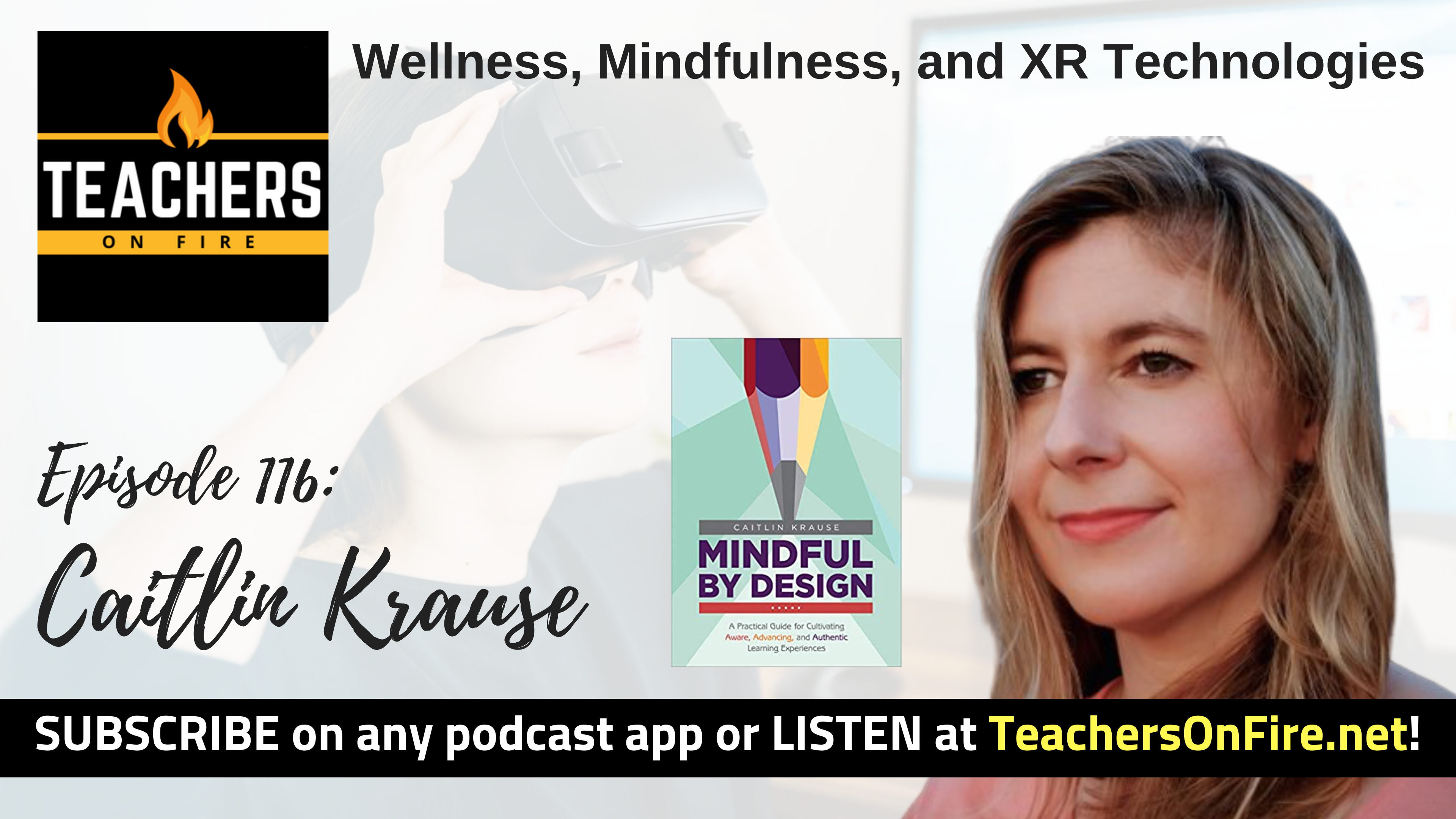
In addition to experience as a computer programmer, Caitlin has taught and developed curriculum at K-12 schools in the United States, Belgium, and Switzerland. Today, she owns and operates her own company which allows her to facilitate meaningful learning experiences for learners around the world.
Caitlin is fascinated by the intersection of arts, collaboration, communication, relationships, and the newest applications of XR technology. Her learning and teaching is predicated on the idea that we learn and grow as whole human beings, and she resists the disciplinary walls and binaries that we often erect between subject areas in education.
Lessons Drawn From a Novel Failure
“Isn’t it great that we are not great at everything?” Caitlin asks rhetorically. “Life is not a simulation. It’s beautiful that we’re not in control.”
Caitlin recalls introducing a novel to a British literature class for juniors. It was a novel that resonated powerfully with her, and she was sure her students would connect with it. But it required a lot of deconstruction, it lacked a compelling love story, and no matter how much she wanted it to work, it became a serious struggle to work through it with this class.
Eventually, she worked through her own resistance to the situation and embraced the failure and necessary surrender that followed. It was a reminder that what is close to our own hearts may not be close to the hearts of our learners. We need to meet them where they are, and sometimes that means letting go of our treasures.
Teacher Wellness
Caitlin has created an online course for educators on the topics of mindfulness, SEL, and teacher wellbeing. Statistics tell us that many teachers struggle with anxiety and burnout, and we see many teachers leaving the profession after only a few years in the classroom.
We need to remember that humans are reactive beings, and the effects of being constantly on and emotionally available for days on end can be damaging in the long-term. Mindfulness is a practice that offers some powerful counter-effects to these emotional demands. Even though mindfulness can actually raise stress in the short-term as practitioners recognize sources of anxiety, over the long term it has been shown to decrease anxiety as we raise awareness and address sources of stress more proactively.
Mindfulness and self-awareness are powerful measures for learners, too, as they adopt simple practices of quiet reflection, intentional breathing, gratitude exercises, and other strategies for self-regulation. As anxiety comes down, opportunities for learning increase.
Mindful By Design
In 2019, Caitlin published Mindful by Design: A Practical Guide for Cultivating Aware, Advancing, and Authentic Learning Experiences (Corwin Press). Caitlin is an authority on AR and VR and anticipates a major shift in the adoption and application of these technologies in learning spaces throughout 2020. She sees them shaking up teaching, learning, storytelling, site exploration, and other immersive learning experiences. Although the applications are powerful and improving all the time, she also points out that the deep learning actually happens before and after students utilize these technologies.
Advances in Artificial Intelligence
We see AI technologies creeping into the learning environments more and more each year, and tools like Google’s Smart Compose, Google Home, or Apple Siri are making content more accessible for all learners. Artificial intelligence often conjures notions of sci fi and Ex Machina, but AI technologies are serving learning well and informing the improvement of a lot of applications. Caitlin shouts out John Carmack’s interview on the Joe Rogan Podcast and celebrates the amazing innovations he has led at Oculus.
Voice commands and operating capacity continue to improve across all devices, and Caitlin is fascinated by the research that MIT and other authorities are pioneering regarding the recognition of human emotion through facial expression and speech. The companies and institutions leading innovation in AI technologies require richer and more diverse data sets, she observes, noting that “You’re only as good as your data set.”
Making sure that a diversity of cultures, genders, and other factors are properly represented and included remains a central challenge, complicated in some contexts by privacy issues. There are obviously some important ethical questions to be asked and answered regarding how these companies and institutions source their data sets.
Relationships with Robots
Caitlin bears no ill will toward robots – in fact, her approach is much the opposite. “I think it’s good to be considerate to our robot friends,” Caitlin chuckles. “I kind of bristle when someone yells at Alexa.” Machine life and artificial intelligence is taking us into some interesting philosophical territory, particularly as we experiment with creative impulses for robots. Yes, a robot can write a piece of poetry or create a song, but does it have a soul? These are some of the essential conversations that must continue going forward.
Saving Room for Anomalies
Additionally, Caitlin notes that AI devices and technologies must always leave room for the element of surprise and irregularity. In other words, if AI algorithms learn our profiles so effectively that they can supply us with a steady stream of content tailored exclusively for expressed interests, passions, and familiar comforts, we actually reduce or eliminate our exposure to unusual content that has the power to provoke curiosity and inspire further learning. We already see that segregation at work in social media networks and news aggregators, and to lose further ground would be a significant loss to humanity.
“They say the brain learns the best when it has the element of surprise, when expected patterns are broken,” Caitlin says. How much can we be surprised? This is a great question to ask ourselves as educators and lifelong learners.
What Else is Setting Caitlin on Fire in Education
The metaphor of being on fire is an apt one for Caitlin, and she takes a hopeful view of how voice and creativity and storytelling will continue to strengthen and add momentum to learning. Our fire is essentially the stuff that we find meaningful, she says, and it’s up to us to spread those ideas to others.
We’re all telling stories as educators, and it’s our place to invite listeners to enter into these stories and write their own heroic odysseys as they enter into unknown spaces and then tell their own tales. “It makes me really excited to be in worlds where not only can we lift each other up but we get to stay curious, stay connected, and create love over fear,” she says.
Professional Goals for 2020
Last year was the year of her book, Mindful by Design, and 2020 will be her year to spread her message, ideas, and mentorship. The book is applicable at so many levels, including education systems, leadership, teacher wellbeing, and classroom practices, and she wants to continue to develop online supports for those who wish to integrate these values and strategies into their own unique contexts.
She also wants to continue to build SEL training through immersive VR experiences and AR applications. It’s a fascinating area that requires further development but offers tremendous promise for the future. Will we see a day when groups of educators can connect in virtual environments to practice breathing and mindfulness exercises together? Perhaps that day has already arrived.
Other Personal Passions
“I’m a very human, curious learner,” Caitlin says, “and anything involving photography really excites me.” She’s enjoyed cameras since childhood, and treasures the activity of photography as a mindfulness tool. She also comes alive during opportunities to run outside, especially trails that wind their way through picturesque settings through the woods or along the ocean. Last but not least, Caitlin loves consuming and learning about chocolate from European countries and around the world – so much that she’s even tempted to write about it some day in the future.
Productivity Hacks and Philosophy
One of Caitlin’s favorite productivity hacks is to break simple numerical goals into smaller pieces. For example, instead of aiming for 20 full push-ups, she sets a goal of 40 half push-ups, which gives her a greater sense of momentum and optimism about achieving the target.
She also avoids goals or resolutions of deprivation, choosing instead to always frame her actions in a positive light. “Being productive means realizing that we are not our worst enemy, so be kind and gentle to yourself,” she encourages.
Finding ways to gamify our goals – even simple routines or chores like cleaning – can add joy and pleasure to ordinary exercises of productivity. She shouts out Lisa Johnson’s book, Creatively Productive, as a convincing argument that productivity doesn’t have to look like grueling deprivation or robotic behaviors.
Voices & Resources That Inspire Her Practice
Over on Twitter, Caitlin recommends following Kent Bye @KentBye: historian, philosopher, and host of the Voices of VR podcast. She also shouts out the New Hampshire’s Poet Laureate, Alexandria Peary @WriteMindfully, someone who’s done some interesting work around the effective use of mindfulness to break through writer’s block.
One edtech company that Caitlin has her eye on is Engage, which is doing some innovative work to support learning experiences in VR environments. Another company called 3D Bear is pioneering some exciting AR technologies as well. Consider following both industry leaders on Twitter @3DBearOfficial and @VReducation.
Caitlin does enjoy podcasts, and she’s especially a fan of the big ones: Radiolab, This American Life, and The Moth. Any content that includes a mix of storytelling and technology will tend to hold her attention.
On YouTube, Caitlin makes a shameless plug for her own channel where she plans to post more creative work in 2020.
When she’s feeling relaxed and ready for some pleasure viewing, Caitlin is streaming Mr. Robot, The Good Place, and The Watchmen on Netflix and Amazon.
Before we sign off on this conversation, Caitlin shares some beautiful poetry pieces. Make sure you’re in a relaxed setting and enjoy.
To connect with Caitlin and learn more about what she’s all about, make sure to check the links below.
“I don’t care about Twitter, and I’ll never go on Twitter,” I heard an educator say last year.
I understand this position. From the outside, Twitter may just seem like more noise, more distraction, more nonsense that doesn’t really add anything to our lives or professional growth.
I’ll also be the first to agree that as busy professionals and leaders of families, we need to be intentional and discriminating with our time. Meaningless scrolling and shallow engagement doesn’t and shouldn’t make the cut.
But what IF Twitter can serve a valuable role in our professional growth and development? What IF Twitter can add to our lives without consuming much time?
Educators Are Learners First
In my view, the case for teachers on Twitter begins with the idea that educators are learners first. The principles of learning that we believe in for our students apply just as much to our learning and growth as they do to theirs. If we’re hungry to learn and grow, it’s wise to build an active Professional Learning Network and engage.
Twitter isn’t the only place to build a professional learning network. But it’s an awesome place to start.
The Learning Activities of a Twitter PLN
1. Collaboration.
Just like our students, education professionals learn best when they learn together. The whole really is greater than the sum of its parts. When you have a question or you’re feeling stuck in a challenging situation, chances are your Twitter PLN will be able to offer suggestions and resources.
2. Communication.
As David Guerin once wrote, “Whoever is doing the talking is doing the learning.” When we write, read, and respond to professional conversation, we’re more engaged. We’re tuned in. We can’t help but learn. And the inverse is also true.
3. Metacognition.
We also learn when we take the time to thoughtfully reflect on our journey. By answering questions like What am I learning, Where am I going, and How will I get there, we gain awareness and greater intentionality about our own learning path. I treat Twitter as a journal, especially when I’m trying a new project or attending an education conference. You too can use Twitter to archive and preserve your own learning reflections for future reference.
4. Visible Learning.
When we make our learning visible, we benefit from feedback, and others learn from our stories. And we can make the learning of others visible, too. When asked why he uses Twitter, principal Chris Chappotin used the word “showcase.” Administrators are especially well-positioned to play this role in their buildings, since they can be in more classrooms and contexts than teachers.
5. Inspiration.
Whether it’s a lesson idea, helpful resource, or a word of encouragement, my edu-Twitter feed is an overwhelmingly positive space. Think of it as constant connection with a cloud of education leaders and mentors. It’s phenomenal.
6. Professional Relationships.
When we engage in professional conversations, we meet others in similar fields and spaces. Twitter is a wonderful place to connect with education leaders and authors, too. It’s as easy as reaching out.
5 Ways to Increase Engagement on Twitter
I believe the number one reason that so many educators try Twitter and then ignore the platform is lack of engagement. Maybe it took them forever to work up the nerve to finally tweet something pithy or valuable, but it’s only crickets in response.
What a waste of time, right?
It doesn’t need to be. By following these five simple strategies, you’ll increase engagement and gain more value from your time on this platform.
1. Use relevant hashtags whenever possible.
If you’re new to the platform, you may regard hashtags as little more than cute decorations. But for many users (including me), hashtags can be a great way to dig deeper into a topic. Think of hashtags as rooms. Whenever you use a hashtag, you’re putting your tweet in that room for others to find. Whether it’s #growthmindset, #goinggradeless, or #formativeassessment, tag your posts so that others can find them topically. With a little Googling, you’ll find the best hashtags to use for your context and areas of work.
2. Tag others whenever appropriate or relevant.
If and when you’re sharing ideas or resources that relate to someone else’s work or area of interest, you’re doing them a service by tagging them. Educators usually like thoughtful tags — especially if it’s an endorsement, shoutout, suggestion, or recommendation aimed specifically at them. I always like being tagged by colleagues in my building, because otherwise I might miss their tweets. And authors usually appreciate being tagged in quotes from their work, because you’re helping to share their message. Again, keep it genuine. But don’t be afraid to connect.
3. Use relevant images, GIFs, and videos.
Make your tweets stand out and get noticed by adding relevant media. Again, this isn’t purely an attention game, but it is about building the kind of engagement on the platform that makes activity worthwhile. You have to be seen to be heard, especially as you get started.
4. Engage in Twitter chats.
There’s absolutely no better way to build connections with other educators than by engaging in real-time Twitter chats. Not sure where to start? Try the weekly #TLAP (Teach Like a Pirate) chat, one of the largest to take place on the platform each week. Or, next time you’re at a large conference, tweet the highlights from your learning at the conference hashtag.
5. Keep it education-only.
Make a point of only following educators, which generally keeps your feed on track with education. It’s incredibly easy to switch between Twitter accounts quickly, so I have my faith, sports, and politics conversations elsewhere. If you’re still not convinced, here are 5 Reasons to Niche Down on Twitter.
The point is, if you follow @RealDonaldTrump, @Yankees, @Netflix, and the like, your feed will get noisy, distracting, and unproductive. My advice? Keep it strictly on education.
A Simple Formula for Getting Started
There’s no time like the present to use Twitter to develop your professional learning. Once you’ve created a Twitter account, how can you go about building a professional learning network? Here are some practical steps.
Start with at least one tweet a day.
Share questions you’re wrestling with, ideas from your learning, or inspiring quotes from your reading.
Use one or more relevant hashtags (like #MSed for middle school education).
Use one or more user handles (think of interested colleagues, figures working in related areas, or authors of your quotes).
Include relevant images whenever possible.
Then, try to follow at least one more educator a day. Not sure where to begin there? Visit @MisterCavey and select Following. You’ll see nothing but educators and education organizations. You can start following them, too.
As I said at the outset, Twitter can facilitate the same learning processes that we seek for our learners: communication, collaboration, creativity, critical thinking, metacognition, and relationships. If you’ve been a Twitter holdout, consider this both a challenge and an invitation.
Happy Tweeting! I look forward to learning with you.
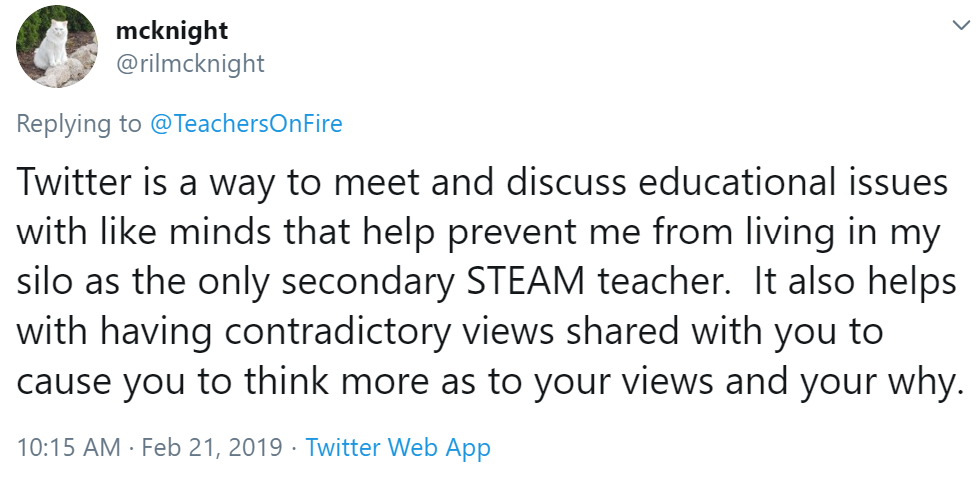
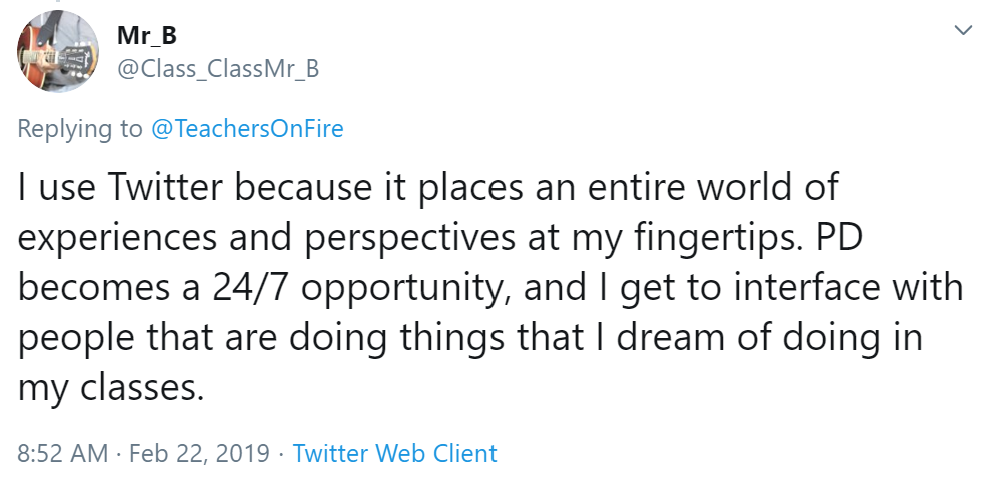
As I put the finishing touches on this piece, I asked my PLN how they use Twitter. Here were some of their responses.
First, an educator who teaches in my area:
And here is a reply from Chris Chappotin, principal of STEAM Middle School and guest on episode 61 of the Teachers on Fire podcast, who I mentioned earlier in this story: