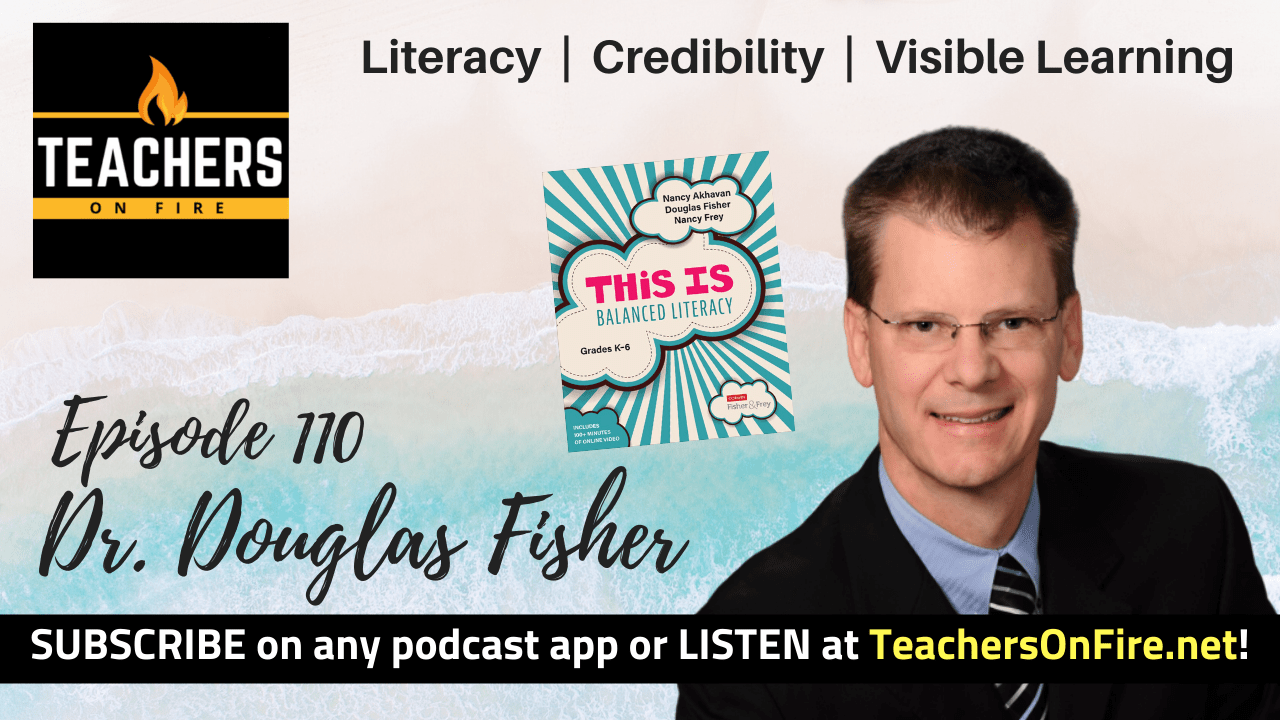
• Episode 110 – Dr. Douglas Fisher

    110 - Dr. Douglas Fisher.png

    Meet Dr. Douglas Fisher

    Dr. DOUGLAS FISHER is a Professor of Educational Leadership at San Diego State University, where he trains future administrators and institutional leaders. He is also a teacher leader at Health Sciences High & Middle College, a high school that he co-founded some years ago as a kind of lab, a practical context in which to continue the work of education research and innovation on a practical level. 

    A Career in Literacy

    Dr. Fisher is a highly accomplished researcher and author in the field of education. He is a member of the California Reading Hall of Fame and is the recipient of an International Reading Association Celebrate Literacy Award, the Farmer award for excellence in writing from the National Council of Teachers of English, and the Christa McAuliffe award for excellence in teacher education.

    He has published numerous articles and books on student achievement and literacy, including Text-Complexity: Raising Rigor in Reading (with Nancy Frey and Diane Lapp), Checking for Understanding (with Nancy Frey) and Common Core English Language Arts in a PLC at Work (with Nancy Frey). He is also a board member of the International Reading Association and a past board member of the Literacy Research Association.

    Disconnection and a Change in Perspective

    Around 15 years ago, Dr. Fisher found himself in a trying situation with his students. He was struggling to connect with his students in the ways that he was accustomed to connecting, and relationships were not coming easily. The experience was discouraging enough that he found himself starting to question whether the profession was even for him.

    “Parents send us the kids they have. They don’t keep the good ones at home.”

    Then, while attending a conference later that year, he heard a speaker say “Parents send us the kids they have. They don’t keep the good ones at home.” This quote spoke to him in a profound way, filling him with renewed gratefulness for the privilege we hold as educators to care for the children of others.

    The public trusts us with the responsibility of teaching, training, and “loving up” their kids, Dr. Fisher observes. Sometimes we just need that reminder of the tremendous honor that is education. After the conference, Dr. Fisher returned to the classroom with renewed commitment and dedication and has never looked back since.

    Balanced Literacy

    Dr. Fisher recently co-authored This Is Balanced Literacy, Grades K-6. When asked to elaborate further on this idea of balanced literacy, Doug is quick to point out that the concept has been around since the 1990s, when there was a lot of debate going on between phonics and whole language approaches. Kids need sufficient experiences with foundational skills, experts argued, including systematic and sequenced steps to growth in literacy. They also need meaning-making experiences that include reading comprehension and thinking about writing.

    Since this time in education, the conversation about balanced literacy has largely moved to discussions about the value of whole group versus small group instruction. In this book, Doug and his co-authors sought to move the literacy conversation back to a focus on the balance between skills and knowledge learning. As they developed their research with this focus, they also started to take a closer look at the balance between reading and writing.

    Current estimates suggest that the average elementary classroom spends up to 80% of their literacy instructional minutes on reading and 20% on writing. In the words of one of Doug’s colleagues, “Every writer can read, but not every reader can write.” Truly balanced literacy instruction requires us to ask these questions of our practice:

    • Are we using our literacy minutes effectively?
    • Are we making sure that our students are properly building both reading and writing skills?
    • Are we including both direct and dialogic instruction?
    • Are we making sure that our students are consuming both informational and narrative texts?

    Studies show that narrative or fictional texts dominate the reading diets of elementary students – informational and expository texts may not be receiving the attention they deserve.

    So how do we balance these tensions: direct and dialogic instruction, narrative and expository, reading and writing, skills and knowledge? This book offers the authors’ take on the best ways to thoughtfully integrate all of these methods and strategies in the literacy classroom. 

    For more on balanced literacy, listen to Doug’s two co-authors explore this concept further.

    The Balanced Literacy Workshop from Corwin Press

    Dr. Fisher and his co-authors currently offer a workshop that explores these strategies further in practical ways. This professional development event includes deep dives into reading instruction, writing instruction, assessing learning, impactful teaching practices, class engagement, coaching, and more. Workshop attendees will ask:

    • What should balanced literacy look like in the classroom?
    • What are the evidence-based strategies that we can adopt in the whole class environment?
    • How can we engage students in high-level collaboration using academic language that allows the teacher to sit down with small groups of students for more specific, targeted instruction?

    There is no one way to teach literacy, Dr. Fisher points out. There are many right ways, but there are also wrong ways. This workshop unpacks the menu of effective options for instruction that literacy teachers have at their disposal. 

    A Quick Suggestion on Literacy Instruction 

    When asked for one quick tip or perspective on literacy instruction, Dr. Fisher reminds us that our literacy strategies accomplish different things at different stages of student learning. There’s nothing wrong with surface learning and the strategies that bring learners to that level, but when we move from surface to deep learning, our tools change, and when we move from deep to transfer levels of learning, our strategies change again.

    As teachers, the question must be: what will unlock literacy for that learner right now, exactly where they are? 

    Visible Learning Plus 

    Visible Learning Plus is a specialized coaching program offered by Corwin Press, Dr. Fisher’s publisher. In Corwin’s words, this program will “Connect and harmonize existing school and system initiatives, build internal capacity, and harness the collaborative energy of educators to accelerate student learning and maximize time, energy, resources, and impact.”

    In simplest terms, Visible Learning Plus mobilizes John Hattie’s research on learning and helps schools understand and elevate the impact of their practices on student learning. Corwin’s coaches and consultants help school leaders and teams get to the bottom of the question of impact: Is what we are doing working? The program also seeks to strengthen collective efficacy – how can teaching teams improve their beliefs, practices, and procedures in a cohesive, engaged, and synchronized way. 

    Teacher Credibility

    One thing that has really captured Dr. Fisher’s thinking of late is the whole issue of teacher credibility and its impact on learning. He’s done a little bit of writing on this topic and has started to dig deeper into the research in order to learn more. When students view their teachers as credible, they learn a lot more from them. The following critical questions determine your credibility as a teacher:

    • Are you trustworthy?
    • Are you competent?
    • Do you show dynamism or passion?
    • Do you have proximity and closeness with your students?

    All of these factors influence student learning in powerful ways, and the good news is that they are changeable behaviors. Significantly, a teacher can employ proven instructional strategies, but if their students do not view them as credible, the strategies lose their effectiveness. As professional teams and learning communities, we should be constantly asking how can we help each other improve our credibility in the eyes of our students.

    Personal Passions: Travel and Exercise 

    When he’s away from his research and the halls of academia, the things that most energize Dr. Fisher are travel and exercise. He never stays with one mode of exercise for too long, so his activities range from running to spin class to trapeze.

    A Personal Productivity Tip: Block Time for Writing

    Dr. Fisher puts time into his calendar to do his writing. This is blocked time that he treats as a job – he does not allow email, phone calls, or other distractions to interfere. He believes that every educator has a book in them, and many educators want to write, but it requires making that time non-negotiable. Although he is thrilled when other people enjoy and consume his writing, he writes primarily to clarify his own thinking.

    Voices & Resources That Inspire His Practice

    Over on Twitter, Dr. Fisher recommends following the amazing @BreneBrown, renowned speaker and author of such books as Dare to Lead.

    In the world of edtech tools, Dr. Fisher is a fan of what PlayPosit can do to improve learner engagement with video content. Get to know this tool a bit better by following @PlayPosit

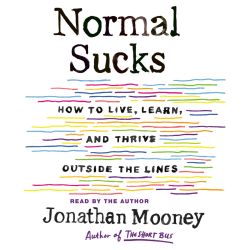
    Normal Sucks by Jonathan MooneyOne non-educational book that Dr. Fisher and his team have gained a lot from in the last year is Contagious Culture: Show Up, Set the Tone, and Intentionally Create an Organization That Thrives by Anese Cavanaugh. Another title that has done a great job of rethinking how we meet the needs of dyslexic learners is Normal Sucks: How to Live, Learn, and Thrive Outside the Lines by Jonathan Mooney.

    At the top of Doug’s podcast lineup is Cult of Pedagogy by Jennifer Gonzales, one of the largest podcasts in the education space today. If you’re not already following Jennifer on Twitter, connect with her @cultofpedagogy

    On YouTube, there’s no beating the classic TED Talks. Dr. Fisher is still a fan of the medium, the content, and the incredible learning that TED continues to share with the world.

    When he has a few minutes for Netflix, Dr. Fisher is watching Money Heist. It’s a fascinating series about a band of bank robbers who plan an elaborate heist in Spain, and Dr. Fisher is also using the series to brush up on his Spanish.

    We sign off on this helpful conversation, and Dr. Fisher gives us the best ways to connect with him online. See below for details!

    You can connect with Dr. Fisher …

    Connect with the Teachers on Fire podcast on social media:

    Song Track Credits

    Listen on YouTube and subscribe to the Teachers on Fire channel!

  • Episode 109 – Vernon Wright

    109 - Vernon Wright

    Meet Vernon Wright

    VERNON WRIGHT is an education leader, speaker, host, and editor. He’s a voice for the people, he pours into relationships, and he lives to serve, motivate, and inspire in authentic ways. He has served in education for over fifteen years as a teacher, teacher leader, campus administrator, and central staff leader.

    Leading Before the Title

    Early into his administrative career, Vernon found himself working for someone who had low visibility, little situational awareness, and almost no emotional intelligence. This leader was invisible in their building, didn’t give voice to staff members, and refused to take action when necesssary. As a result, staff members in the building would seek out Vernon for insights or support, even though in theory they should have been checking in with his superior.

    When he asked them why this was happening, they responded that he was visible, he listened to others, and he was a leader of action. Vernon realized through these affirmations that he was leading above his title, and it was a lesson that he has taken with him into every leadership context since. The experience further solidified his core leadership values and helped him understand the nuances of coaching and dialogue, even with people who are at the same level of authority or higher.

    Welcome to the #ZeroApologyZone

    Image

    Vernon is pioneering a movement among educators that he calls the #ZeroApologyZone. It’s characterized by the words “Believe. Study. Hustle. Manifest. Repeat.”

    • Believe. What do you believe about yourself? What do you believe about others? What do you believe about your purpose?
    • Study. We need to study to show that we are ready to have an impact. We need to prepare. If we want to increase our influence, we must increase our competence.
    • Hustle. Take action. Move from being interested to committed.
    • Manifest. Show outcomes and evidence of impact. Do work that is visible and makes a difference for others.
    • Repeat. Once you’re able to work through this process with positive results, why not do it again? As long as it is bringing impact and benefiting others, this is a cycle worth repeating.

    Vernon calls this cycle the #ZeroApologyZone because all too often, we apologize for things that we shouldn’t apologize for. When we become a voice for the people, when we advocate for equity and justice, when we do good work in education, we should never apologize for ruffling feathers along the way.

    Who are you? What are you all about? What do you stand for without apologies?

    Identify those things, and you’ll be well on your way to creating your own powerful mission and vision statement. You’ll build that emotional intelligence that not only understands who you are in real time, but what is really at your core, your essence, your spiritual DNA. 

    Connect, Impact, and Scale

    To take our journeys of personal and professional growth to the next level, we need to think in terms of connect, impact, and scale.

    • Connect: we need to reach out, network, dialogue, and understand the mission, vision, and purpose of the people around us.
    • Impact: once we understand others and build authentic connections, we’re in a position to better support and collaborate.
    • Scale: we don’t limit our influence to vertical 1:1 relationships, but expand that influence horizontally. When we support one person, others can and should benefit as well. In the age of the internet, we have all the tools we need to share great learning and leadership with audiences around the world. 

    Why YOU Should Create Content

    To educators who doubt the value of sharing their own message, Vernon says that what seems obvious to you may not be obvious at all to others. What may be commonplace wisdom to you might be someone else’s breakthrough, but it requires moving from a consumer to a creator in order for the world to share in your learning.

    Content creation is sometimes perceived as selfish or narcissistic when actually the opposite is true. Sharing information, ideas, and experiences is actually the selfless thing to do, because it requires courage, time, and energy to share, and it allows others to benefit from your ideas. 

    Real Leaders Mentor and Elevate

    When you share your ideas and pour into other people, you’re building a legacy that matters. Legacy requires impact and evidence, and when people tell Vernon they are a leader, the first question he asks is “Who are you mentoring?”

    Real leaders are always looking for opportunities to impact, influence, and elevate the voices of others. A scarcity mindset says that if we elevate others, we might lose some of the spotlight and audience ourselves, but actually the opposite is true. In contrast, an abundance mindset says that as we elevate others, others will elevate us.

    You were put on this earth for a reason. You are not alone, and your existence is not pointless. Your voice and your perspectives are wanted and needed by others, and to believe otherwise is a lie. The greatest fulfillment in life is not found in wealth or fame but in the connections and impact we make on others. If we can reach one person, that act of contribution was worth it.

    What is Disrupt Ed TV?

    Disrupt Ed TV shares inspiring messages for educators through a number of mediums and platforms. The organization is made up of a team of education leaders who address the most important issues in education, each from their own perspective.

    It’s been a phenomenal experience for Vernon, both personally and professionally, and he is deeply grateful to the founders of this project for allowing him to partner with them. He regards his decision to join Disrupt Ed TV as a watershed moment in his journey, a door that he walked through that significantly altered his future.

    Walking Through Doors and Watershed Moments

    Walking through a door is taking action, and action is the key that unlocks the door of opportunity. It’s committing to step forward, to manifest, to move into our destiny. If we don’t take the action, we leave all the amazing opportunities waiting for us on the other side of the door.

    Are you committed to being a lifelong learner? Are you committed to constantly pushing your journey of growth forward? In order to grow it, we need to show it. We can’t ask for growth and innovation from our team unless we’re pushing ourselves first through demonstrated action.

    Professional Projects on the Go

    Vernon was recently privileged to speak at Rewire, a star-studded education conference that took place in Tabernacle, NJ. He is also developing a line of apparel that amplifies his message, and he invites listeners to join the #ZeroApologyZone at thewrightleader.com.

    We’re all walking billboards, he reminds us. What is your billboard saying? We can either choose to craft our message and brand with thought and intentionality, Vernon says, or we can allow others to craft it for us. Do you know what your brand is all about?

    Vernon is doing a lot of coaching and consulting, and he invites listeners to reach out by DM if they are interested in engaging his services there. He also enjoys ongoing partnerships with people like Aubrey Patterson at Nohea Kindreds and others like Sarah Thomas and Mandy Froehlich at EduMatch.

    A lot of people see the public successes but miss the private hustle, Vernon points out. If you’ve been hustling for some time in private, it may be your moment to start manifesting in public, which helps you connect, impact, and scale your message even further.

    Personal Passions: Personal Coaching and Consulting

    Vernon lives to take people from version 1.0 to 2.0. To that end, he is passionate about increasing scale in order to reach more people with the message that 1.0 is not good enough. Listen to the small voice inside, he urges, that wants us to take things to the next level. If you’ve been waiting for your sign that it’s time to grow, consider this conversation the sign.

    Productivity Hacks: Goal-Setting and Vision Boards

    There are two things Vernon does on the regular that he encourages all educators and thought leaders to do in order to maximize their productivity.

    1. Write down your goals and be very specific.
    2. Review them, meditate on them, and reflect on them daily.

    Mix in a dash of hustle, and you will realize your goals. It’s about being focused. Vernon has found from personal experience that as he codifies his goals and makes them his Magnificent Obsession, things begin to line up. Make your goals SMART and again — review them daily.

    Vernon also recommends using vision boards that can be referred to regularly, from morning to evening. Every time he passes by his vision boards, he is reminded of where he is headed, even if just on a subconscious level.

    Voices & Resources That Inspire His Thinking

    Over on Twitter, Vernon recommends following DisruptEdTV @DisruptedTV. DisruptEd was the organization that first allowed Vernon to find his voice and grow his influence, and he’s grateful for the opportunities they’ve given him and their continuing influence in education. Two other must-follows that are also connected to DisruptEdTV are Evan and Laura Robb. Follow them @ERobbPrincipal and @LRobbTeacher

    The edtech tool that Vernon finds indispensable in his work is the GSuite, Google’s suite of cloud-based applications. In particular, Vernon is a big fan of the power of Google Slides to facilitate creation, collaboration, and communication from any device or location.

    10X-RuleA book that was absolutely transformative in Vernon’s personal and professional journey was The 10X Rule: The Only Difference Between Success and Failure by Grant Cardone.

    Going back to Ed Mylett, Vernon is a huge fan of Ed’s podcast as well. Although he doesn’t speak directly to education, Ed is another thought leader who challenges you to take your impact to the next level.

    Not surprisingly, Vernon’s first YouTube channel shoutout goes to DisruptEd TV – a must for every serious educator. And Vernon also points to Ed Mylett’s YouTube channel as a place for guaranteed inspiration.

    When he’s got some down time for Netflix, Vernon is all about learning. His Netflix selections of choice are inevitably documentaries.

    We sign off on this legendary conversation, and Vernon gives us the best places to connect with his message online. See below for details!

    You can connect with Vernon …

    Connect with the Teachers on Fire podcast on social media:

    Song Track Credits

    Listen on YouTube and subscribe to the Teachers on Fire channel!

  • Episode 108 – Deanna Lough


    108 - Deanna Lough.png

    Meet Deanna Lough

    DEANNA LOUGH is an eighth grade English teacher at Sussex Academy of the Arts and Sciences in Georgetown, located in the southern part of Delaware. She’s an aspiring leader, kid Mom, puppy Mom, Mrs., music fan, and a lover of all things inspiring and positive.

    How She Rediscovered Her Joy

    A few years ago Deanna reached a point where she felt like she was killing herself with work. Her lack of energy and margin was preventing her from connecting with her students the way she wanted to, which led her to start asking how she could make her classroom a better space for her students.

    That question has since evolved into a focus on equity, a pursuit that has really driven growth and evolution in her practice. Thanks to the changes she’s made in her thinking and work, she enjoys teaching a whole lot more today and has rekindled the passion that led her to enter the profession in the first place. 

    A Journey of Putting the Needs of Learners First

    At the time that Deanna really started rethinking her practice and her learning space, she asked her students to describe their ideal classroom.

    • What would it look like?
    • What kind of work would they do?
    • How would teachers support their learning?

    Their responses steered her first toward flexible seating and then to her own embedded biases and the obstacles faced by students from cultural and sexual minorities. She also started asking tough questions about her instruction and assessment.

    • Were her assessments actually fair?
    • Were they really assessing what she wanted to assess?
    • Were they really supporting the learning journeys of her students?

    As she asked these questions, she realized that a lot of the traditional and adversarial grading policies that she had complied with for so long were causing her the most stress and stealing her joy. Although her school still requires her to submit grades, she’s begun the slow work of changing her assessment practices and allowing her students to demonstrate their learning in new ways. 

    What Else is Setting Deanna on 🔥 in Education Today

    In addition to her changes in assessment, Deanna is keen on supporting her LGBTQ students and students of color in more effective ways. She’s become aware of so many situations that don’t do a good enough job of supporting these learners, and she’s also started to think about how some of the same systemic barriers affect minority educators, too.

    The work of educators such as Dr. Sheldon Eakins (@SheldonEakins) and Dr. Mechele Newell (@mechelenewell) has also been deeply influential in her journey. One of her biggest realizations is that she does have a voice in these issues and that she needs to use it — to advocate not just for her minority students but for all of her learners and for the state of humanity.

    A Professional Goal

    Deanna is thrilled to teach in a professional environment that allows educators to set their own professional goals. Her focus for this year relates to thoughtful uses of technology in her classroom. Her school is 1:1, meaning all of her learners have Chromebooks, so she wants to not only improve learning experiences for students but also increase her own expertise in the Google environment. She makes the point that as we grow, learn, and gain competence as educators, we bring more joy to the job, and students notice that. Lately, she’s also enjoyed watching her students support the digital expertise of others.

    A Personal Passion Outside of Education: Music 🎶

    Deanna is a huge music enthusiast, and even though she’s never been trained to play an instrument she’s taken up the challenge of writing about it. This commitment has pushed her to listen to music podcasts to learn more, and shows like Sound Opinions and Rolling Stones Music Now have helped and inspired her to keep going. Right now, her goal is to write one formal music review per month, and she’s shared this journey with her students as well. 

    Productivity and Priorities

    One set of strategies that Deanna has found valuable is Angela Watson’s 40-hour Teacher Week Club, and one her biggest takeaways has been the prioritized task list. Whenever she has a lot going on, she takes a few minutes to sit down and arrange to-do items by priority.

    Another helpful takeaway has been Google Keep, a simple but effective list keeper that syncs across all devices. “Nothing will kill your joy faster than when you try to be overly ambitious and get more things done in a day than are humanly possible,” she points out.

    Voices & Resources That Inspire Her Learning

    Over on Twitter, Deanna recommends following Dr. Sheldon Eakins @sheldoneakins. As mentioned earlier in our conversation, he’s doing great work in the area of equity and Deanna has learned a lot from his online course. Make sure to visit his site and tune into his podcast as well.

    Deanna’s edtech tool pick is Screencastify, a leading screencast application that works well in the Chromebook environment with a handy Google Chrome extension. She’s also been extremely impressed by their customer support.

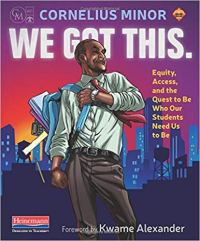
    We Got This by Cornelius MinorA must-read book title in the equity space is We Got This: Equity, Access, and the Quest to Be Who Our Students Need Us to Be by Cornelius Minor. Deanna can’t say enough about how open Cornelius is about his own journey even as he helps other educators rethink the accessibility in their learning spaces.

    A few education podcasts that Deanna appreciates include Dear Teacher, Don’t Give Up by Jeffery Frieden, EduMatch Tweet & Talk by Dr. Sarah Thomas, and The Dr. Will Show by Dr. Will Deyamport III. All three hosts are former guests of the Teachers on Fire podcast!

    When she’s looking for education inspiration on YouTube, Deanna turns to Edusations by Phil Strunk. On Netflix, the show at the top of her list that just restores her faith in humanity is Queer Eye

    We sign off on this great conversation, and Deanna gives us the best ways to connect with her online. See below for details!

    You can connect with Deanna …

    Connect with the Teachers on Fire podcast on social media:

    Song Track Credits

    Listen on YouTube and subscribe to the Teachers on Fire channel!

     

  • Episode 107 – Trevor MacKenzie


    107 - Trevor MacKenzie.png

    Meet Trevor MacKenzie

    TREVOR MACKENZIE is a learner, teacher, speaker, consultant, and outdoor enthusiast. Trevor teaches English at the 10th through 12th grade levels at Oak Bay High School in Victoria, BC, Canada. He is also regarded by many as the preeminent voice on inquiry-based learning today, authoring Dive into Inquiry: Amplify Learning and Empower Student Voice and co-authoring Inquiry Mindset: Nurturing the Dreams, Wonders, and Curiosities of Our Youngest Learners

    The First Five Years Are the Hardest

    When asked about an experience of adversity on his education journey, Trevor thinks back to his first five years in the profession. There were many forks in the road, he says, where he found himself questioning whether or not he even wanted to stay in education. It took him a while to move from substitute teaching to a full-time contract, and even then it was a real challenge to juggle all the responsibilities of a classroom teacher: lesson planning, unit design, assessment, parent communication, coaching, and other duties.

    Trevor credits his local community of colleagues and professional peers who gave him advice, encouragement, and solidarity during those early years. Although his professional learning network has evolved far beyond the bounds of his own building, he continues to appreciate the power and importance of collaboration today.

    Why Inquiry? 

    First and foremost, Trevor says, he never proposes that other teachers must do things his way. “Teaching is an art with incredible nuance and subtlety, and there’s simply no lockstep approach or prescriptive framework to what makes a good teacher.”

    That said, Trevor readily admits that inquiry-based learning is where his heart is, and he loves nothing more than helping other educators see what is possible for learners. Education has changed a great deal in the last decade – not just because of our access to phones but also in terms of the amount of prior knowledge that students bring to the classroom. It’s no longer about how much students know, but about what they can do with what they know.

    Inquiry-based learning challenges teachers to facilitate experiences that help our learners to explore content and then create products that have an impact on others. Inquiry also challenges students to investigate the “un-Googleable” questions, the sort of questions that Google Home and Alexa cannot help them with. These are the kinds of vast, broad questions that students must chew on and wrestle with over extended periods of time. Inquiry encourages the development of the 4 Cs: competencies that are absolutely critical in today’s workforce. As a framework, inquiry provides the space and common language for students to become creators, problem-solvers, and active agents of their learning.

    Inquiry and Curiosity

    Children enter the school system full of curiosity, chomping at the bit to learn, to play, to read, and to interact. Sadly, students often leave high school with that curiosity and joy of learning greatly diminished. “Curiosity is at the heart of how we can better meet the needs of all of our learners,” Trevor points out.

    We need to look at our curriculum with an eye to integrating inquiry approaches – it never needs to be a situation of all or nothing, inquiry vs the curriculum. Inquiry-based learning, when properly applied, allows us to explore prescribed curricular outcomes through the lens of curiosity and creativity.

    Understanding the Types of Student Inquiry

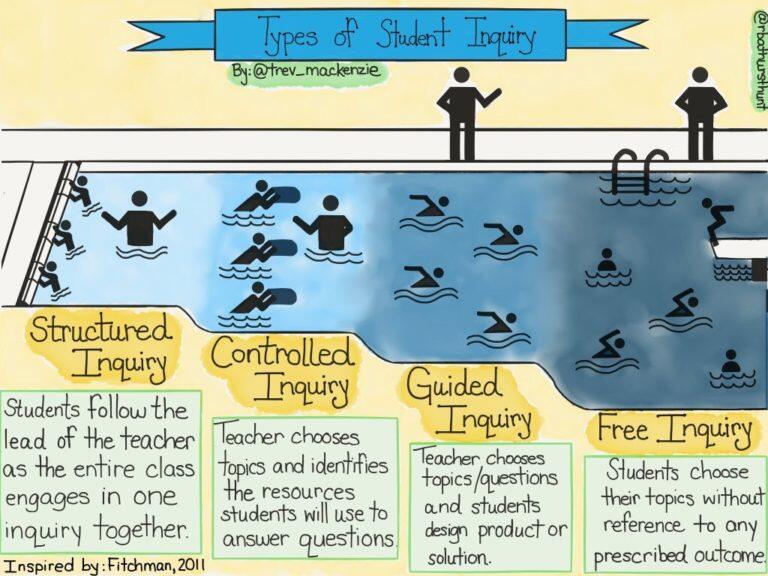
    Structured    Inquiry, Controlled Inquiry, Guided Inquiry and Free Inquiry

    In the swimming pool illustration, Trevor divides the types of student inquiry into four levels: structured, controlled, guided, and free. Although it might seem tempting to jump quickly into the deep end of the swimming pool, Trevor cautions against initiating free inquiry without giving learners the necessary tools, understanding, and vocabulary. To move too far and too fast into inquiry is to invite chaos and confusion for teachers and learners, so strategy and forethought is required here.

    Ideally, a school can work together on strong and structured units of inquiry-based learning so that all learners in the community become familiar with a common language. Frame those first units of study around central, unGoogleable questions. Use provocations to spark rich and engaging entry points to new areas of interest and study, and allow space for students to pursue side paths and related questions along the way. For help in getting started, visit TrevorMacKenzie.com for a large collection of free inquiry unit planning templates and other resources.

    Inquiry and Assessment

    When first introduced to inquiry-based learning, educators often have questions around assessment. To help guide teachers through these challenges and demonstrate what assessment can look like in the inquiry classroom, Trevor is currently working on a book that speaks directly to the mindset shift he has experienced around assessment in his own practice, and he goes on to describe some of the changes he’s made in the classroom.

    For example, he no longer puts any numbers or letter-grades on formative assessments — he only offers feedback. He also makes sure that students are invested in the assessment process through the co-creation of criteria, the inclusion of student voice, and by making sure that assessment occurs in the classroom, by and with students — instead of something done to them. Assessment done properly infuses course content instead of taking the shape of something slapped on to the end of a unit of a study. 

    The Power of Grading Conferences

    Speaking to the power of the conference, Trevor says that the simple decision to sit down with each of his learners to discuss their assessments for the term was one of the most helpful and practical moves he’s ever made in his practice. He immediately noticed the empowerment and sense of agency that the conferences gave students. For a change, many of his students actually wanted their parents to read their report cards because they had a direct hand in crafting those comments. Even more importantly, the process broke many students out of a fixed mindset regarding what past report cards and the education system had told them they were and were not capable of as learners.

    Could Inquiry Reshape Professional Development?

    Sadly, Trevor says, professional development is often not designed by teachers, and as a result, there can be a disconnect between philosophy and practice. Make sure that teachers have a voice, and make relevance and immediate application high priorities in the design of professional development activities, he urges.

    What Else is Setting Trevor on 🔥 in Education

    Beyond inquiry, something else that is setting Trevor on fire in education today is the conversation around diversity, equity, and inclusion. He’s taken some hard looks at cultural responsiveness, systemic biases, allyship, identity studies, and the unpacking of his own personal biases. Educators who greatly impress Trevor in this space include Gary Gray Jr., Liz Kleinrock, and Cornelius Minor. If we want our students to truly understand themselves as learners, people, and human beings, we owe it to them to help them understand the biases, narratives, and historical forces that shape our understanding of ourselves.

    Serving with Presence

    As much joy as he derives from working with learners in his classroom, Trevor is also passionate about teaching teachers and working with other educators around the world. Balancing the two consituencies well and being fully present in every context requires intentionality and mindfulness. “As I enter the classroom each and every day, I’m asking how I can be present and mindful of what’s immediately before me,” Trevor says.

    A Personal Passion: Cycling

    Trevor is an avid cyclist, and on many mornings he is up early and out of the house on his bike before school. He also enjoys a good community of fellow cyclists in his area that he enjoys biking and racing with. Cycling gets him going, fires him up, and keeps him healthy so that he can serve others well.

    A Productivity Hack: Early Mornings 

    Trevor’s best productivity hack is to get up at 5:00 a.m. each morning, and he’s been inspired by other creatives to work before the rest of the world is awake. It’s the perfect time to tie up loose ends, complete tasks, do important reading, or write reflectively. With small children at home and students at school, the early morning is simply the best block of time in the day to be productive and undistracted.

    Voices & Resources That Inspire His Practice 

    Over on Twitter, Trevor recommends following @TheMerrillsEdu. The Merrills are an amazing elementary teaching couple who take creativity to a whole new level in their practice. Make sure to give them a follow!

    No edtech tool has revolutionized Trevor’s assessment practices more than FlipGrid, where students post video responses and interact with each other’s ideas. Microsoft recently acquired this legendary platform and made its features absolutely free for educators, increasing equity and access for all learners in the process. Make sure to connect with Flipgrid on Twitter @FlipGrid

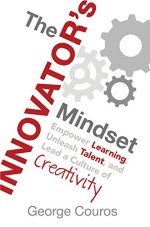
    The Innovator's Mindset by George CourosWhen prompted for a book pick, Trevor points to a classic — The Innovator’s Mindset: Empower Learning, Unleash Talent, and Lead a Culture of Creativity, by George Couros. Trevor also shouts out another title that has been influential in his practice, Understanding By Design, by Grant Wiggins and Jay McTighe.

    In the world of podcasts, Trevor is making a late appearance at the world’s most famous true crime series, Serial. He’s also gaining a lot from the Teaching While White Podcast – White Fragility podcast series.

    As for YouTube channels, Trevor is going back to one of the faves he mentioned previously: Gary Gray Jr. Gary is an important voice in the conversation on equity and he keeps things real on his channel.

    Although his kids are still too young for the chills and thrills of this popular series, Trevor has been enjoying Stranger Things whenever he does find the time for some entertainment on Netflix.

    We sign off on this terrific conversation, and Trevor gives us the best ways to connect with him online. See below for details!

    Connect with Trevor …

    Connect with the Teachers on Fire podcast on social media:

    Song Track Credits

    Listen on YouTube and subscribe to the Teachers on Fire channel!
     

  • Episode 106 – Andrew Arevalo


    106 - Andrew Arevalo.png

    Meet Andrew Arevalo

    ANDREW AREVALO is a 4th grade educator in the city of El Centro in southern California. He is a speaker, innovator, and game designer with passions for blended learning, design thinking, and gamification. He also has his Master’s degree in education and has been recognized as a CUE Emerging Teacher.

    From Delight to Disappointment

    Andrew experienced some adversity as recently as last year, when he finally worked up the courage to speak at a national education conference. He was absolutely delighted when his proposal was accepted, but that joy was quickly followed by disappointment when he learned that he would be docked pay for the missed day of school. Eventually, after encouragement and support from family and friends, he decided to sacrifice the income in order to attend the conference and speak.

    The experience was absolutely worth it, igniting his passions further and connecting him with other inspiring voices in education. To other educators who face similar financial dilemmas, Andrew says “You’ve got to go for it. You just never know who you’re going to meet, and who will inspire you.”

    Like Father, Like Son

    On July 7, 2019, Andrew tweeted this touching tribute to his father:

    “First and foremost, I love my dad!” Andrew says. Greg Arevalo has generously served his community for decades, and he is well-known and loved by many as a result. It’s a tremendous legacy to step into, an honor that Andrew, his brother (a local high school principal), Andrew’s fiance, and his sister-in-law all carry with pride. Greg never pushed the path of education on his sons, but he quietly sold the profession by the joy that was so evident in his work and the growth he consistently witnessed in his learners.

    How a Lost Pitch Event Led to a Game-Changing Opportunity

    A few months ago, Andrew participated in a pitch event at the University of San Diego thanks to a connection with Lisa Dawley, Executive Director of the Jacobs Institute for Innovation in Education and someone Andrew calls an amazing soul. Andrew was pitching a model for personalized professional development in front of a Shark Tank-style panel of judges, and he followed acts like Sir Ken Robinsons and Dave Burgess.

    Even though his pitch wasn’t selected as the winner, something very special came from the experience – he was invited to participate in an exclusive gathering of educators and intellectuals from all levels and contexts of education across America. The purpose of the gathering, held recently in New York City, was to support important conversations around some of the most pervasive problems and challenges that we face in education today. Andrew left the event completely invigorated and inspired by the expertise and vision shared by the other attendees. What he thought was a loss became a huge win.

    What’s Setting Andrew on 🔥 in Education Today

    Many of Andrew’s dearest passions continue to come directly from his own teaching practice and the activities happening right there in his classroom. Lately, his fourth graders have been developing future job titles and descriptions, university courses that will support these future jobs, buildings that will house and facilitate these future courses, and city infrastructures that could support the university campus with the sustainable development goals in mind.

    Students are using cardboard and LEGO to build structure prototypes, and Andrew plans to record short day-in-the-life-of video presentations for each project that will be linked to unique QR codes, connecting parents with their child’s ideas and work.

    A Professional Goal: More Reflection

    One of the aspects that Andrew would like to strengthen in his professional practice is the reflective process. We’re all busy, we’re all moving fast, and too often we find it hard to find the time to give our professional projects and work the thoughtful analysis they deserve. Just as reflection and metacognition is valuable for our learners, these activities can’t help but make us better educators when we actually make the time to reflect. As he collects thoughts and impressions in a journal, they continue to inform and inspire his first book, another project that he can’t wait to share.

    Personal Passions Away From Education

    Andrew loves playing mobile games like Clash Royale, partly because they disconnect him and help him relax. Lately, he’s also enjoyed seeing an emerging trend of educators who game with their own children — a way that games can be used to strengthen family relationships.

    A Productivity Habit: How can I make it better?

    A go-to mindset that works for Andrew is to finish every project with the question of “How can I make it better?” Just as we discussed in the professional space, sound processes of reflection can make sure that we are constantly growing, evolving, and improving. Of course, the flip side of this question is “When is enough enough?” We have to balance that commitment of constant innovation with the need to let things go and simply move on.

    Voices & Resources That Inspire Andrew’s Thinking

    Over on Twitter, Andrew says you are simply missing out on life if you are not following @AnnKozma723. Ann is the Educator Innovation Lead at Flipgrid, and she brought nonstop ideas and inspiration when her Flipgrid team visited Andrew’s district recently.

    For his edtech tool pick, Andrew is pointing out the Oculus Quest, an industry-leading VR set that is changing our understanding of what is possible in education.

    Amina's Voice by Hena KhanIf a school day goes by and Andrew hasn’t read some of Amina’s Voice to his fourth graders, he hears about it! This book by Hena Khan unpacks identity, belonging, and purpose in clever and kid-friendly ways – a great addition to your classroom library.

    Another education podcast that Andrew is digging is OnEducation, hosted by Mike Washburn and Glen Irvin – two educators who are passionate about changing the game and giving air time to real conversations in the education space. Follow the podcast on Twitter @OnEducationPod

    For his YouTube channel recommendation, Andrew shouts out someone who he just happened to connect with at a coffee shop earlier this year. The channel is called Bernadette Teaches Music, and it’s hosted by a music teacher with international teaching experience. Follow her on Twitter @Ukuleleplazi

    The last great content that Andrew watched on Netflix was The Game Changers, a documentary about vegans who have transformed their mindsets and their bodies to achieve seemingly impossible feats. As a former vegan himself, Andrew found their message interesting and inspiring.

    We sign off on this fun conversation, and Andrew gives us the best ways to follow him and connect online. See below for details!

    You can connect with Andrew …

    Connect with the Teachers on Fire podcast on social media:

    Song Track Credits

    Listen on YouTube and subscribe to the Teachers on Fire channel!